Table of Contents
The Widespread Claim: Healing Chakra with a Specific Singing Bowl
The sound healing field attracts genuine practitioners alongside those who traffic in misinformation. One particularly persistent claim deserves examination: that individual notes from the Western musical scale can be used in chakra healing.
Some teachers pass along these ideas without questioning them. Their sincerity isn't in doubt—many genuinely believe what they teach and deliver their work with authentic compassion. But sincerity and accuracy aren't the same thing.
When you accept teachings without scrutiny—regardless of how likeable or well-intentioned the teacher seems—you're not necessarily moving toward understanding. You're adopting someone else's framework as your own.
The sound healing marketplace also includes deliberate fraudsters. It's worth stating clearly: be skeptical of spiritual claims backed by profit incentives rather than evidence. For a deeper dive into how these frequency claims actually hold up, explore the broader context of healing sound frequencies and their claimed powers.
The key is, no matter what story you tell, make the buyer the hero.
Chris Brogan
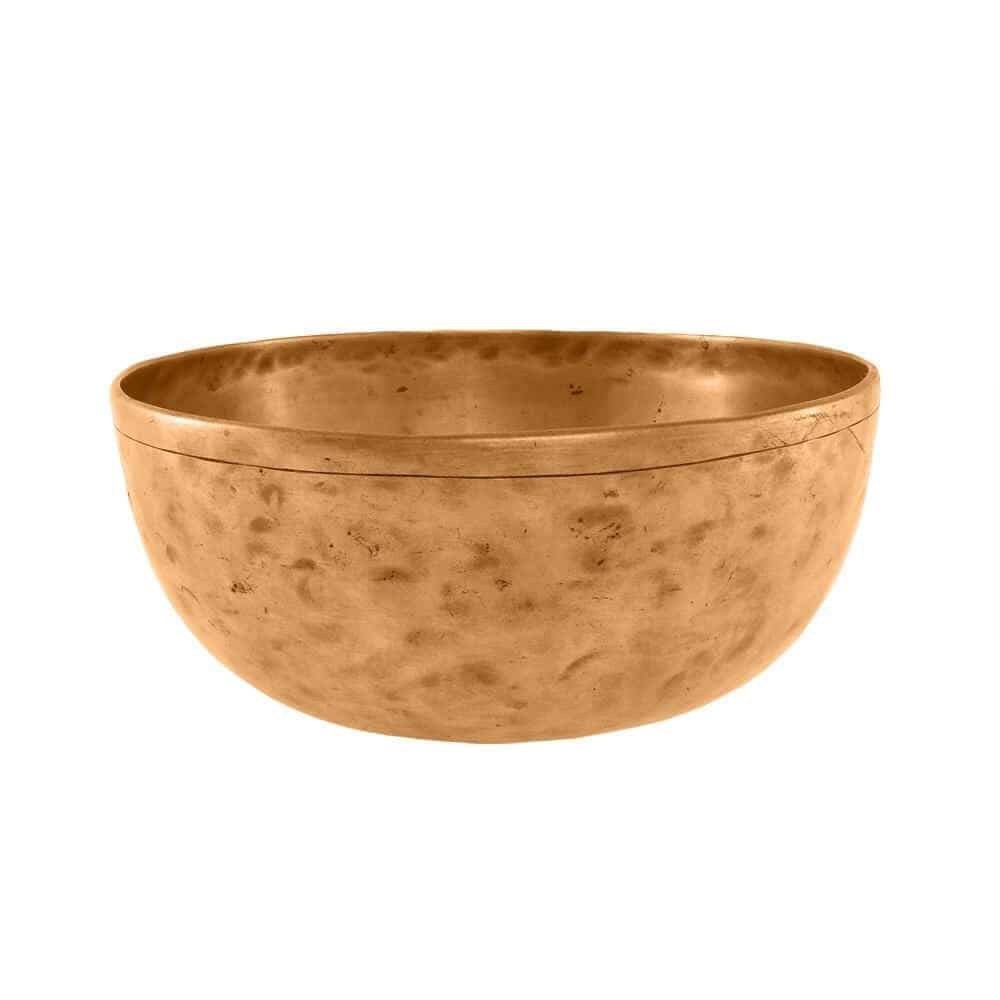
My initial encounter with Himalayan singing bowls involved wading through claims that struck me as highly questionable. Chief among my concerns was the supposed relationship between chakras and specific pitches within our modern Western musical system.
Walk into most retailers—online or physical—that sell singing bowls, and you'll encounter product descriptions linking particular bowls to chakra healing. Travel through Nepal, Tibet, or India and vendors will confidently pair bowls with chakra systems. The pitch is familiar and persuasive:
"I sense you're struggling with self expression. This throat chakra singing bowl is exactly what you need for healing throat chakra imbalances."
"Your heart feels closed. Let me show you this bowl—it's specifically crafted for healing heart chakra and opening emotional blockages."
"You need grounding. This root chakra singing bowl was designed precisely for healing root chakra issues and connecting you to earth energy."
When I spoke with traditional healers and practitioners of the Bon Po lineage in Nepal, none of them referenced the Western musical scale in relation to chakra work. They weren't familiar with the framework at all. Yet somehow, contemporary practitioners claiming "authentic Tibetan" methods present these correspondences as ancient wisdom.
The common "Tibetan traditional" approach uses intervals based on Perfect Fifths—a Western music theory concept—to space bowls around the body. But understanding the unique sonic properties of singing bowls reveals why these chakra-to-bowl associations are fundamentally oversimplified. This alone raises a red flag: Western music theory postdates any authentic Tibetan system by centuries.
How the "Tibetan Standard" Chakra Bowl Sequence Actually Works
Here's how practitioners claim this maps to chakra work: An F bowl positions at the first chakra (root), a C bowl at the second (sacral), G at the solar plexus, D at the heart (a major focus area for those seeking healing heart chakra solutions), A at the throat (particularly relevant for those working on healing throat chakra challenges), E at the third eye, and B at the crown.
If you follow the Perfect Fifth progression, the correct arrangement would be:
F2, C3, G3, D4, A4, E5, B5
Most large antique Jambati bowls fall into the F2 or G2 range, which explains why sellers start their sequences there. The progression extends up to B5. But in reality, this is not what you get when purchasing a chakra singing bowls set from these so-called Tibetan sound healing practitioners.
The Octave Inconsistency Problem in Commercial Chakra Sets
Despite claims of authenticity, most commercial "chakra healing" bowl sets don't actually follow the Perfect Fifth sequence. They typically include: F2, C3, G2, D2, A2, E2 or E3, and B2.
Look closely: these aren't organized by octave at all. The notes share names with the sequence above, but the octave numbers are scattered. This isn't a coherent system—it's a jumbled approximation.
The financial incentive is obvious: lower-frequency bowls (F2, C3) are larger, heavier, and more expensive. Sellers profit from pushing the bigger, pricier instruments. Add lax quality control—many bowls sold as "F2" actually deviate significantly from that exact frequency—and the whole premise collapses. If you're working with bowls, learning proper practices for working with singing bowls matters far more than following a chakra chart.
Here's what traditional Tibetan medicine actually describes: five primary energy centers, not seven. Most commercial chakra systems don't even align with the source tradition they claim to represent.
The Anachronism Problem: Ancient Teachings Can't Reference Modern Musical Concepts
Why would an ancient Tibetan system designate "F2" with such precision? It couldn't have. The modern Western musical scale—with its labeled notes and standardized frequencies—didn't exist in ancient Tibet. Suggesting otherwise is historically impossible.
When A4 is tuned to 440Hz (the modern standard), F2 measures 87.31Hz. The specificity implied by chakra-note correspondence doesn't exist in any ancient text. It's a modern invention.
The real reason practitioners start with F2? Pragmatism, not ancient wisdom. Bowls lower than F2 are extremely difficult to source. Starting higher would push the upper notes into impractical registers. Beginning with F2 simply makes the sets easier to assemble.
The So-Called Ayurvedic Chakra Healing Doesn't Work Either
Some teachers invoke an "Ayurvedic authentic" approach, suggesting bowls placed in simple sequence: C, D, E, F, G, A, B—without specifying octaves.
Think about this: how would a C from the second octave produce the same effect as that same note four octaves higher? They're vastly different frequencies. Yet practitioners expect identical results. No rigorous explanation exists for why octave wouldn't matter for healing chakras.
This system sounds tidy but lacks any logical foundation. It persists because it's easy to remember and sounds authoritative.
The Sound of Singing Bowls Is Far More Complex Than a Single Note
Here's what most "chakra healing" marketing ignores: every sound partial in a singing bowl contains multiple frequencies simultaneously, not just one.
When you hear a bowl produce beats—that wavering, pulsing quality—it's the interference pattern between two slightly different frequencies within each sound partial. Understanding how frequencies interact and create effects shows why single-note systems fail entirely. Even if one frequency matches a targeted note exactly, the others won't. You never achieve a "pure" chakra tone.
Often, the bowl's overtones ring louder than the fundamental frequency. So if you're playing a bowl with a C fundamental and a G overtone that dominates in volume, which chakra are you healing? The question reveals the flaws in the entire framework.
Skilled practitioners understand this complexity. They develop their intuition through the art of active listening with sound, moving beyond any suggested systems. They work intuitively with chakra healing through harmonic richness—combining multiple bowls to create layered resonance patterns—rather than relying on single-note dogma. The bowls' combined frequencies, their pulsation patterns, and their harmonic interactions create the actual benefit, not adherence to a predetermined note system.
Why Chakra and Western Music Theory Aren't Compatible Systems
These two frameworks emerged from different traditions, serve different purposes, and describe different phenomena:
Origins: Indian spiritual philosophy gave birth to the chakra model. Western music theory developed much later, shaped by mathematical and acoustic principles from European traditions.
Purpose: Chakras represent subtle energy centers within contemplative frameworks. Western musical notes organize sound for musical expression and structure.
Conceptual foundation: Chakras relate to prana and consciousness—abstract, subjective energetic states. The Western scale is built on measurable vibration frequencies and mathematical ratios.
Function: Chakras operate within systems of consciousness and spiritual development. Musical notes function within systems of aesthetic organization and pattern.
Authority: Chakra interpretations vary across different Hindu, Buddhist, and Tantric traditions. The Western scale is standardized across all modern musical contexts.
Nature of knowledge: Chakra healing work involves metaphorical and phenomenological understanding. Music theory is quantifiable and mechanistic.
Attempting to force correspondence between these systems is a category error. They describe different realities using different languages. Pretending otherwise—even with good intentions—creates false expectations and misleading guidance.
What Actually Matters in Sound Healing Work
Understanding this distinction is essential to accessing the real power of singing bowls. The benefit comes from the instrument's actual acoustic properties, the practitioner's skill and attention, and the listener's openness—not from mythical frequency-to-chakra mappings in chakra healing sound session. When you work with bowls mindfully, without forcing them into a false system, their potential expands. Understanding how sound healing works beyond specific instruments is what unlocks that potential.
Harmonic complexity becomes an asset rather than a problem. Selection based on sound quality matters more than chart lookups.
The field of psychoacoustics still holds unexplored territory. We're far from understanding everything about how sound influences consciousness and wellbeing. The honest path forward involves continuous questioning, experimentation grounded in listening, and resistance to oversimplified narratives.
Moving Forward with Integrity
As sound healing gains wider interest, the need for accurate information intensifies. Growth requires scrutinizing claims carefully, testing methodologies against experience, and prioritizing truth over marketability.
Stay intellectually alive. Question rigid doctrine. Approach claims with both openness and healthy skepticism. Your development as a sound healer depends on this balance.
Real progress takes time. Patience matters. The work won't always feel dramatic. Stick with the practice anyway.
I'm inviting you to join this process of genuine inquiry. With curiosity and discernment, we can examine old assumptions and build clearer understanding. When knowledge spreads honestly, it benefits everyone.
Deeper exploration of these topics appears in my foundational courses: "Sound Bath Certification Training" and "Sound Healing Certification Training." For a comprehensive path to becoming a sound healer grounded in real knowledge, these programs go beyond marketing claims into actual practice and understanding.
FAQs
Can singing bowls really heal chakras?
Singing bowls can create profound relaxation and presence, but not because they correspond to specific chakras through musical notes. The idea that individual notes heal root, heart, or throat chakras is a modern myth without historical evidence. What actually works is the bowl's harmonic complexity, your intention, and how attentively you listen—not a predetermined note-to-chakra map.
What's the best singing bowl for healing root chakra?
Forget about finding a "root chakra bowl" by note. What matters is selecting a singing bowl with rich, complex overtones and a sound that resonates with you personally. A high-quality F2 or G2 bowl often works well for grounding because of its lower frequency, but the magic is in the bowl's acoustic properties and how you engage with it, not the label someone put on it.
Is there a healing heart chakra singing bowl?
There's no such thing as a scientifically proven "heart chakra" frequency or bowl. Vendors claim D or F bowls heal the heart chakra, but this is marketing, not science. Any quality singing bowl can create emotional openness through harmonic resonance and the meditative state it induces—not through matching a specific note to your chest.
Do solfeggio frequencies or chakra frequencies actually work?
No frequency can directly heal a chakra or "repair DNA" as claimed online. These are popular myths. What sound can do is influence your nervous system through relaxation, lower stress, and enhance focus. But that's very different from the specific healing frequency claims you'll see marketed. The benefit comes from the overall sonic experience, not magic numbers.
What does the chakra healing truth actually say?
The real truth is this: the chakra system comes from Indian spiritual traditions, and the Western musical scale is a modern mathematical system. They're incompatible frameworks trying to describe different things. Ancient Tibetan healers never referenced "F2 for root chakra"—that's a contemporary invention designed to sound authentic while making products easier to sell.
Can I use chakra healing with stones and singing bowls together?
You can certainly use stones and singing bowls together if it supports your practice. But be honest about what's happening: you're creating a ritual that focuses your intention, not activating chakras through frequency-to-stone-to-chakra chains. Both tools can be meaningful, but the benefit comes from your presence and attention, not from the tools themselves matching a chakra system.
Why do so many teachers claim chakra singing bowl systems work?
Some teachers genuinely believe these systems work because they were taught this way and see no reason to question it. Others profit from selling "chakra sets" because lower-frequency bowls are expensive and marketable. Either way, good intentions don't make false claims true. Skepticism and direct experience should guide your practice, not blind faith in anyone's teaching.
What's the difference between healing throat chakra claims and reality?
Vendors claim an A or G singing bowl heals the throat chakra because of note correspondence. Reality: A and G are a specific frequencies in the modern Western scale, which didn't exist in ancient traditions. Ancient healers would have no reason to assign that precise note to the throat. The claim is modern marketing dressed up as ancient wisdom.
How do chakra healing systems get octaves so wrong?
Most commercial "singing bowl chakra sets" scatter octaves all over—F2, C3, G2, D2, A2, E2 or E3, and B2. If they truly followed Perfect Fifths (the framework they claim to use), the octaves would be consistent. This inconsistency reveals the truth: these sets are designed for profit and ease of assembly, not scientific precision or historical authenticity.
Is Ayurvedic sound healing and chakra tuning real?
Ayurvedic medicine is real and ancient, but the modern "Ayurvedic chakra tuning" systems claiming specific notes heal chakras are not. Contemporary teachers market Ayurvedic chakra systems with sequences like C, D, E, F, G, A, B—but they never specify which octave, which already reveals the problem. Ancient Ayurvedic texts don't reference Western musical notes or frequencies. These systems are modern inventions layered onto a traditional framework to sound more authoritative.
What is authentic Tibetan sound healing?
Authentic Tibetan sound healing uses a lot of ritual instruments as meditative tools within Buddhist and Bon Po traditions. But it does not use Western musical notes to heal specific chakras. When I spoke with traditional healers and shamans in Nepal and Tibet, they had no concept of matching notes to chakras. The "authentic Tibetan chakra system" you see online is modern marketing, not historical practice.
Did Tibetan monks use chakra singing bowl systems?
No. Tibetan Buddhist monks and Bon Po practitioners used and still use singing bowls, but not through the framework of "chakra bowls with specific notes for healing." The chakra system comes from Hindu and Tantric traditions, not Tibetan Buddhism. When contemporary teachers claim "authentic Tibetan chakra healing," they're conflating traditions and inventing systems that never existed historically.
What's the difference between Ayurvedic and Tibetan chakra systems?
Both are modern inventions, but they contradict each other. The "Tibetan" system claims specific Perfect Fifth intervals (F2, C3, G3, D4, A4, E5, B5). The "Ayurvedic" system uses a simple chromatic sequence (C, D, E, F, G, A, B) without specifying octaves. If both were ancient, they'd be consistent. Their disagreement reveals the truth: contemporary teachers invented these systems independently, each claiming authenticity neither actually possesses.
How many chakras does Tibetan medicine actually describe?
Tibetan medicine describes five primary energy centers, not seven. Yet most commercial "Tibetan chakra bowl sets" sell seven bowls. This inconsistency is a clear sign these systems are modern marketing constructs, not authentic representations of Tibetan healing traditions. If vendors truly honored Tibetan medicine, their sets would reflect what Tibetan texts actually teach.