Table of Contents
- The Sound Bowl Boom and the Science Gap
- What Are Sound Bowls? A Primer
- How Sound Bowls Produce Sound: The Physics of Resonance
- What 'Sound Bowls Healing' Actually Means
- Defining Sound Healing vs. Sound Therapy vs. Sound Bath
- The Role of the Sound Bowls in a Healing Context
- Why Intention and Facilitation Matter as Much as the Instrument
- The Science Behind Sound Bowls Healing
- What Neuroscience Research Actually Shows
- Common Sound Bowl Healing Claims—Examined Through a Scientific Lens
- What Is Actually Happening During a Sound Bath Session?
- How to Use Sound Bowls Effectively: Evidence-Based Guidance
- Sound Bowls Healing: What It Can and Cannot Replace
- Want to Practice Sound Bowls Healing Professionally?
- Conclusion: Sound Bowls Work—Here's the Real Reason Why
- FAQs
Sound Bowls Healing: What the Science Actually Shows (And Where the Marketing Lies)
The Sound Bowl Boom and the Science Gap
Sound bowls healing is advertised everywhere now. Yoga studios, corporate wellness offices, Spotify playlists, Instagram ads—they've moved from niche spiritual practice to mainstream wellness staple in less than a decade. The market is booming, the claims are bold, and most people ordering a sound bath online have no idea whether they're paying for actual healing or elaborate theater backed by numerology.
Here's the problem: the field got flooded with claims that don't hold water. Not because sound bowls healing doesn't work—it does—but because the reasons singing bowls work have nothing to do with chakra alignment, ancient Tibetan secrets, or magic frequencies. The industry discovered that people will pay more for mysticism than for neuroscience, and so the real mechanisms got buried under layers of Orientalized folklore and pseudoscience.
This article exists to dig through that. It covers what singing bowls are and what is sound bowls healing, what the research genuinely shows, where the myths come from, and how to use them effectively without buying into a narrative that contradicts basic physics and biology.
What Are Sound Bowls? A Primer
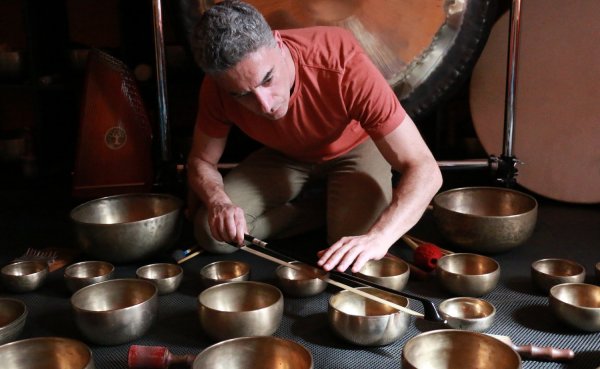
Sound bowls are metal or crystal vessels that produce sustained tones when struck or when a mallet is rimmed around the edge. That's it. They're not ancient mystical artifacts charged with cosmic energy. They're instruments—well-constructed ones produce complex, harmonically rich sounds; poorly made ones sound thin and flat.
There are two main types:
Himalayan (Tibetan) Singing Bowls
Metal bowls, usually bronze (copper and tin alloy), handcrafted in Nepal and Northern India. They produce multiple tones simultaneously—a fundamental frequency plus a series of harmonics and overtones. The complexity of their sound comes from their construction, not their age or origin. When played with proper technique, they ring for a long time, creating an immersive sonic environment.
To understand the unique sonic properties that make these instruments effective, read our guide to the secret of singing bowls and what distinguishes their sound.
Crystal Singing Bowls
Made from fused high-purity quartz, these are modern instruments—developed in the 1980s from semiconductor manufacturing waste. They produce cleaner, more sine-wave-like tones with fewer overtones. People often describe them as "brighter" or "lighter" than metal bowls. They're also more fragile and significantly more expensive.
Both work. Neither is objectively "better" for healing. The choice comes down to the sound you prefer, the context of your practice, and how much you want to spend.
How Sound Bowls Produce Sound: The Physics of Resonance
When you strike a singing bowl or rim it with a mallet, you set the metal or crystal into vibration. The bowl's shape, thickness, material composition, and construction method determine which frequencies vibrate most readily—its resonant modes.
A metal singing bowl doesn't vibrate at one frequency. It vibrates at many simultaneously. The fundamental (the lowest tone) is usually what you hear most clearly, but overlaid on top are dozens of overtones—partials that are integer multiples of the fundamental frequency. Some of these overtones are harmonically related (they fit the harmonic series) and some are inharmonic (they don't). This inharmonic complexity is what gives metal bowls their distinctive warmth and complexity.
That sustained ring you hear is the bowl continuing to vibrate after you stop playing it. How long it rings depends on the bowl's material, thickness, craftsmanship, and whether it's damped by the surface it sits on. A hand-finished antique bowl can ring for 30+ seconds. A mass-produced bowl might ring for 5.
The physics is straightforward. The magic comes later—not from the vibration itself, but from what happens when you listen to it.
What 'Sound Bowls Healing' Actually Means
Sound bowl healing is a form of complementary therapy that uses singing bowls to induce relaxation and support emotional and psychological wellbeing. That's the honest definition. It doesn't cure disease, it doesn't repair DNA, it doesn't realign your chakras.
What it does: Research shows consistent reductions in tension, anxiety, and negative mood states after sound bowl healing sessions. Participants report improvements in sleep, emotional release, increased sense of peace, and restored energy. Heart rate and blood pressure show reductions consistent with a relaxation response. None of this is trivial—chronic stress is a major contributor to disease and dysfunction—but it's also not the same as saying sound bowls healing can treat cancer.
The mechanism isn't mysterious or energetic. It's neurophysiological and well understood through the lens of psychoacoustics, auditory processing, and nervous system regulation.
Defining Sound Healing vs. Sound Therapy vs. Sound Bath
These terms are used interchangeably in marketing, but they mean different things:
Sound Healing is the broadest umbrella—any use of sound with the intention of supporting health and wellbeing. It includes bowls, gongs, tuning forks, voice, ambient sound, music therapy—anything in the sonic spectrum used in a health context.
Sound Therapy is more specific. It's a clinical practice, often delivered by a trained practitioner, that uses sound and vibration with measurable therapeutic goals. It may be used alongside conventional medical care.
Sound Bath is an experience, not a clinical intervention. You lie down or sit in a room while a facilitator plays singing bowls, gongs, and other instruments around you for 30-60 minutes. You're bathed in sound. It's less about treatment and more about immersion in a relaxing acoustic environment.
The distinction matters because it sets expectations. A sound bath is a wellness experience. Sound therapy might be used for anxiety reduction in a clinical setting. Sound healing is everything in between.
The Role of the Sound Bowls in a Healing Context
Here's what's crucial to understand: the bowl is a tool, not the whole practice.
When you're in a sound bath, the therapeutic effects come from a constellation of factors. Yes, the bowl's acoustic properties matter. But so do:
- The facilitation. How the practitioner understands trauma-informed practice, how they hold space, how they communicate before and after.
- The environment. Temperature, lighting, acoustics of the room, whether you feel physically safe.
- Your own receptivity. Whether you're actually relaxed or waiting for it to be over, whether you trust the facilitator, what you bring to the session emotionally.
- The context. A sound bath in a studio you've never visited has different effects than one in a place where you feel at home.
- Your nervous system state at entry. Someone coming in dysregulated responds differently than someone already calm.
This is why two sound baths can feel completely different even if the same practitioner plays the same bowls. The variable isn't the bowl—it's the human system receiving it.
Why Intention and Facilitation Matter as Much as the Instrument
A lot of marketing in sound healing focuses on metaphysical properties of singing bowls, but what actually matters is whether the sound supports your nervous system regulation and whether the facilitator knows what they're doing.
For a thorough examination of how facilitator skill shapes outcomes—and what can go wrong in sound bath sessions—see our analysis of the pros and cons of sound baths.
A $200 new crystal bowl played skillfully in a trauma-informed session will create better outcomes than a $8,000 gold infused crystal bowl played by someone who doesn't understand nervous system dynamics and has no training in facilitation.
This matters for practitioners to understand, and it matters for people seeking services to know. When you're shopping for a sound bath, don't look at the colors of the bowls and don't compare their price tags. Ask about the facilitator's training. What do they know about trauma? What's their experience with people who have anxiety, PTSD, or nervous system dysregulation? How do they handle someone who becomes emotional during a session?
The facilitator's skill is the variable that determines whether the experience supports you or triggers you.
The Science Behind Sound Bowls Healing
Sound bowl effects operate through three main scientific frameworks: psychoacoustics (how the brain processes sound), physiology (how the body responds), and neuroscience (what happens in the brain).
Psychoacoustics: How the Brain Interprets Sound Bowl Music
Psychoacoustics is the study of how the brain perceives sound. When you listen to a singing bowl, your auditory cortex processes the fundamental frequency, the harmonics, the subtle changes in pitch and timbre as the bowl rings down. This isn't passive. Your brain is actively working to extract meaning and pattern from what you're hearing.
The complex, layered tones of a singing bowl create a cognitively engaging but not demanding listening task. Your attention is drawn to the sound, but you're not required to follow a narrative or solve a problem. This kind of listening—sometimes called "deep listening" or "focused receptive listening"—creates a distinct mental state. It reduces mind-wandering, quiets the default mode network (the brain system active when your mind is unfocused), and shifts your attention from internal rumination to external sensory input.
This shift alone is therapeutic. Most anxiety and depression involve being stuck in loops of internal thought. Moving attention to something external and absorbing breaks that loop.
Entrainment: Can Sound Bowls Synchronize Your Brainwaves?
This is where claims get overblown. The "neural entrainment" hypothesis suggests that external stimulation at a certain frequency causes your brain to oscillate at that same frequency. The popular version: listen to 40 Hz binaural beats and your brain will produce 40 Hz gamma waves, making you focused. Listen to 7.83 Hz (the Schumann Resonance, supposedly) and you'll align with Earth's magnetic field.
The research is much less supportive than the marketing suggests.
A 2023 systematic review published in PLOS One examined 14 studies on binaural beat entrainment. Results: five studies supported the entrainment hypothesis, eight found contradictory results, and one had mixed findings. The authors concluded the evidence is "inconclusive at best" and highlighted major methodological problems across studies. The effect, when present, is smaller and more variable than commonly claimed.
This doesn't mean brainwaves aren't affected by sound. They are. It means the effect isn't as predictable, precise, or reliable as marketed. It also means we should be skeptical of specific frequency claims—the idea that exactly 432 Hz or exactly 528 Hz will produce exact neurological effects.
Singing bowl entrainment works differently than binaural beats anyway. Singing bowls don't produce the necessary sustained pure tones at consistent frequencies. The tones drift, the overtones interfere, the sound is complex. If entrainment is happening, it's through a different mechanism than the simple frequency-matching model suggests.
For a detailed breakdown of how binaural beats actually work mechanically, see our comparison of binaural beats, monaural beats, and isochronic tones — and why singing bowls operate through different neurological mechanisms.
The Nervous System Response to Sound Bowl Healing Sessions
This is where the real mechanism lives, and it's simpler and more reliable than entrainment.
Low-frequency, sustained sounds—exactly what singing bowls produce—activate the parasympathetic nervous system. The parasympathetic nervous system is your "rest and digest" mode, mediated largely through the vagus nerve. When the vagus nerve is stimulated and tone (responsiveness) is high, your body knows it's safe to relax. Heart rate slows. Blood pressure drops. Digestion resumes. Muscle tension releases.
For a comprehensive exploration of how your vagus nerve responds to sound and what this means for building lasting nervous system resilience, read our detailed guide to nervous system regulation through sound and the vagal tone connection.
Research on the vagus nerve shows that low-frequency sounds, particularly in the range produced by large metal bowls, can trigger this response. The vibrations travel through the body as mechanical waves through tissue and fluid. The ear processes the acoustic signal. Both pathways signal the central nervous system: this is a safe, non-threatening stimulus. The body can downregulate stress.
This is why meditation works. Why slow, deep breathing works. Why gentle music works. Why massage works. They all dial down the sympathetic ("fight or flight") nervous system and activate the parasympathetic. Sound bowls healing is just one way to do it.
What Neuroscience Research Actually Shows
The strongest evidence for sound bowl effects comes from studies measuring relaxation-related physiological markers:
Reductions in self-reported tension and anxiety. Multiple studies, including a 2017 observational study of 62 participants by Goldsby et al. published in SAGE Publishing, found significant reductions in negative mood, anxiety, and physical pain following singing bowl meditation. New participants showed even larger reductions than experienced ones, suggesting a robust effect.
Stress hormone reduction. A 2023 study of virtually-delivered biofield-based sound healing for generalized anxiety disorder found statistically significant reductions in anxiety levels, negative affect, and perceived stress (p < .001) in participants who received three weekly hour-long sessions.
Autonomic nervous system shifts. Studies measuring heart rate, blood pressure, and respiration consistently show changes compatible with parasympathetic activation—heart rate decrease, blood pressure reduction, slower breathing.
EEG changes. Some studies show changes in brainwave patterns consistent with relaxation, though results are variable and methodology often isn't rigorous.
Important limitation: Most studies in this area have small sample sizes, lack proper control groups, and rely on self-report measures for their main outcome. The effect sizes are real—not subtle—but the evidence base is still early-stage. We know something is happening. We're less certain about exactly what and why.
What we can say: Sound bowl meditation produces acute reductions in tension and negative affect, along with physiological markers of relaxation. It works best as a complementary practice alongside other stress-management approaches, not as a standalone treatment.
Common Sound Bowl Healing Claims—Examined Through a Scientific Lens
The sound bowl industry has generated a substantial catalog of claims that range from plausible to absurd. Let's examine the major ones.
Claim: Sound Bowls Are Tuned to Chakras
This claim combines two false premises: that chakras are a biological system (they're not—they're a metaphor from Hindu philosophy) and that specific musical pitches correspond to them.
The premise doesn't hold up. There's no anatomical, physiological, or historical basis for "the heart chakra is C#" or any similar assignment. The ancient texts that discuss chakras don't mention specific notes. Modern chakra-frequency associations came from 20th-century reinterpretations, numerology, and marketing, not from historical or scientific sources. For a thorough examination of why these chakra-note associations are unfounded, read our detailed analysis of the truth about chakra healing.
More fundamentally: a singing bowl doesn't vibrate at one frequency. It vibrates at dozens simultaneously. Even if we accepted that specific frequencies matter (we shouldn't), the notion that a bowl "tunes" to a chakra is physically meaningless.
You can use the chakra framework as a meditation or visualization tool—that's legitimate—but don't confuse it with acoustic physics.
Claim: Specific Frequencies (e.g., 432 Hz, 528 Hz) Have Healing Powers
This is the modern sacred frequency claim, and it's almost entirely marketing.
For a comprehensive examination of frequency healing claims and what the evidence actually shows, see our deep dive into healing sound frequencies and why 528 Hz, 432 Hz, and Solfeggio frequencies don't work the way they're marketed.
432 Hz: Marketed as "the natural frequency of the universe" or "aligned with Earth's magnetic field" or "the frequency ancient civilizations used." The reality: 432 Hz is an arbitrary pitch. Orchestras around the world tune to slightly different standards. There's no historical evidence ancient instruments were tuned to 432 Hz. The notion that it's "natural" is false—frequency is just a measurement tool invented by humans.
One small 2024 double-blind study of 83 emergency nurses found that music tuned to 432 Hz produced slightly lower heart rates compared to 440 Hz. That's a real finding. It's also a finding from one small study of stressed healthcare workers, not proof that 432 Hz is universally healing.
528 Hz: Sold as the "love frequency" and "DNA repair frequency," based on a story about biochemist Glen Rein's research on how 528 Hz affects DNA molecules. Searching peer-reviewed literature: the evidence doesn't exist. For a full examination of Solfeggio frequencies specifically, read our analysis of Solfeggio frequencies: the claims vs. the science. The story persists in the wellness industry because it's profitable to sell. Claiming a frequency "repairs DNA" attracts people seeking healing.
The honest assessment: Some frequencies and tones produce relaxation through mechanisms we understand (low frequency engagement, acoustic masking, expectancy). Specific healing properties of specific frequencies are not supported by evidence. If listening to 528 Hz helps you relax, the mechanism is the same as listening to 500 Hz or 550 Hz—relaxation through attention and parasympathetic activation, not magic frequency selection.
Claim: Sound Bowls Detoxify the Body or Realign Organs
These claims misunderstand how vibration works in the body.
Sound vibrations travel through tissue and fluid. They don't reach the liver and tell it to detoxify. They don't realign your kidneys. They don't vibrate toxins out of your body. The body doesn't work that way.
What vibrations do: they trigger a relaxation response, which does improve digestion, circulation, and overall physiological function. Better digestion might help eliminate waste. Better circulation might support organ function. But that's indirect support for normal biological processes, not direct detoxification or realignment.
Detoxification claims should be immediate red flags. They're almost never supported by evidence and are frequently used to sell products or services to vulnerable people.
Claim: Tibetan Bowls Are Ancient Healing Instruments
This is the foundational marketing myth for the entire industry, and it's false.
The popular story: Tibetan monks have used these bowls for thousands of years to heal and meditate. They're ancient instruments infused with spiritual power.
The historical record is far messier. Metal bowl-shaped bells exist in various Asian cultures and have for centuries. But the specific practice of "singing" a bowl—rimming it with a mallet to sustain a tone—appears to be a relatively recent practice, likely developed in Nepal and Northern India. Evidence for bowls being used this way in Tibet is thin to nonexistent.
The term "singing bowls" doesn't appear in English until a 1972 record album, "Tibetan Bells," by Henry Wolff and Nancy Hennings. That was 52 years ago. The Tibetan origin story appears to be largely a 1970s-onward marketing narrative, not historical fact.
Monks who grew up in Tibet have said they never encountered bowls being spun and rimmed. The bowls may have been used as ritual vessels or bells, but the "singing" practice seems to be a modern Western invention projected backward.
Does this make the bowls less valuable or useful? No. It means the origin story is marketing fiction layered over a real, useful instrument. Many antique Himalayan bowls are genuinely beautiful and acoustically excellent. Their value doesn't depend on false claims about their age or purpose.
What Is Actually Happening During a Sound Bath Session?
Strip away the mythology and here's what's happening:
You enter a quiet room. You lie down or sit in a comfortable position. The lights are dimmed. The temperature is warm. You feel physically safe and supported. Your attention is drawn to complex, layered sounds—a singing bowl, perhaps a gong, other instruments. The sounds are sustained, gradually fading, re-emerging.
Your brain shifts from an active, problem-solving mode to a receptive, listening mode. This shift alone reduces anxiety and stress. Your auditory cortex processes the complex tones. The low frequencies trigger a parasympathetic response—your vagus nerve activates, telling your body it's safe to relax. Heart rate slows. Breathing deepens. Muscles release tension.
You're not in an altered state. You're not accessing other dimensions. You're in a state of deep relaxation guided by sound and facilitation. Your nervous system is doing what it's designed to do when conditions signal safety.
This is powerful. It's also completely explicable through neuroscience and physiology.
The Role of Deep Listening and the Relaxation Response
The relaxation response is a well-documented physiological state, first described by cardiologist Herbert Benson in the 1970s. It's characterized by decreased heart rate, blood pressure, and respiratory rate, along with increased parasympathetic tone. It's the opposite of the stress response.
Deep listening—focused, receptive attention to sound without judgment or analysis—reliably triggers the relaxation response. When your attention is held by something external and absorbing, the internal talk-track quiets. The default mode network, which drives rumination and anxiety, downregulates. Simultaneously, the parasympathetic nervous system activates.
This is why sound bowls healing works. Not because these instruments are mystical. Because focused attention on safe, calming stimuli reliably induces relaxation.
How Group Sound Bath Sessions Amplify the Effect
There's a documented social component to sound bath effectiveness. When you're in a group, several things shift:
Social safety. Being in a room with others suggests this is a safe space—no threat is imminent. This signals the nervous system to relax.
Shared experience. Group experiences can amplify individual responses through social facilitation and mirror neuron activation. Seeing others relax can make relaxation easier.
Acoustic immersion. In a group, you're surrounded by reflected sound. The acoustic environment is more immersive than individual listening.
Reduced performance anxiety. Paradoxically, the anonymity of a group can make people more able to let go than a one-on-one session.
Research is limited here, but the effect is observable: group sound baths often produce larger shifts than solo sessions, all else equal.
Trauma-Informed Considerations for Sound Bowl Healing Practice
This is critical and often overlooked in the industry: sound baths can trigger people with trauma histories.
Reasons include:
- Sensory overwhelm. For someone with sensory processing sensitivities or PTSD, immersive sound can be overwhelming rather than calming.
- Loss of control. Lying down in a dark room with eyes closed can trigger claustrophobia or helplessness responses.
- Dissociation. For some trauma survivors, deep relaxation can lead to dissociation—a disconnected, numb state—rather than healing.
- Somatic activation. Sound can trigger physical sensations that connect to traumatic memory.
A trauma-informed practitioner understands these possibilities. They:
- Offer choice (eyes open or closed, sitting or lying, front or back of room)
- Explain what's about to happen
- Check in after the session
- Know how to support someone who becomes emotional or dysregulated
- Recognize that not everyone benefits from sound baths
- Don't position the practice as healing in the sense of "fixing" trauma
This requires training beyond bowl technique. It requires understanding of the nervous system, trauma physiology, and facilitation skills. Many sound bath practitioners don't have this training. That's a gap in the industry.
How to Use Sound Bowls Effectively: Evidence-Based Guidance
If you're seeking a sound bath or considering learning to facilitate, here's what research and practice suggest:
Choosing a Sound Bowl Set: What Quality Actually Means
When selecting bowls—either for personal use or professional practice—forget the marketing. Quality is determined by:
Tone clarity. Does the bowl produce a clear, sustained tone? Can you hear the fundamental note easily, or is it muddled?
Sustain length. How long does the bowl ring? Hand-finished antique bowls ring longer than mass-produced new ones. Longer sustain generally means better craftsmanship and material.
Harmonic complexity. Does the bowl produce multiple rich overtones, or a thin, single-note sound? Listen closely. Can you hear the complexity?
Material and construction. Hand-hammered bowls typically have better acoustic properties than spun or die-cast bowls. You can often feel the difference in the weight and wall thickness.
Consistency. Different bowls should sound different—that's fine—but within a single bowl, consistent striking and rimming should produce consistent results.
Avoid bowls marketed as "chakra tuned," "frequency aligned," or "made from seven sacred metals." These are marketing hooks, not indicators of quality. Also avoid bowls that claim to have been "blessed" or "activated"—the bowl's acoustic properties don't change based on anyone's intention.
Age is sometimes a marker of quality (old antique bowls were often made with careful technique) but not always. A new hand-finished bowl can outperform an old poorly-made one.
Where to Buy Singing Bowls Without Being Oversold
The singing bowl market has exploded, and with it has come a lot of upselling and misinformation.
What to watch for:
- Extreme price markups for "antique" bowls. Yes, antique bowls can be valuable. But a $500 price tag doesn't mean a bowl is ancient or special. It means someone is charging you for scarcity and story.
- Claims about chakra alignment, frequency healing, or other metaphysical properties.
- Sellers who can't or won't describe the bowl's acoustic properties specifically.
- Pressure to buy larger or more expensive bowls than you need.
- Vague marketing language ("energy," "vibration," "powerful") instead of specific information.
Better approach:
Find sellers who describe singing bowls acoustically—sustain length, overtone profile, how they sound when struck vs. rimmed. Listen to sound samples if possible. Buy from people who are honest about a bowl's age and origin and don't overclaim. Be skeptical of premium prices unless there's a specific reason (genuine antique with documented provenance, exceptional craftsmanship, etc.).
Bells of Bliss sources and curates bowls with care for acoustic quality, material integrity, and honest representation. That's the standard.
How to Play a Sound Bowl Correctly
This sounds simple but matters for both the sound and the experience.
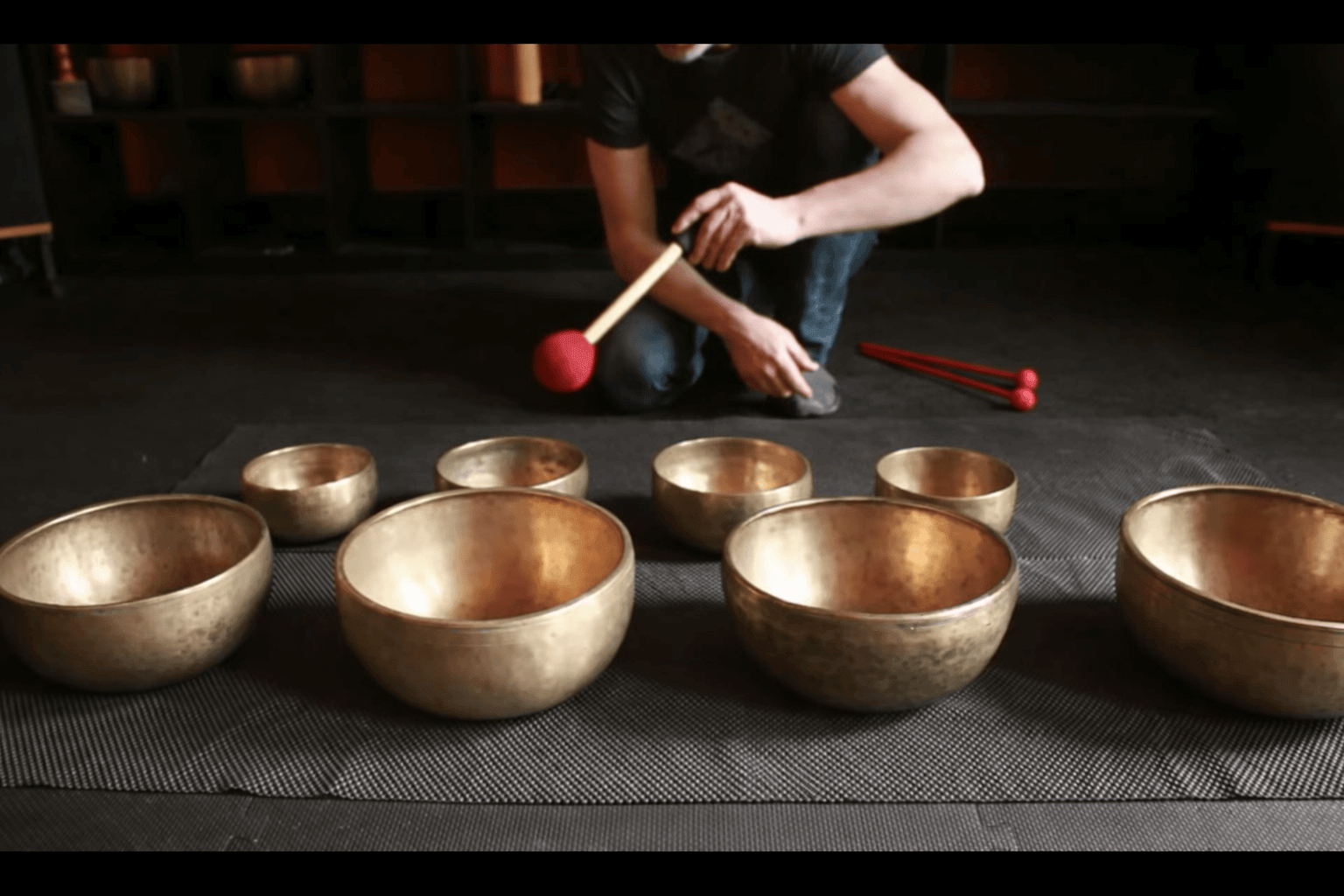
Striking: Hold the bowl in your lap or on a cushion. Strike the outside or inside rim with a padded mallet. The mallet should be soft—suede-covered, felt-wrapped. Strike near the rim where the sound is clearest. A single strike followed by listening is often most effective. Repeated strikes can overwhelm.
Rimming: This is the technique that creates the sustained tone. Hold the bowl steady. Angle the mallet so the padded end contacts the rim at about 45 degrees. Apply gentle pressure and move the mallet slowly around the rim. The bowl will begin to sing—a thin, high-pitched tone that gradually sustains. Patience is required. Don't press too hard. Let the mallet find the right angle and speed.
Mallet selection: Experiment. Soft mallets produce warm, sustained tones. Firmer mallets produce brighter tones. Different materials (suede, felt, leather, wrapped cloth) change the sound. Find what works for your bowl and your intention.
Technique matters because it affects the sound quality and therefore the listener's experience. A bowl poorly played sounds thin and irritating. A bowl well played creates an immersive, engaging soundscape.
For detailed guidance on practical technique and common errors to avoid, see our comprehensive guide to sound healing tips for beginners that will change the game and our analysis of sound bath common errors and finest practices.
Sound Bowls on YouTube and Amazon: What to Watch Out For
A lot of sound bath content online is low-quality or misleading.
Red flags:
- Videos labeled "432 Hz" or "528 Hz", "111Hz" that don't actually contain those frequencies (or that claim frequency healing without evidence)
- "Binaural beats" claimed to produce specific mental states without evidence
- Ambient music mislabeled as "singing bowl music" when it's actually synthesized or heavily produced
- Promises of healing serious illnesses
- Comments disabled (often a sign the creator doesn't want fact-checking)
Better options:
Look for content from known practitioners or schools. Search by the specific bowl type or sound you want. Be skeptical of extreme claims. Understand that videos serve an algorithm—the most outlandish claims get views, so outlandish claims are common.
If you're using recorded sound bowls healing session for personal relaxation, the specific frequency claims matter less than whether the sound actually relaxes you. Listen to what feels good. Ignore the marketing narrative.
Sound Bowls Healing: What It Can and Cannot Replace
This needs to be clear: sound bowls are complementary. They're not alternative to conventional medical care.
Appropriate Use Cases and Contraindications
Sound bowls can help with:
- General stress and tension reduction
- Anxiety management (as part of a broader approach)
- Sleep support (particularly in combination with other relaxation practices)
- Emotional release and processing
- Mindfulness and meditation support
- Complement to yoga, breathwork, or other wellness practices
Sound bowls should not replace:
- Medical treatment for serious illness
- Mental health treatment for depression, PTSD, or psychosis
- Medication for anxiety or other psychiatric conditions
Specific contraindications:
- Epilepsy (certain frequencies and rhythmic sounds can trigger seizures—consult your neurologist)
- Pacemakers or other electronic medical implants (vibration can interfere)
- Severe hearing sensitivity or misophonia
- Acute trauma response (can be triggering rather than healing)
- Pregnancy (particularly third trimester—vibrations should be avoided; consult your OB)
- Inner ear conditions or tinnitus (can exacerbate symptoms)
If any of these apply, consult your healthcare provider before seeking a sound bath.
Sound Bowls as Complementary—Not Alternative—Therapy
The evidence supports singing bowls as a stress-reduction tool. Stress reduction itself supports healing and resilience. But stress reduction isn't the same as treating disease.
The model: Sound bowls can lower stress, improve sleep, reduce anxiety. These are real benefits. They support your overall health and wellbeing. They should be part of a comprehensive approach that includes medical care when needed, regular exercise, good nutrition, social connection, and other evidence-based practices.
If someone is selling singing bowls as a replacement for insulin for diabetes, or as an alternative to chemotherapy for cancer, they're operating outside evidence and potentially causing harm.
If someone is offering sound bowls as part of integrative care—alongside conventional treatment, with clear understanding that it's complementary—that's legitimate.
Want to Practice Sound Bowls Healing Professionally?
If you're drawn to this work and considering making it professional, understand what that actually requires.
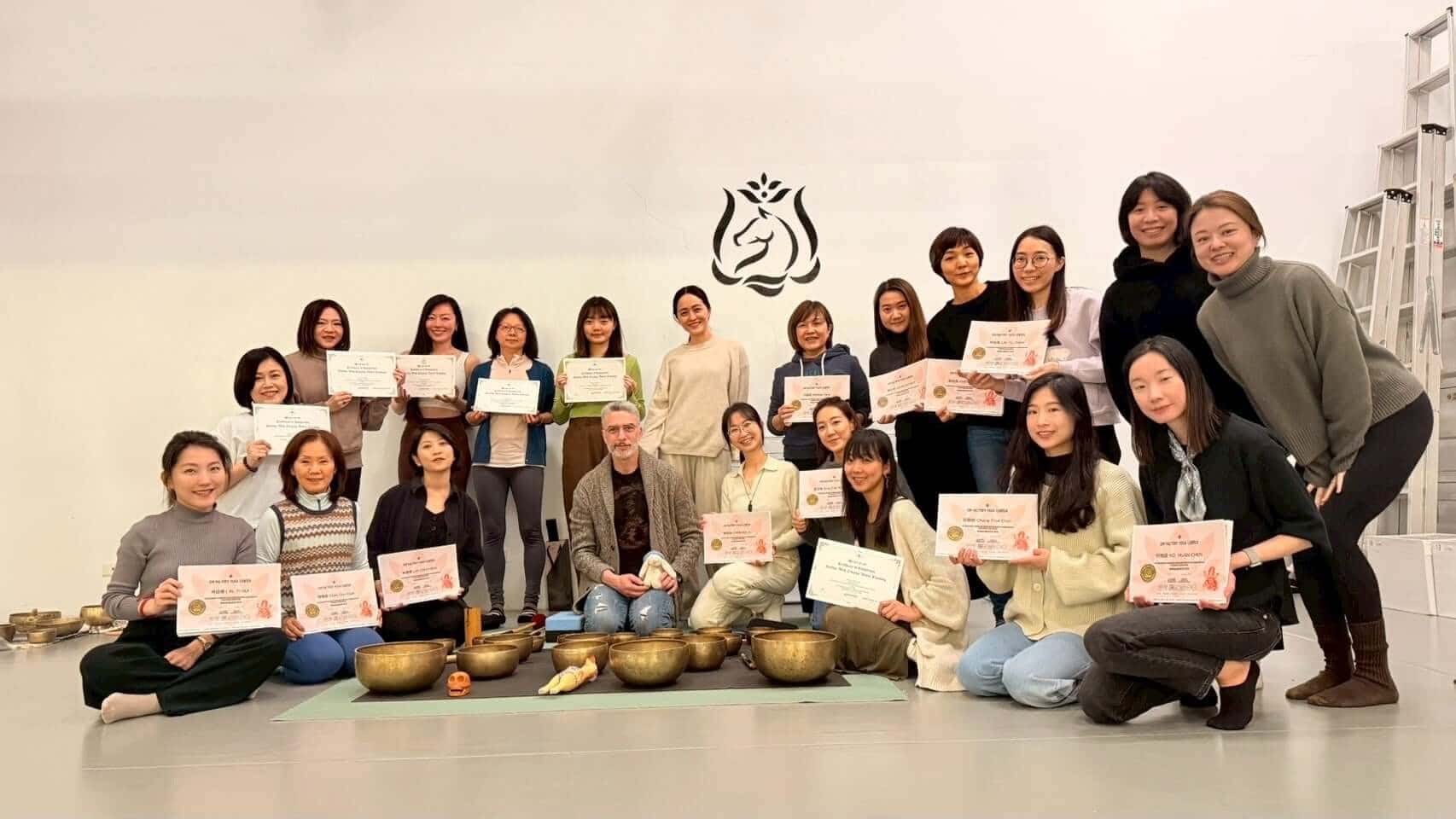
If you're serious about this path, start with our guide on how to become a sound healer in 2026. You can also explore whether learning sound healing on your own is the right approach for you.
What a Science-Based Sound Healing Certification Covers
A serious certification program doesn't teach chakra systems, frequency magic, or metaphysical narratives. Before pursuing certification, understand what sound healing certification in 2026 actually requires. It teaches:
Acoustics and physics. How sound works, how bowls produce their tones, what determines acoustic quality, how sound travels and interacts with space.
Psychoacoustics. How the brain processes sound, how attention and perception work, why certain sounds produce relaxation.
Neuroscience and physiology. How the nervous system works, parasympathetic vs. sympathetic response, vagal tone, the relaxation response, how sound triggers nervous system shifts.
Music theory and harmonic knowledge. Understanding intervals, harmonics, how tones relate to each other, how to select bowls and instruments that work together.
Practical technique. How to play bowls correctly, how to design sessions, how to create effective soundscapes.
Trauma-informed facilitation. How trauma affects the nervous system, how to create safety, how to recognize and support someone who's triggered, ethical boundaries.
Business and ethics. How to run a practice, liability, insurance, ethical marketing (i.e., not making false claims), informed consent.
Hands-on practice and mentorship. Learning from experienced practitioners, receiving feedback, developing skill through repetition.
A quality program takes months or years, not a weekend workshop. It requires study, practice, supervised experience, and ongoing education.
For a concrete example of what serious training looks like, see our overview of Sound Medicine Academy: what you'll learn and why it's different.
How to Get Accredited and Insured as a Sound Healer
Professional credibility requires:
Multi-body accreditation. Major credentialing bodies include the International Institute of Complementary Therapies (IICT), Yoga Alliance (if your practice includes yoga), the National Board of Certification for Animal Acupressure and Massage (if working with animals), and others depending on your jurisdiction and focus.
Liability insurance. This is non-negotiable if you're working with clients. It protects you if someone claims you caused harm. Most major insurance providers now offer policies for sound healers and complementary practitioners. For comprehensive guidance, read our article on sound healing and liability insurance.
Continuing education. Accreditation requires ongoing professional development. You stay current through workshops, conferences, reading, and mentorship.
Transparent, evidence-based marketing. You claim only what evidence supports. You're clear about sound healing's role as complementary. You disclose your training and credentials. You don't promise to cure disease.
Sound Medicine Academy's certifications (200-Hour Teacher Certification and 100-Hour Sound Bath Certification) cover this comprehensively, grounded in evidence and designed for people serious about professional practice.
Conclusion: Sound Bowls Work—Here's the Real Reason Why
Sound bowls work. The research is clear on this. They reduce tension, anxiety, and negative mood. They trigger parasympathetic activation. They support relaxation and emotional processing. They're useful, accessible, and—when played by someone who knows what they're doing—powerful.
But they work through mechanisms that have nothing to do with the marketing narratives that dominate the industry.
They work because:
Low-frequency sound activates your parasympathetic nervous system. Your body has a built-in relaxation system. Sound signals safety to that system. The system activates. Your physiology shifts toward rest and healing.
Deep listening quiets your mind. When your attention is absorbed by something external and engaging, the constant internal chatter stops. This alone is therapeutic.
The environment and facilitation matter more than the bowl itself. A skilled practitioner who understands nervous system dynamics, trauma, and facilitation creates an experience that supports you. An unskilled practitioner, no matter how expensive the bowl, creates something less useful.
Your nervous system is always responding to signals from your environment. Singing bowls are one way to send a signal that it's safe to relax. So are breathing practices, meditation, yoga, massage, time in nature. Multiple approaches work.
This reframing—away from mysticism and toward neuroscience—doesn't diminish sound bowls healing. It clarifies it. It removes the requirement to believe in things that contradict basic physics. It positions singing bowls as what they are: a useful, evidence-informed, accessible tool for stress reduction and wellbeing.
If you're seeking a sound bath, seek it with eyes open. Ask about the facilitator's training, not the bowl's age. Notice your nervous system's actual response, not the story you've been told about what should happen. If it helps you relax, it's working. If it doesn't, something else will.
If you're considering professional practice in sound healing, understand that serious work requires serious training—in acoustics, neuroscience, trauma-informed facilitation, and ethics. The weekend workshop won't get you there. The practice that prioritizes mysticism over evidence won't serve your clients. The facilitators who deepen their knowledge, stay grounded in what research actually shows, and practice with integrity—those are the ones creating real value.
Sound bowls work. Let them work through the mechanisms that actually exist, supported by evidence, grounded in science. That's more powerful than any myth.
FAQs
What Is a Sound Bath?
A sound bath is an immersive meditation experience where you lie down or sit in a comfortable position while a facilitator plays singing bowls, gongs, chimes, and other instruments around you for 30-60 minutes. Unlike a regular meditation, you're bathed in sustained, harmonic tones. You hear the sound, and you feel the vibrations moving through your body.
The name comes from the metaphor of sound waves washing over you like water in a bath. You're not actively doing anything — no special skills required. You simply lie back, listen, and let your nervous system respond.
What happens during a sound bath:
A typical session starts with you lying down on a yoga mat in a quiet, dimly lit room. The facilitator plays instruments in a specific sequence, creating layers of sound. As the bowls ring, you hear multiple tones simultaneously — a rich, complex soundscape. The vibrations travel through the room and through your body. Your attention naturally focuses on the sound. Your thinking mind quiets. Your body relaxes.
The experience usually lasts 45-60 minutes, with time after for integration (coming back to normal awareness slowly).
Different from:
- Meditation: Meditation involves focusing your mind. A sound bath does that for you through sound.
- Live music concert: A concert entertains you. A sound bath immerses you for therapeutic effect.
- Music therapy: Music therapy is clinical and may have specific treatment goals. A sound bath is wellness-focused relaxation.
The science:
Sound bath effectiveness comes from three mechanisms:
- Parasympathetic activation: Low-frequency, sustained sounds signal your nervous system that it's safe to relax. Heart rate slows, blood pressure drops, breathing deepens.
- Deep listening: When your attention is absorbed in listening to complex tones, the constant mental chatter quiets. This shift alone produces relaxation.
- Facilitation and environment: A skilled facilitator who creates a safe, comfortable space enhances the experience. The room, lighting, temperature, and your sense of safety all matter.
Common experiences:
People report: deep relaxation, emotional release (sometimes tears), clarity of mind, improved sleep that night, reduced anxiety, and a sense of peace and wellbeing.
Important clarification:
A sound bath is complementary wellness practice, not medical treatment. It can support stress reduction and relaxation but doesn't cure disease or replace conventional medical care.
Do Singing Bowls Actually Work?
Yes. Singing bowls work — but not the way marketing claims suggest. They don't repair DNA, align your chakras, or tap into mystical energy. What they do is measurable and scientifically explained: they reduce stress, activate your relaxation response, and support nervous system regulation.
What research actually shows:
Studies on sound bath effectiveness consistently find:
- Stress reduction: Participants report significant decreases in tension, anxiety, and negative mood (multiple peer-reviewed studies, 2017-2024)
- Nervous system shifts: Heart rate decreases, blood pressure drops, and breathing deepens during and after sessions (measurable physiological changes)
- Sleep improvement: People report better sleep quality following sessions
- Pain reduction: Some studies show decreases in perceived pain and muscle tension
- Mood improvement: Participants report feeling more peaceful, grounded, and emotionally balanced
But does it work for everyone?
No. And that's important to say. Some people feel immediate effects. Others take several sessions. Some find them helpful; others find them less effective than other relaxation practices.
Factors that affect outcomes:
- Your readiness: Are you actually relaxed, or are you waiting for something to happen?
- Facilitator skill: An experienced, trauma-informed facilitator produces better results than someone just striking bowls
- Your nervous system state: Someone highly dysregulated may need additional support
- Previous experience: Your familiarity with meditation or relaxation practices affects how you respond
- The space: A safe, comfortable, well-designed room enhances effectiveness
How they work (the mechanism):
Singing bowls produce low-frequency, sustained tones. These tones activate your vagus nerve (your primary relaxation nerve). This activation signals your parasympathetic nervous system to shift into "rest and digest" mode.
This isn't mystical — it's neuroscience. Your nervous system has two primary modes: sympathetic (fight-or-flight) and parasympathetic (rest-and-recovery). Low-frequency sound signals safety, which activates the parasympathetic system.
When parasympathetic tone increases: stress hormones decrease, heart rate slows, digestion improves, sleep becomes easier, emotional regulation improves.
The marketing myths (which don't make them work):
- "Ancient Tibetan wisdom" — Not supported by evidence
- "Chakra alignment" — Chakras aren't biological structures
- "Frequency magic" (432 Hz, 528 Hz, etc.) — Specific frequencies don't have inherent healing properties
- "Cleanse your energy field" — Energy fields aren't measurable or affected by sound in the way marketed
These claims don't need to be true for sound bowls to work. They work because of nervous system physiology, not because of mysticism.
Appropriate expectations:
Singing bowls work best for:
- General stress reduction
- Anxiety management (as part of broader approach)
- Sleep support
- Emotional release and processing
- Complementary wellness
They do NOT:
- Cure psychiatric conditions
- Replace medical treatment
- Provide spiritual enlightenment (though some experience spiritual feelings during relaxation)
- Work uniformly for everyone
The bottom line:
Singing bowls work through measurable neurophysiological mechanisms. The evidence supports them as effective stress-reduction tools. But they're not magic, and they're not for everyone.
How Much Does a Singing Bowl Cost?
Singing bowl prices range from $15 to $5,000+ depending on size, material, construction method, age, and whether you're buying from a dealer using marketing narratives.
Price Breakdown by Category:
Budget/Mass-Produced Bowls: $15-$100
- Small (4-6 inch) bowls, mass-manufactured, thin walls
- Sound quality: Thin, flat tone, short sustain (5-10 seconds)
- Best for: Casual home use, beginners trying to see if they like the practice
- Reality: These are often sold with chakra claims and misleading marketing to justify markups
Quality New/Hand-Finished Bowls: $100-$400
- Sizes vary (5-10 inches), hand-finished construction
- Sound quality: Good tone complexity, reasonable sustain (20-30 seconds)
- Best for: Personal practice, small group facilitators
- Legitimate pricing: Fair value for actual craftsmanship
Premium Hand-Hammered Bowls: $400-$1,000
- Sizes 7-12 inches, skilled artisan construction, bronze or quality metal
- Sound quality: Rich, complex tones, excellent sustain (40+ seconds)
- Best for: Professional practitioners, serious personal practice
- Value: Reflects genuine craftsmanship and acoustic quality
Antique/Specialty Bowls: $500-$5,000+
- Genuinely old bowls with documented provenance, or exceptionally rare acoustic quality
- Sound quality: Exceptional (often superior to new bowls)
- Best for: Collectors, professional practitioners with established practices
- Important: Only pay premium for documented authenticity and verified acoustic quality
Crystal Singing Bowls: $200-$800
- Modern instruments made from fused quartz (developed in 1980s)
- Sound quality: Clean, bright tone, different character than metal bowls
- Best for: Practitioners who prefer that specific sound
- Note: They cost less to produce than metal bowls, so premium pricing indicates branding markup
Red Flags: Overpriced Bowls
Don't pay premium prices just for these claims:
- "Chakra-tuned" (meaningless marketing)
- "Seven sacred metals" (false)
- "Blessed by monks" (doesn't affect sound)
- "Authentic Tibetan" (origin doesn't determine quality)
- "Frequency-aligned" (not how metal works)
- "Antique" without documentation (probably not actually antique)
What determines legitimate pricing:
✓ Hand-hammered vs. mass-produced (labor-intensive vs. industrial)
✓ Size and weight (larger bowls cost more in materials)
✓ Material quality (bronze, specific alloys, purity)
✓ Sustain length (longer sustain = better craftsmanship)
✓ Tone complexity (richer overtones = more refined acoustic tuning)
✓ Documented age (if antique)
✓ Artisan reputation (established makers charge appropriately)
Value Consideration:
A $300-500 quality hand-finished bowl used for professional practice for 10 years is better value than five $50 mass-produced bowls that need replacing.
Where to buy without overpaying:
- Established retailers who describe acoustic properties specifically
- Sellers who can explain construction methods
- Practitioners who source directly from artisans
- Dealers with transparent pricing and no mystical upselling
- Places that offer return policies if sound quality doesn't meet expectations
Bottom line:
Quality bowls cost $150-400 for personal use, $400-1,000 for professional practice. Anything cheaper is likely mass-produced; anything more expensive requires specific justification beyond marketing stories.
What Are the Health Benefits of Singing Bowls?
Sound bowls produce measurable benefits for nervous system regulation, stress reduction, and emotional wellbeing. However, benefits vary by individual and require realistic expectations.
Evidence-Supported Benefits:
1. Stress and Anxiety ReductionWhat the research shows: Participants report significant reductions in tension, anxiety, and perceived stress after sound bath sessions. Stress hormone levels (cortisol) decrease measurably.
What this means: Regular sound bowl practice can lower baseline anxiety, making you more resilient to stressors.
Important note: Sound bowls support anxiety management but don't replace treatment for anxiety disorders.
2. Improved Sleep QualityWhat happens: The parasympathetic activation triggered by sound bowls continues after sessions, often improving sleep quality that night and the following nights if practiced regularly.
Who benefits most: People with mild insomnia or stress-related sleep disruption.
3. Reduced Muscle Tension and Physical RelaxationWhat occurs: The vibrations penetrate tissue and muscle, and the nervous system shift to parasympathetic mode reduces muscle tension. People report shoulders relaxing, jaw unclenching, breathing deepening.
Measurable: Heart rate and blood pressure both decrease during sessions.
4. Emotional Release and ProcessingWhat happens: The deep relaxation can facilitate emotional release — sometimes people cry during or after sessions, not from sadness but from letting go of held emotion.
Why it matters: Emotional processing supports psychological wellbeing and resilience.
5. Improved Focus and Mental ClarityWhat occurs: Deep listening to sound quiets the constant mental chatter. After sessions, people report clearer thinking and improved ability to focus.
Duration: Effects typically last several hours to a day, more with regular practice.
6. Support for Meditation PracticeWhat it does: Sound bowls provide a focal point for attention, making meditation easier for beginners or people who struggle with "empty mind" meditation.
Benefit: You're doing something that's still meditation (focused listening) without the frustration of trying to empty your mind.
Benefits That Are Overstated:
- DNA repair/cellular healing: Not supported. Sound doesn't repair DNA.
- Chakra balancing: Chakras aren't anatomical structures; this is metaphorical at best.
- Curing serious illness: Sound supports wellbeing but doesn't cure medical conditions.
- Spiritual enlightenment: Some people have meaningful experiences, but this isn't guaranteed or the primary mechanism.
Important Distinctions:
Sound bowl benefits are supportive and complementary, not curative. They work best as part of a comprehensive wellness approach including:
- Regular exercise
- Good nutrition
- Quality sleep
- Strong social connections
- Professional mental health treatment (when needed)
- Other stress-reduction practices
Individual Variation:
Benefits vary because:
- Nervous system baseline differs (some people start more dysregulated)
- Trauma history affects how sound is processed
- Facilitator skill matters significantly
- Your receptivity and expectations influence outcomes
- Frequency of practice affects results (regular use > one-off sessions)
How to Maximize Benefits:
- Find a skilled facilitator. Training in trauma-informed facilitation and nervous system science makes a difference.
- Practice regularly. One session feels good; weekly practice builds lasting nervous system changes.
- Create the right conditions. Temperature, lighting, comfort, and sense of safety all enhance results.
- Manage expectations. Sound bowls support wellbeing; they don't cure disease or solve all problems.
- Combine with other practices. Sound bowls work best alongside yoga, meditation, breathwork, or therapy.
Are Tibetan Singing Bowls Real/Authentic?
This is a loaded question that deserves an honest answer: the "ancient Tibetan healing instrument" story is mostly marketing fiction. But that doesn't mean quality singing bowls aren't real or valuable.
The Origin Story (What Marketing Claims):
The popular narrative: Tibetan monks have used singing bowls for thousands of years as ancient healing instruments. They're tuned to chakras, made from seven sacred metals, and infused with spiritual power. When you use one, you're tapping into centuries of wisdom.
The Historical Reality (What Evidence Shows):
- No solid evidence of ancient use: Scholars who have researched this find little documentation of singing bowls being played the way they're used today in ancient Tibet or monasteries.
- Tibetan practitioners don't recognize the practice: When asked, Tibetan monks and practitioners who grew up in Tibet say they never encountered bowls being spun and rimmed with mallets.
- The name is modern: "Singing bowls" first appeared in English in a 1972 album called "Tibetan Bells" by Henry Wolff and Nancy Hennings. That's 52 years ago.
- The practice is probably 1970s-onward Western invention: Sound baths as marketed today appear to be a modern Western wellness practice, not an ancient one.
- The "seven sacred metals" claim is false: Metallurgical analysis of antique bowls shows them to be mostly bronze (copper and tin). No evidence of seven metals.
What's Actually True:
- Metal bowl-shaped instruments exist across Asian cultures (ancient, documented)
- Some antique bowls are from the Himalayan region (Nepal, Tibet, India)
- Antique bowls often have excellent acoustic properties (skilled craftsmanship)
- Metal bowls have connections to Buddhist ritual practice (documented)
- Modern singing bowl practice is primarily Western and relatively recent
Why the myth persists:
The "ancient wisdom" narrative sells. It justifies premium pricing. It appeals to desires for authenticity and spiritual depth. Once it became established in marketing, it became self-reinforcing through repetition and citations.
Are they "real"?
Yes and no — depends what you mean:
- Real instruments? Absolutely. They're actual metal bowls that produce sound.
- Real ancient healing tools? Not supported by evidence.
- Real acoustic quality? Yes — good bowls have measurable acoustic properties.
- Real therapeutic value? Yes — they produce measurable nervous system effects.
How to evaluate what you're buying:
Focus on these (they determine value):
- Sound quality (tone clarity, sustain length, complexity)
- Construction method (hand-hammered vs. mass-produced)
- Material composition (bronze quality, thickness)
- Craftsmanship (hand-finished vs. cheap)
- Acoustic properties (can you hear the difference?)
Ignore these (they're marketing):
- "Authentic Tibetan" label
- "Chakra-tuned" claims
- "Sacred metals" stories
- "Blessed by monks" narratives
- "Ancient wisdom" messaging
- Chakra color associations
The honest positioning:
You can say: "This is a quality handcrafted singing bowl from the Himalayan region. It's made from bronze using traditional metalworking techniques. The acoustic properties produce excellent tone and sustain. It's effective for sound meditation and relaxation."
You don't need to say: "This ancient Tibetan healing instrument carries millennia of spiritual power."
For practitioners:
Credibility comes from honesty about history and origin, not from perpetuating false narratives. Clients who understand the real mechanisms — nervous system science, parasympathetic activation, deep listening — trust you more than clients who've been sold mythology.
Bottom line:
Quality singing bowls from the Himalayan region are real, valuable, and effective. The "ancient Tibetan wisdom" story is marketing fiction. You don't need the myth for sound bowls to be worth using — their actual acoustic and neurophysiological properties are enough.
Can Singing Bowls Help With Anxiety/Depression?
Singing bowls can support anxiety management and emotional wellbeing, but they cannot replace professional mental health treatment for clinical anxiety or depression. Understanding this distinction is critical.
What singing bowls can do for anxiety:
Acute anxiety relief: During and immediately after a sound bath session, anxiety typically decreases. Heart rate slows, breathing deepens, and nervous system shifts into relaxation. This effect is measurable and real.
Anxiety symptom reduction (mild-to-moderate): Regular practice can lower baseline anxiety levels, reduce the frequency of anxious thoughts, and improve your ability to regulate emotional responses.
Support for therapy: When used alongside professional mental health treatment (therapy, medication), sound baths can enhance overall wellbeing and support the therapeutic process.
Nervous system regulation: By activating parasympathetic tone, sound baths help train your nervous system to shift into relaxation more easily, which builds resilience over time.
What singing bowls cannot do:
- Treat clinical anxiety disorders: Generalized Anxiety Disorder, Social Anxiety Disorder, PTSD, and other diagnosed anxiety conditions require professional mental health treatment. Sound bowls can supplement treatment but don't replace it.
- Replace medication: If you're on medication for anxiety or depression, continue taking it. Sound bowls complement medication; they don't substitute for it.
- Cure depression: Depression is a complex neurological condition requiring professional treatment. Sound bowls may support mood, but they can't treat clinical depression.
- Resolve trauma: Trauma requires specialized treatment. Sound can trigger trauma responses in some people. Trauma-informed facilitation is essential.
The research specifically:
A 2023 study of sound-based interventions for generalized anxiety disorder found statistically significant reductions in anxiety and negative affect following regular sound sessions. However:
- Study sizes are typically small
- Results are strongest for mild-to-moderate anxiety
- Benefit depends on practitioner skill and session quality
- Regular practice is necessary (not one-time sessions)
- Sound alone is less effective than sound combined with other interventions
For mild anxiety:
Sound baths can be a primary intervention. Combined with other practices (exercise, breathwork, meditation, social connection), they may be sufficient.
For moderate to severe anxiety:
Professional mental health treatment is primary. Sound baths can be complementary but shouldn't replace therapy or medication.
How to use sound bowls for anxiety support:
- See a mental health professional first: Get proper assessment and treatment plan.
- Choose a trauma-informed facilitator: They understand anxiety, know what can trigger it, and can create safe conditions.
- Practice regularly: Weekly sessions are more effective than one-off experiences.
- Combine modalities: Sound works better with therapy, yoga, breathwork, and other practices.
- Manage expectations: Expect gradual improvement, not miraculous healing.
- Watch for triggers: Some people with anxiety find immersive sound overwhelming. If that's you, try shorter sessions, eyes-open options, or seated positions.
Red flags to watch:
- A facilitator claiming sound bowls will "cure" your anxiety
- Anyone suggesting you reduce or stop anxiety medication
- Practitioners who aren't trained in trauma-informed care
- Services that position sound as alternative to professional mental health treatment
For depression:
Similar principles apply. Sound baths may support mood and emotional processing, but depression requires professional treatment. The research on sound and depression is less robust than for anxiety, so keep expectations realistic.
What might help with depression:
Sound bowls combined with:
- Professional therapy (most important)
- Medication (if recommended by psychiatrist)
- Regular exercise
- Social connection
- Yoga or movement practices
- Sleep and nutrition support
The ethical positioning:
If you're facilitating, be clear: "Sound baths support relaxation and can complement mental health treatment. They're not treatment for anxiety or depression. If you're struggling, please work with a mental health professional."
This honesty actually builds trust and referral relationships with therapists and doctors.
Bottom line:
Singing bowls support anxiety management and emotional wellbeing. For clinical anxiety or depression, they're a complementary tool, not a primary treatment. Professional mental health care remains essential.
How Do You Use a Singing Bowl?
There are two basic techniques for playing singing bowls: striking and rimming. Both produce different sounds and effects. Here's how to do each correctly.
Striking (Creating a Single Resonant Tone)
Setup:
- Hold the bowl in your lap or place it on a cushion in front of you
- Keep your posture relaxed and upright
- Have your mallet ready
Technique:
- Hold the mallet like a drumstick (loose grip, not tight)
- Position the mallet so the padded end contacts the outside rim of the bowl
- Strike the rim near the edge (not the center) where the sound is clearest
- Use a deliberate, medium-force strike — not too soft (no sound) or too hard (jarring)
- As soon as you strike, lift the mallet away
- Let the bowl ring and fade naturally
What to expect:You'll hear a tone that gradually diminishes over 15-30+ seconds (depending on bowl quality). The sound may have multiple pitches as it fades.
Practice tip:A single strike followed by listening is often more effective for meditation than repeated strikes. Let the sound complete before striking again.
Rimming (Creating Sustained Tones)
Rimming creates the "singing" in singing bowl — a sustained, evolving tone that you maintain by moving the mallet around the rim.
Setup:
- Place the bowl on a cushion or on the floor (whichever is comfortable)
- Hold it stable with one hand if needed
- Have your mallet ready
Technique:
- Angle the mallet so the padded end contacts the rim at approximately 45 degrees
- Apply gentle, consistent pressure
- Move the mallet slowly around the rim in a circular motion (clockwise or counterclockwise)
- Don't press hard — let the friction create the sound, not force
- Move at a steady, unhurried pace
- Listen to the bowl as it begins to sing
Finding the "sweet spot":This is the trickiest part. The bowl will produce a thin, high-pitched tone when you've got the right angle, pressure, and speed. It may take practice.
- Too much pressure = scratching sound
- Too little = no sound
- Wrong angle = nothing happens
- Right angle + gentle pressure + slow movement = sweet singing tone
What to expect:Once the bowl is singing, you'll hear a sustained tone that evolves as you continue. The tone may change pitch slightly as you move the mallet, and you may hear multiple overtones emerging.
Common mistakes:
- Pressing too hard: You're fighting the bowl. Let the friction do the work.
- Moving too fast: Slow down. The slower you move, the better the tone usually is.
- Stopping abruptly: Let the tone fade naturally when you lift the mallet away.
- Wrong mallet: Use soft mallets (felt or suede-covered). Hard mallets won't produce good tones.
Mallet selection matters:
Soft mallets (felt or suede-covered, wrapped):
- Produce warm, resonant tones
- Better for therapeutic sound
- Best for most applications
Harder mallets (wrapped but firmer):
- Produce brighter, more energetic tones
- Useful for activation or energizing
- Less common for relaxation
Experiment to find what produces the best sound for your specific bowl.
Playing for meditation or groups:
Striking approach:
- Strike once, let it ring completely
- Wait for silence
- Strike again when ready
- This creates clear pauses between tones
Rimming approach:
- Start rimming gently
- Create a continuous, evolving soundscape
- Maintain steady pressure and speed
- Let the tone fade naturally when you're ready to stop
Tips for better sound:
- Know your bowl: Different bowls have different "sweet spots." Practice until you find where each bowl sounds best.
- Start gently: Build into louder volume rather than starting loud.
- Listen as you play: Pay attention to the quality of the tone you're producing and adjust technique accordingly.
- Practice without pressure: Spend time just getting to know your bowl's sound before using it in sessions.
- Technique training: If you're facilitating professionally, proper technique training (like Sound Medicine Academy's certification) ensures you're producing quality tones and maximizing therapeutic effect.
Are There Any Risks or Contraindications of singing bowls?
Singing bowls are generally safe for most people, but certain medical conditions, mental health issues, and pregnancy stages require caution. Here's what you need to know.
Generally safe for:
- Healthy adults without hearing sensitivities
- People with general anxiety or stress
- People seeking meditation support
- Most meditation practitioners
- Corporate wellness settings
Proceed with caution (medical conditions):
Epilepsy (particularly sound-sensitive):If you have a history of sound-induced seizures, avoid sound baths or consult your neurologist first. While sound bowls don't produce the rapid flashing patterns that trigger photosensitive epilepsy, some individuals with auditory-sensitive epilepsy may respond to sustained, rhythmic sounds.
Pacemakers or electronic medical implants:Vibrations can potentially interfere with some electronic medical devices. If you have a pacemaker or other implant, check with your cardiologist before sound baths.
Inner ear conditions or tinnitus:Immersive sound can sometimes exacerbate tinnitus or inner ear sensitivity. Start with shorter sessions or avoid if sound significantly worsens symptoms.
Hearing impairment or hearing aids:Sound baths may not be effective if you can't hear frequencies clearly, and loud sound can damage hearing aids. Discuss with your audiologist.
Mental health considerations:
PTSD and trauma:Sound baths can trigger people with PTSD, especially trauma involving helplessness, isolation, or sensory overwhelm. Many trauma survivors benefit from sound work, but it requires trauma-informed facilitation and should ideally be part of professional treatment.
Acute psychiatric episodes:During active manic, psychotic, or severely depressed episodes, immersive experiences can be destabilizing. Wait until you're more stable or consult your mental health provider.
Dissociation disorders:Some people with dissociative conditions find deep relaxation triggers dissociation rather than healing. If you're prone to dissociation, discuss with your therapist and work with a trauma-informed facilitator.
Pregnancy:
First trimester:Avoid intense, low-frequency vibrations (large gongs, deep bowls) in early pregnancy. It's safest to stick with lighter sound or avoid altogether.
Second trimester:Generally safer; gentle sound baths are usually fine. Check with your OB if you have concerns.
Third trimester:Avoid any sound work that produces significant vibration. By this point, you should avoid any new or intense experiences.
General guidance: Consult your OB before attending sound baths during pregnancy.
Hearing sensitivity/misophonia:
If you have heightened auditory sensitivity or specific sound aversions (misophonia), immersive sound might be uncomfortable or triggering. Not everyone finds sound baths relaxing.
When to proceed with caution:
- First-time anxiety: Lying in darkness with sustained sound can trigger claustrophobia or anxiety in some people. Have options (eyes open, sitting position, ability to leave).
- Recent major trauma: Sound baths can be helpful but should be part of professional treatment, not a substitute.
- Active substance use or withdrawal: Altered states can be risky. Wait until stabilized.
- Severe sleep deprivation: You might actually fall asleep, which is fine, but not ideal if you're already extremely fatigued.
Red flags — don't attend a sound bath if:
- You're in active crisis or having suicidal thoughts (see a mental health professional instead)
- You're actively having a psychiatric episode
- You have sound-induced epilepsy (without medical clearance)
- You have acute hearing damage or infection
What a responsible facilitator does:
✓ Asks screening questions before sessions
✓ Explains contraindications clearly
✓ Offers modifications (eyes open, sitting, shorter duration)
✓ Checks in after sessions
✓ Knows how to support someone who becomes triggered
✓ Makes referrals to mental health professionals when appropriate
✓ Has liability insurance
If you become triggered during a session:
- You can leave anytime (a good facilitator makes this clear upfront)
- Grounding techniques help (noticing physical sensations, five senses awareness)
- Follow-up with your mental health provider if significant distress occurred
- It's not your fault or the facilitator's fault — nervous systems respond differently
Bottom line:
Sound baths are safe for most people but require caution with certain medical conditions, mental health histories, and pregnancy. A responsible facilitator screens for contraindications and modifies sessions appropriately.
What's the Difference Between Crystal and Metal Singing Bowls?
Crystal and metal bowls are different instruments with distinct sounds, properties, and applications. The choice depends on your preference and what you're using them for.
Metal (Himalayan/Tibetan) Bowls:
Construction: Made from bronze (copper/tin alloy) and sometimes other metals. Hand-hammered by artisans, which gives each bowl unique acoustic properties.
Sound characteristics:
- Rich, complex tones with multiple overtones
- Warm, resonant quality
- Varied pitch and tone as it rings
- Natural decay (gradually fades)
- Multiple tones audible simultaneously
Acoustic properties:
- Sustain: 30-60+ seconds (quality bowls)
- Fundamental frequency: Usually 50-200 Hz (low to mid-range)
- Harmonic complexity: Rich and nuanced
Aesthetic:
- Bronze/copper color, sometimes aged patina
- Rustic or elegant appearance
- Each bowl is unique
Cost:
- Budget: $30-100
- Quality: $150-500
- Premium: $500+
Use cases:
- Sound baths (most common)
- Meditation
- Yoga sessions
- Therapeutic/clinical settings
- Professional practice
Pros:
- Rich acoustic complexity
- Long sustain for immersive sound
- Versatile (striking or rimming)
- Aesthetically beautiful
- Professional acoustic quality available
Cons:
- Heavier and larger (harder to transport)
- Require proper technique to play well
- Quality varies significantly by maker
- More expensive upfront
Crystal Singing Bowls:
Construction: Made from fused high-purity quartz (developed in 1980s). Modern instruments created through manufacturing, not handcrafting.
Sound characteristics:
- Clean, pure tones (close to sine waves)
- Bright, ethereal quality
- Single dominant tone
- Sustained, pure ring
- Less tonal complexity than metal
Acoustic properties:
- Sustain: 30-60+ seconds
- Fundamental frequency: Usually 100-500 Hz (higher range)
- Harmonic complexity: Cleaner, fewer overtones
Aesthetic:
- Clear quartz or frosted appearance
- Modern, sleek look
- Can be dyed different colors (sometimes claimed to align with chakras)
Cost:
- $150-500 typically
- Less expensive than quality metal bowls
- More expensive to produce than price suggests (margin markup)
Use cases:
- Sound baths
- Chakra-focused sessions (though scientifically unfounded)
- Meditation
- Personal practice
- Sometimes used in spas
Pros:
- Clean, bright sound
- Easy to play (more forgiving technique)
- Modern aesthetic
- Visually striking
- Less heavy than large metal bowls
Cons:
- Fragile (easily cracked if mishandled)
- Less harmonic complexity
- Higher price tag than equivalent metal bowl
- Harder to repair if broken
Direct Comparison:
| Factor | Metal | Crystal |
|---|---|---|
| Tone | Warm, complex | Bright, pure |
| Sustain | 30-60+ seconds | 30-60+ seconds |
| Complexity | Rich overtones | Fewer overtones |
| Difficulty playing | Requires technique | More forgiving |
| Durability | Very durable | Fragile |
| Portability | Heavy | Lighter |
| Cost | $150-500 (quality) | $150-500 |
| Aesthetic | Rustic/elegant | Modern/sleek |
| Best for | Deep immersion, variety | Clean, bright sound |
Which should you choose?
Choose metal if:
- You prefer rich, complex tones
- You want deep immersive sound
- You're using for professional practice
- You like the traditional aesthetic
- You want instruments to last decades
Choose crystal if:
- You prefer bright, pure tones
- You want a modern look
- You like easier technique
- You have limited space
- You want different aesthetic
Can you use both?
Yes. Many facilitators use both, layering metal and crystal bowls to create variety in soundscapes.
Important note on chakra claims:
Don't pay extra for "chakra-tuned" crystal bowls. Chakras aren't anatomical structures, and specific frequencies don't tune to them. Crystal bowls work whether or not you assign chakra meanings to them.
Quality matters more than type:
A quality metal bowl beats a cheap crystal bowl. A quality crystal bowl beats a cheap metal bowl. The instrument's acoustic properties matter more than whether it's metal or crystal.
Bottom line:
Both work. Metal bowls offer richness and complexity; crystal bowls offer brightness and purity. Choose based on sound preference, aesthetic preference, and budget. Quality and craftsmanship matter more than the material itself.
How Long Do Singing Bowls Last?
Quality singing bowls last indefinitely if treated well. They don't wear out from use. They can last generations or centuries.
How long metal bowls last:
Quality metal bowls: Indefinitely. A well-made bronze bowl can outlast the person who owns it. Antique bowls from 100+ years ago still function perfectly.
Construction longevity:Metal doesn't degrade from vibration or repeated playing. The acoustic properties remain constant. A bowl played daily for 30 years sounds the same as it did on day one.
Real wear:
- Physical damage (dents, cracks) from dropping or hitting
- Surface patina/oxidation (aesthetic, doesn't affect sound)
- Damage to rim from poor mallets
- Structural damage from severe impact
With proper care: A metal bowl literally never wears out acoustically.
How long crystal bowls last:
Fragility: Crystal bowls are more fragile than metal. They can crack or shatter if:
- Dropped
- Hit with hard objects
- Subject to thermal shock (extreme temperature changes)
- Struck too hard
If intact: Like metal bowls, crystal bowls remain acoustically unchanged indefinitely.
Risk factor: Breakage is the primary concern, not acoustic degradation.
Longevity factors:
Care:
- Store safely (not on hard floors)
- Avoid dropping
- Use appropriate mallets (don't strike with hard objects)
- Protect from temperature extremes
- Clean gently (don't use harsh chemicals)
Mallet wear:Mallets do wear out — the felt or suede covering gets worn. But mallets are inexpensive to replace ($10-30), not the bowl.
Acoustic permanence:The bowl's acoustic signature doesn't change with age or use (assuming no damage). A 50-year-old bowl sounds identical to a new one of same construction.
What actually happens over time:
Year 1: Bowl sounds perfect (all new bowls do)
Years 1-20: No acoustic change (assuming proper care)
Years 20+: Bowl may develop patina or minor surface marks, but sound remains identical
Decades later: Still sounds the same
Professional practice durability:
If you're investing in bowls for professional sound bath facilitation:
- Quality bowls ($300-800) are solid investments
- They can support a business for 20+ years of daily use
- No degradation in therapeutic value
- Maintenance costs are minimal (occasional mallet replacement)
ROI for professionals:
If you use a $400 bowl for 10 years of practice (3,000+ hours of use), the cost per hour is minimal. Compare to other business tools, and bowls are extremely cost-effective.
Antique bowl value:
Interestingly, old bowls often become more valuable:
- Scarcity (fewer antique bowls available)
- Craftsmanship (old bowls often made with exceptional care)
- Collectibility (some bowls become rare)
- Sound quality (old bowls are often superior to modern ones)
An antique bowl from the 1800s can be worth hundreds or thousands of dollars, not because it's "more ancient," but because quality bowls from that era were exceptionally well-made.
Warranty/guarantees:
Most bowl dealers don't offer extensive warranties because:
- Bowls don't fail acoustically
- Damage is almost always from user mishandling
- There's no manufacturing defect typical of electronics
A "lifetime" guarantee on acoustic quality is essentially meaningless—it will last a lifetime anyway.
When to replace a bowl:
You almost never need to replace a quality bowl unless:
- It's severely damaged (cracked, dented beyond repair)
- You want a different sound for professional reasons
- Upgrade to higher quality for professional use
Personal vs. professional:
- Personal use: One $150-300 bowl can serve you for life
- Professional practice: Multiple bowls ($500-2,000+ investment) support practice indefinitely
Bottom line:
Quality singing bowls are essentially permanent purchases. They don't wear out, don't need replacement, and maintain their acoustic properties for life. The only durability concern is physical damage, which is preventable with proper care.
A metal singing bowl is one of the few wellness tools you can invest in once and use for decades with zero acoustic degradation.