Table of Contents
- The Vagus Nerve: Your Body's Relaxation System
- Vagal Tone: What It Is and Why It Matters
- How Sound Activates the Vagus Nerve
- Low Frequency Sounds: Why They Work Best
- The Difference Between Acute and Chronic Vagal Tone
- Practical Application: How to Optimize Vagal Activation Through Sound
- Heart Rate Variability: The Measurable Marker
- The Limitation: Sound Alone Isn't Sufficient
- For Practitioners: Teaching Vagal Tone
- Conclusion: Sound as Vagal Medicine
- Learn More
- Professional Training in Vagal Science
- FAQs
You've probably heard the term thrown around in wellness spaces: "vagal tone," "vagus nerve stimulation," "activating your parasympathetic nervous system through sound." It sounds technical. It also sounds optional — something nice to know, but not essential to understanding how sound healing works.
It's actually the core mechanism.
Understanding how your vagus nerve responds to sound is the difference between talking about sound healing as mystical and explaining it as measurable neuroscience. It's the bridge between "I feel relaxed" and "here's why." And if you're serious about facilitating sound practice, it's non-negotiable knowledge.
The Vagus Nerve: Your Body's Relaxation System
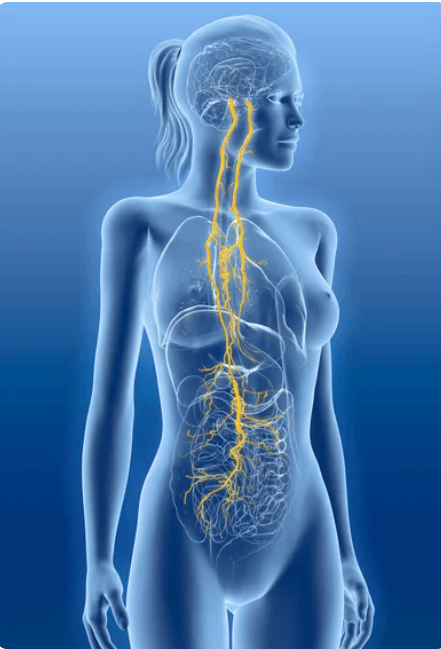
The vagus nerve is the longest cranial nerve in your body. It runs from your brainstem down through your neck, chest, and abdomen, connecting your brain to your heart, lungs, and digestive organs. Its name comes from the Latin "vagus" — wandering — because it quite literally wanders throughout your body.
This nerve isn't a single channel of information. It's bidirectional. It sends signals downward from your brain to your organs, telling them how to function. And it sends signals upward from your organs to your brain, reporting on what's happening in your body.
The vagus nerve is the primary communication highway of your parasympathetic nervous system — the system responsible for "rest and digest" functions. When your vagus nerve is active and responsive (what's called "high vagal tone"), your body can easily shift into relaxation, recovery, and healing modes. When vagal tone is low (the nerve is inactive or responsive), your body stays in stress mode.
Vagal Tone: What It Is and Why It Matters
Vagal tone is a measure of how quickly and effectively your vagus nerve can activate and deactivate.
Think of it like this: imagine a light switch. High vagal tone means the switch works smoothly — you flip it and the light comes on immediately. Low vagal tone means the switch is stiff — you flip it and nothing happens, or it takes time.
In your nervous system:
High vagal tone = your body can:
- Quickly shift from stress to calm
- Digest food efficiently
- Regulate heart rate smoothly
- Recover from emotional intensity
- Stay flexible in response to challenges
Low vagal tone = your body:
- Gets stuck in stress mode
- Has difficulty digesting
- experiences irregular heart rate
- takes longer to recover from upset
- responds rigidly to challenges
Research shows that people with high vagal tone are more resilient, have better digestion, experience less chronic inflammation, sleep better, and report higher overall wellbeing. Conversely, low vagal tone is associated with anxiety, depression, poor digestion, chronic inflammation, and difficulty recovering from stress.
The measurement commonly used to assess vagal tone is Heart Rate Variability (HRV) — the variation in time between heartbeats. High HRV (more variation, more flexibility) correlates with high vagal tone. Low HRV (less variation, less flexibility) correlates with low vagal tone.
How Sound Activates the Vagus Nerve
Here's where singing bowls, gongs, and other sound healing instruments come in.
The vagus nerve has branches in your ear. Specifically, the auricular branch of the vagus nerve (ABVN) connects to your middle ear. This means sound stimulation reaches your vagus nerve directly.
When you listen to certain types of sound — particularly low-frequency, sustained tones like those produced by singing bowls — several things happen:
The physical vibrations travel through your body (remember, you're mostly water, and sound travels efficiently through water). These vibrations stimulate tissues and organs connected to the vagus nerve.
The acoustic signal is processed by your auditory system. Your ear receives the sound, and your auditory cortex interprets it as safe, non-threatening stimulus.
Your brain receives a message of safety. This is crucial: when your vagus nerve is stimulated by gentle, predictable, low-frequency sounds, it sends a signal upward to your brain: "Everything is okay. You can relax."
Your parasympathetic nervous system activates. In response to this "safety" signal, your body shifts into rest-and-digest mode. Heart rate slows. Blood pressure drops. Breathing deepens. Digestive function increases. Muscle tension releases.
This entire process happens largely outside of conscious awareness. You're not thinking yourself into relaxation. Your nervous system is responding to acoustic stimulation.
Understanding how sound bowls actually work is essential. The mechanism isn't chakra alignment or ancient wisdom — it's neuroscience. For the real history of singing bowls and why the marketing myths matter, see our detailed analysis of Tibetan singing bowls and how the marketing myth developed.
Low Frequency Sounds: Why They Work Best
Not all sounds activate the vagus nerve equally.
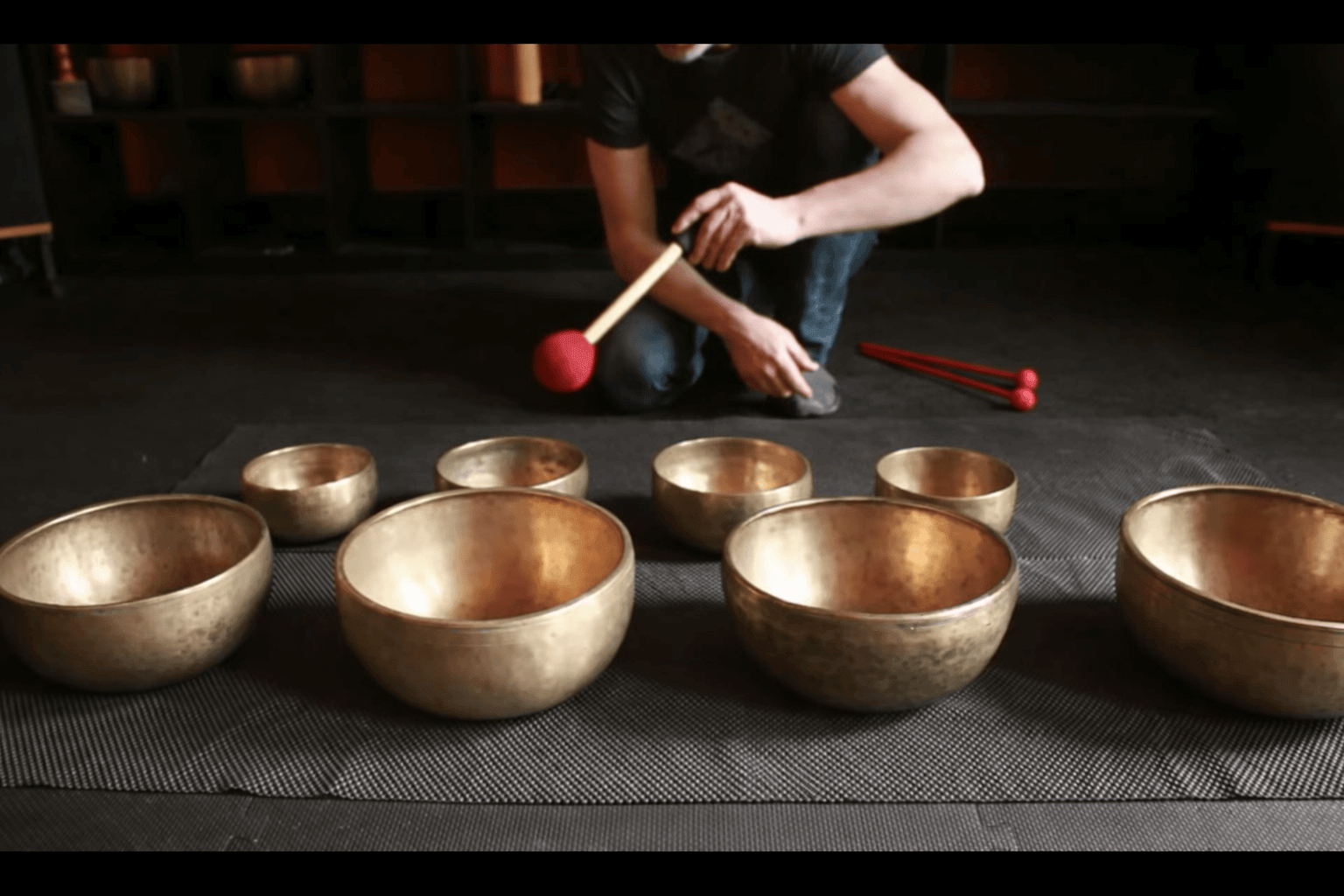
Low-frequency sounds are particularly effective. This is why large singing bowls (which produce lower frequencies) are more effective for nervous system regulation than small bowls or high-pitched instruments.
Here's why:
1. Physical resonance: Low-frequency vibrations travel through your body more easily than high frequencies. They penetrate tissue, resonate through bone, travel through fluid. Your body literally feels them.
2. Neurological processing: Your brain processes low-frequency sounds as stable, grounding, safe. This is evolutionary: low frequencies in nature (like thunder rumbling across distance) don't pose immediate threat. High frequencies (like a predator's screech) signal danger.
3. Vagal stimulation: The branches of the vagus nerve in your ear and middle ear respond most readily to low-frequency stimulation.
4. Polyvagal theory insight: Researcher Stephen Porges, who developed Polyvagal Theory, found that the middle ear muscles — which are connected to the vagus nerve — are particularly responsive to prosodic, low-frequency sounds. Listening to calming, melodic, low-toned sounds literally signals safety to your nervous system.
This is why playing a large singing bowl (low frequency, sustained tone, gentle) produces a more robust relaxation response than playing a crystal bowl (higher frequency, cleaner tone). While frequency-specific "healing" claims don't hold up, low-frequency sound does genuinely activate your nervous system through vagal pathways. For more on how frequency actually affects sound healing, see our breakdown of frequency-based interventions.
The Difference Between Acute and Chronic Vagal Tone
Understanding this distinction is important for realistic expectations.
Acute vagal activation is what happens during a single sound bath. Your vagus nerve responds to the sound. Your parasympathetic nervous system activates. You relax. When the session ends, your nervous system gradually returns to baseline.
This is real and measurable — heart rate drops, blood pressure decreases, stress hormones reduce. But it's temporary. The effect lasts hours, possibly into the next day, but it's not permanent.
Chronic high vagal tone develops through repeated practice over weeks and months. When you regularly practice sound meditation, your vagus nerve becomes more responsive overall. Your baseline shifts. You become more easily relaxed, more resilient, more flexible in your nervous system response.
Research on other vagal-activating practices (like yoga, breathwork, meditation) shows that consistent practice measurably increases vagal tone — which can be verified through HRV monitoring.
For sound practice to build chronic high vagal tone, it requires regular engagement — not just one-off sessions. This is why people who integrate sound meditation into their routine report sustained improvements in anxiety, sleep, and overall resilience.
Practical Application: How to Optimize Vagal Activation Through Sound
If you're using sound intentionally to regulate your nervous system, here's what actually matters:
1. Frequency Range
Target low frequencies: 40-120 Hz is optimal for vagal activation. A large singing bowl (typically 50-150 Hz fundamental) is ideal. Gongs are excellent. Bass-heavy meditation music works.
High-frequency sounds (bells, small bowls, crystal instruments) activate different parts of your nervous system — useful for alertness and focus, but not for relaxation.
Building vagal tone requires consistent practice with quality instruments that produce proper low-frequency stimulation.
2. Consistency Over Intensity
Regular, gentle exposure beats sporadic intense sessions. Twenty minutes of sound meditation three times a week is more effective for building vagal tone than one intensive two-hour session monthly.
This is how parasympathetic tone develops — through repetition that teaches your nervous system the sound is safe.
3. Sustained Tones
Avoid jarring, percussive sounds. The safety signal your vagus nerve needs comes from predictable, steady stimulation. A single bowl strike that rings for 30 seconds is more effective than rapid repeated strikes.
This is why rimming (creating a sustained tone) is generally more effective for vagal activation than striking (one sharp blow).
4. Quality of Attention
Deep listening amplifies the effect. When you're truly paying attention to the sound — not thinking about other things, not hoping for results, just listening — your nervous system recognizes the attention as a safety signal.
This is why sound baths in dedicated spaces, with minimal distractions, produce stronger effects than background sound while working. For specific techniques to optimize your practice through deep listening and focused attention, see our practical guide to sound healing tips for beginners.
5. Safety Context
Your nervous system needs to feel safe. This is why facilitation matters. If you're listening to a recording in a comfortable space where you feel secure, your vagus nerve responds more readily. If you're listening while anxious about being late somewhere, the physiological response is muted.
This is also why trauma-informed facilitation is essential in sound work. For people whose nervous systems are chronically activated (due to trauma, anxiety, chronic stress), safe space and skilled facilitation are prerequisite to effective vagal activation.
Sound baths produce real effects through vagal activation. Understanding what can go wrong and what facilitators need to know is crucial. For a thorough examination of how facilitator skill shapes outcomes, read about the pros and cons of sound baths.
Heart Rate Variability: The Measurable Marker
If you want to track whether sound practice is actually building your vagal tone, HRV (Heart Rate Variability) is the most reliable measurement.
HRV measures the variation in milliseconds between consecutive heartbeats. A healthy heart doesn't beat at exactly the same interval every time — there's natural variation. This variation is a sign of nervous system flexibility.
HRV is one measurable way to track whether your nervous system is becoming more flexible and resilient.
How to measure HRV:
- Wearable devices (Apple Watch, Oura Ring, others) track it continuously
- Apps (Elite HRV, Whoop, others) provide baseline measurements
- Some fitness trackers include HRV monitoring
What to expect:
- Baseline HRV varies by age, fitness level, and individual physiology
- Higher HRV correlates with higher vagal tone and better resilience
- Regular sound meditation practice, over weeks to months, increases HRV
- A single session might show acute improvement; chronic improvement requires sustained practice
Practical use:Track your HRV before starting regular sound practice. After 4-6 weeks of consistent sound meditation (3+ times weekly), measure again. If your average HRV has increased, you're building vagal tone. This objective feedback helps sustain practice.
The Limitation: Sound Alone Isn't Sufficient
Here's what needs to be said clearly: sound practice activates the vagus nerve, but it doesn't solve all nervous system dysregulation.
Sound practice is most effective for:
- General stress reduction
- Anxiety management (mild to moderate)
- Sleep support
- Emotional regulation
- Building parasympathetic capacity
Sound practice is insufficient for:
- Severe anxiety disorders
- PTSD (though it can support treatment)
- Depression (though it can complement treatment)
- Chronic nervous system dysregulation from trauma
People with significant nervous system dysregulation benefit from:
- Trauma-informed therapy
- Somatic therapies (like Somatic Experiencing)
- Medication when appropriate
- Breathwork and other vagal practices
- Sound as one tool among several
This distinction matters because wellness culture often oversells what any single modality can accomplish. Sound is powerful. It's not a substitute for clinical treatment when that's what someone needs.
For Practitioners: Teaching Vagal Tone
If you're training sound healers or teaching clients, here's what they need to understand:
If you're serious about professional practice grounded in nervous system science, understanding vagal tone is foundational. This isn't optional knowledge—it's the foundation of credible practice.
The mechanism is neurophysiological, not mystical. Your vagus nerve is a real anatomical structure. Vagal tone is measurable. The relaxation response is physiological. This is verifiable, teachable knowledge.
Chronic improvement requires practice. One sound bath feels good. Building lasting change requires consistent engagement. This is true of any nervous system training — it's not unique to sound.
Trauma matters. People with trauma histories may need different approaches or additional support. Meeting them with sensitivity and skill is essential. Understanding how trauma dysregulates the nervous system and vagal responsiveness is critical for safe practice.
Honesty about mechanism builds credibility. When you explain why sound works (vagal activation, parasympathetic response) instead of using vague "energy" language, clients trust you more. Trust increases effectiveness.
Individual variation is normal. Some people have immediate visceral responses to sound. Others take several sessions to notice effects. This is normal nervous system variation, not a sign that the practice doesn't work.
Conclusion: Sound as Vagal Medicine
The vagus nerve and vagal tone are central to understanding sound healing.
Sound doesn't work through frequency magic or chakra alignment. It works because low-frequency, sustained tones stimulate your vagus nerve, which sends a safety signal to your brain, which activates your parasympathetic nervous system, which produces measurable relaxation and healing responses.
This mechanism is scientifically grounded, individually variable, and powerful when practiced consistently.
If you want to use sound to regulate your nervous system, focus on low-frequency, sustained tones, practiced regularly, in a safe environment. Track your response (subjectively and, if interested, through HRV). Build practice over time. Understand that you're training your nervous system, and training takes repetition.
The vagus nerve doesn't require you to believe in ancient wisdom or frequency mysticism. It requires consistent stimulation with the right kind of sound.
That's enough.
Learn More
For a deeper understanding of how sound activates your nervous system, explore our comprehensive guide to Sound Bowl Healing: What the Science Actually Shows.
Professional Training in Vagal Science
Understanding vagal tone is not optional for professional practice. It's foundational.
If you want to facilitate sound baths professionally, our 100-Hour Sound Bath Certification covers the complete nervous system science, including:
- How your vagus nerve responds to sound
- Building parasympathetic capacity
- Measuring and tracking nervous system changes
- Safe facilitation for diverse nervous systems
- Trauma-informed practice principles
If you're called to teach others as a sound healer, our 200-Hour Teacher Certification includes everything above plus:
- Advanced psychoacoustics and nervous system science
- How to teach vagal science to your students
- Curriculum development grounded in neuroscience
- Training the next generation of evidence-based practitioners
Our 300+ graduates across 16 countries are doing this work with integrity and depth—grounded in science, not mythology.
FAQs
What Is Vagal Tone?
Vagal tone is a measure of how responsive and flexible your vagus nerve is. In simple terms: it's how well your body can shift between states of stress and relaxation.
Think of it like a muscle. If your vagal tone is high, your nervous system is flexible and responsive. If your vagal tone is low, your nervous system gets stuck in stress mode.
What this means physically:
High vagal tone = your body can:
- Quickly shift from stress to calm
- Regulate heart rate smoothly
- Digest food efficiently
- Recover from emotional intensity
- Respond flexibly to challenges
Low vagal tone = your body:
- Gets stuck in stress mode
- Experiences irregular heart rate
- Has poor digestion
- Takes longer to recover from upset
- Responds rigidly to challenges
The vagus nerve itself:
The vagus nerve is the longest cranial nerve in your body. It runs from your brain down through your neck, chest, and abdomen, connecting your brain to your heart, lungs, and digestive organs.
It's bidirectional—it sends signals downward from your brain to your organs, and it sends signals upward from your organs to your brain. This constant conversation between your brain and body is what vagal tone measures.
How it's measured:
Heart Rate Variability (HRV) is the most common measurement. HRV measures the variation in milliseconds between consecutive heartbeats. A healthy heart doesn't beat at exactly the same interval every time—there's natural variation. This variation indicates nervous system flexibility.
- High HRV = high vagal tone = nervous system flexibility
- Low HRV = low vagal tone = nervous system rigidity
Why it matters:
Research consistently shows that people with high vagal tone experience:
- Lower anxiety and stress
- Better sleep quality
- Improved digestion
- Less chronic inflammation
- Better emotional regulation
- Greater resilience
Conversely, low vagal tone is associated with anxiety disorders, depression, poor sleep, digestive issues, and chronic health problems.
How to improve it:
Vagal tone improves through practices that activate the parasympathetic nervous system:
- Sound meditation (particularly low-frequency bowls)
- Yoga and breathwork
- Cold water exposure
- Singing and humming
- Gargling
- Consistent relaxation practice
The good news:
Vagal tone isn't fixed. You can train it. Regular practice that activates your vagus nerve gradually increases your baseline vagal tone, making your nervous system more flexible and resilient.
How Can I Improve My Vagal Tone?
Vagal tone improves through consistent practices that activate your parasympathetic nervous system. Here are the most effective approaches, ranked by evidence and accessibility.
1. Sound-Based Practices (Most relevant to sound healing)
Low-frequency, sustained sounds directly stimulate your vagus nerve. This is why sound baths, singing bowls, and gongs are effective.
How it works:
- The vagus nerve has branches in your ear
- Low-frequency vibrations travel through your body
- These vibrations signal your nervous system that it's safe to relax
- Your parasympathetic system activates
Practice:
- Sound baths: 1-2 times weekly, 45-60 minutes
- Home practice: 20-30 minutes of singing bowl meditation
- Duration needed: 4-6 weeks to see measurable HRV improvements
This is so effective that dedicated sound practice is one of the fastest ways to build vagal tone. For deeper understanding of the mechanism, see our guide to how your vagus nerve responds to sound.
2. Breathwork (Accessible, Daily)
Slow, deep breathing directly activates the vagus nerve.
How it works:
- Slow exhalation (longer than inhalation) signals safety to your nervous system
- This vagal activation shifts you into parasympathetic mode
Practice:
- Box breathing: 4 counts in, 4 hold, 6 counts out
- Alternate nostril breathing: 5-10 minutes daily
- Extended exhalation breathing: Focus on making exhales longer than inhales
- Duration: 5-10 minutes daily
Research shows consistent breathwork increases vagal tone measurably within 2-4 weeks.
3. Yoga (Gentle, Restorative)
Yoga combines movement, breathwork, and nervous system regulation.
Most effective styles:
- Restorative yoga
- Yin yoga
- Gentle yoga
- Avoid high-intensity (increases stress hormones short-term)
Practice:
- 30-60 minutes, 3+ times weekly
- Focus on forward folds and gentle twists
- Include breathwork emphasis
- Duration needed: 6-8 weeks for measurable improvement
4. Cold Water Exposure (Intense but Fast)
Cold water activates the vagus nerve through the diving reflex.
How it works:
- Immersion in cold water activates vagal response
- This trains your vagus nerve to respond to stress more adaptively
Practice:
- Cold shower: 30-90 seconds, 3-4 times weekly (build up gradually)
- Cold plunge: 1-3 minutes, if available
- Even cold water on face activates the response
Caution: Start slowly. Gradual adaptation is safer than sudden cold exposure.
Research shows regular cold exposure increases vagal tone within 2-3 weeks but requires ongoing practice.
5. Meditation (Gentle, Accessible)
Meditation quiets the mind and activates parasympathetic response.
Practice:
- 10-20 minutes daily
- Focus attention (any object—breath, sound, mantra)
- Consistency matters more than duration
Meditation alone is slower than other methods but highly effective when practiced consistently.
6. Social Connection (Foundational)
Positive social interaction activates the vagus nerve.
How it works:
- Safe, supportive relationships signal safety to your nervous system
- Conversation, laughter, and physical affection all increase vagal tone
Practice:
- Spend time with people who make you feel safe
- Engage in meaningful conversation
- Physical affection (hugging, safe touch)
- Group activities (yoga class, sound bath with others)
7. Gargling & Humming (Simple, Daily)
These activate throat muscles connected to the vagus nerve.
Practice:
- Gargle vigorously for 30 seconds, 2-3 times daily
- Humming or singing: 5-10 minutes daily
- Both are accessible and free
Research shows these simple practices increase vagal tone, likely through vagal branch stimulation.
Combining Practices (Most Effective)
One practice is helpful. Multiple practices combined are more powerful:
Optimal weekly routine:
- Sound meditation: 2-3 times weekly (45-60 min each)
- Breathwork: Daily (10 min)
- Yoga or gentle movement: 3 times weekly (30 min)
- Cold exposure: 3-4 times weekly (30-90 sec)
- Social connection: Daily
- Humming/gargling: Daily (minimal time)
Timeline to results:
- Acute effects: Within a single session (heart rate slows, breathing deepens)
- Measurable improvement: 4-6 weeks of consistent practice
- Significant shift: 8-12 weeks of regular engagement
- Sustained change: 3-6 months of consistent practice
Track your progress:
Heart Rate Variability (HRV) apps can track objective improvement:
- Measure your baseline before starting
- Re-measure after 4-6 weeks
- Look for increasing HRV numbers
Subjective improvements you'll notice:
- Sleep quality improves
- Anxiety decreases
- Emotional recovery is faster
- Digestion improves
- You feel calmer
Important note:
If you have anxiety disorders, depression, or trauma history, vagal tone improvement is helpful but works best alongside professional mental health treatment, not as a replacement.
For professional guidance on how to incorporate sound practice into a comprehensive vagal tone-building routine, consider our 100-Hour Sound Bath Certification, which covers both the science and practical application.
Does Vagal Stimulation Really Work?
Yes. Vagal stimulation produces measurable physiological effects. The research is robust, and the mechanism is well-understood.
What the evidence actually shows:
Studies measuring vagal effects consistently find:
- Heart rate decreases during vagal activation (measurable within seconds)
- Blood pressure drops (within 10-15 minutes of practice)
- Stress hormone levels (cortisol) decrease (measurable within 30 minutes)
- HRV increases (measurable within weeks of consistent practice)
- Breathing becomes deeper and slower (automatic, within seconds)
- Digestive activity increases (within 20-30 minutes)
These aren't subjective. They're measurable physiological changes.
The mechanism (why it works):
Your vagus nerve controls your parasympathetic nervous system—your "rest and digest" mode. When your vagus nerve is activated, it sends a signal to your brain: "You're safe. You can relax."
In response, your body:
- Slows heart rate
- Lowers blood pressure
- Stops stress hormone production
- Increases digestive function
- Relaxes muscles
- Quiets your mind
This is hardwired biology, not belief.
Important distinction: Acute vs. chronic effects
Acute effects (during/immediately after): Very reliable. Nearly everyone experiences heart rate slowing, breathing deepening, and relaxation during vagal activation.
Chronic effects (long-term): Require consistent practice. Regular vagal activation gradually trains your nervous system to stay more relaxed baseline and shift out of stress more easily.
This means:
- One sound bath feels good (acute effect)
- Weekly sound baths for 3 months improve your baseline nervous system state (chronic effect)
Does it work for everyone?
Mostly yes, with variations:
- Immediate responders (60-70% of people): Feel clear effects from first session
- Gradual responders (20-25%): Need 3-5 sessions to notice effects
- Non-responders (5-10%): Don't experience noticeable effects (may be due to severe dysregulation, trauma, or individual neurological differences)
Factors that affect outcomes:
- Your baseline nervous system state
- Your receptivity (not belief—actual openness to the stimulus)
- Facilitator skill (matters significantly)
- Frequency of practice
- Whether you're also dysregulated by trauma
What doesn't work:
Belief alone. You don't need to "believe" in vagal stimulation for it to work—it works regardless. A skeptic's heart rate will slow just as much as a believer's.
However, expectancy can enhance results (the mind does affect nervous system responsiveness).
Realistic expectations:
Vagal stimulation works for:
- Stress reduction
- Anxiety management (as part of broader approach)
- Sleep support
- Emotional regulation
- Building nervous system resilience
It doesn't:
- Cure psychiatric conditions alone
- Replace medication
- Work immediately for severe dysregulation
- Eliminate all stress
The research baseline:
If you search peer-reviewed literature for "vagal stimulation," "vagus nerve activation," "heart rate variability," you'll find:
- Hundreds of published studies
- Consistent, replicable findings
- Well-understood mechanisms
- FDA-approved vagal nerve stimulators for treatment-resistant depression (proving the mechanism is real and clinically significant)
Bottom line:
Vagal stimulation genuinely works. It's not mystical or belief-dependent. It's measurable neuroscience producing observable physiological changes.
Can Sound Lower Heart Rate and Blood Pressure?
Yes. Sound—specifically low-frequency, sustained tones—reliably lowers both heart rate and blood pressure within minutes through vagal activation.
What research shows:
Studies measuring physiological responses to sound consistently find:
- Heart rate reduction: 5-15 BPM decrease during/after sound exposure (measurable with any basic HR monitor)
- Blood pressure reduction: 5-10 mmHg systolic/diastolic decrease
- Effects persist: Benefits typically last 2-6 hours after session
- Consistency matters: Regular practice produces baseline improvements
The mechanism:
Low-frequency sound (50-200 Hz) activates your vagus nerve, which controls parasympathetic response. This signals your body to:
- Slow heart rate (mediated by vagal effect on heart)
- Lower blood pressure (mediated by vasodilation and reduced stress hormones)
This is the same mechanism your body uses during sleep or relaxation.
How quickly does it happen?
- Immediate (within 1-5 minutes): Heart rate and breathing changes
- Short-term (within 15-30 minutes): Blood pressure and stress hormone reduction
- Sustained (hours afterward): Effects typically last 2-6 hours
- Long-term (weeks-months): Baseline improvements develop with regular practice
Important variables:
Results vary based on:
- Sound quality (quality matters—thin, poorly-made sounds produce weaker effects)
- Duration (longer sessions produce larger effects)
- Frequency (frequency of practice—weekly produces more consistent results than one-time)
- Your baseline state (someone highly anxious may see larger drops)
- Facilitator skill (a trained facilitator creates better conditions)
Best results:
Occur with:
- Large singing bowls or gongs (low frequency)
- 45-60 minute sessions
- Quality instruments (proper sustain and tone complexity)
- Skilled facilitation
- Regular practice (1-2 times weekly)
Who benefits most:
- People with high baseline heart rate/blood pressure
- People with anxiety
- People with stress-related hypertension
- People with autonomic dysregulation
Important medical note:
If you have:
- Heart conditions, talk to your cardiologist before sound baths
- Pacemaker or electronic implants, check for compatibility
- Blood pressure medications, don't stop taking them—sound complements medication
Sound supports blood pressure and heart rate management but doesn't replace medication for clinical hypertension.
Realistic expectations:
Sound is effective for:
- Acute relaxation (within sessions)
- Building parasympathetic capacity (over weeks)
- Supporting other interventions (exercise, medication, stress management)
Sound alone is usually insufficient for clinical hypertension but is excellent as a complementary practice.
How to measure:
Track your own vitals:
- Measure resting heart rate before and after sound
- Measure blood pressure before/after (or note symptom changes)
- Track sleep quality (often improves)
- Notice stress response improvements
After 4-6 weeks of regular practice, you should see:
- Lower resting heart rate
- Lower blood pressure (if it was elevated)
- Better stress recovery
- Improved sleep
What Does Vagal Tone Have to Do With Anxiety?
Vagal tone is directly connected to anxiety. Higher vagal tone = lower anxiety. Lower vagal tone = higher anxiety. Building vagal tone is one of the most evidence-supported ways to reduce anxiety.
How vagal tone causes anxiety:
When your vagal tone is low, your nervous system gets stuck in stress mode. Your body stays alert, waiting for threat. This produces:
- Constant low-level anxiety
- Hypervigilance
- Difficulty relaxing
- Excessive worry
- Physical tension
- Sleep disruption
Low vagal tone makes it hard for your body to shift out of "fight or flight."
How building vagal tone reduces anxiety:
When your vagal tone is high, your nervous system is flexible. You can:
- Quickly shift from stress to calm
- Recognize safety when it's present
- Recover from anxiety quickly
- Feel genuinely relaxed
- Sleep well
- Respond proportionally to stressors
High vagal tone gives your nervous system the ability to downregulate anxiety.
The research connection:
Studies show:
- People with high vagal tone have significantly lower anxiety
- People with anxiety disorders typically have low vagal tone
- Interventions that increase vagal tone reduce anxiety measurably
- The effect is consistent across different populations
Anxiety types that improve with vagal tone building:
Generalized anxiety (worry, nervousness):Very responsive to vagal training. Regular practice reduces baseline worry.
Social anxiety (fear of social situations):Improves as your nervous system becomes more relaxed baseline. You feel less activation in social contexts.
Panic attacks (sudden acute anxiety):Better managed with high vagal tone. Your body is primed to recognize safety and downregulate quickly.
Health anxiety (worry about your health):Often improves as physical symptoms (racing heart, tension) decrease with better vagal tone.
Performance anxiety (nerves before presentations, competitions):Reduces as your nervous system becomes more stable and less reactive.
Trauma-related anxiety (PTSD, hypervigilance):Improves with vagal training combined with trauma treatment. Vagal work alone isn't sufficient but is highly supportive.
Important distinction: Complement vs. Replacement
For mild-to-moderate anxiety:Vagal tone building (through sound, breathwork, yoga) can be primary intervention. Often sufficient alongside lifestyle changes.
For clinical anxiety disorder or severe anxiety:Professional mental health treatment is primary. Vagal tone building is highly valuable complementary practice.
Don't use vagal work to avoid needed professional treatment. Use it alongside therapy and/or medication.
How sound specifically helps anxiety through vagal activation:
Sound bowls produce low-frequency tones that directly stimulate your vagus nerve. This:
- Interrupts the anxiety cycle (nervous system can't stay in high alert while being stimulated to relax)
- Teaches your nervous system it's safe (through consistent exposure to calming stimulus)
- Builds parasympathetic capacity (regular practice strengthens relaxation ability)
- Provides acute relief (immediate anxiety reduction during session)
- Supports chronic improvement (regular practice builds baseline relaxation)
Timeline for anxiety improvement:
- Acute (during session): Immediate anxiety decrease
- Short-term (1-2 weeks of regular practice): Noticeable reduction in baseline anxiety
- Medium-term (4-8 weeks): Significant improvement, better stress response
- Long-term (3-6 months): Substantial change in nervous system baseline
Building vagal tone for anxiety reduction:
Most effective practice:
- Sound meditation: 2-3 times weekly, 45-60 minutes
- Breathwork: Daily, 5-10 minutes
- Yoga or movement: 3+ times weekly
- Cold exposure: 3-4 times weekly (optional but effective)
- Combined: This multi-modal approach is most powerful
What to avoid:
- Using vagal work as sole treatment for clinical anxiety (combine with professional care)
- Expecting overnight transformation (build is gradual)
- High-intensity exercise initially (can increase anxiety before improving it)
- Forcing relaxation (gentle practice works better)
Measuring anxiety reduction:
Track:
- Subjective anxiety (rate 1-10)
- Physical symptoms (heart racing, tension)
- Sleep quality
- Stress response (how quickly you recover from stress)
- Ability to relax
After 4-6 weeks of consistent practice, most people notice:
- Baseline anxiety is lower
- Anxiety episodes are less frequent
- Recovery from anxiety is faster
- Sleep is better
- Fewer physical symptoms
Professional support:
If you have clinical anxiety, work with a therapist or psychiatrist alongside vagal training. The combination is more effective than either alone.
For professional guidance on how to incorporate sound practice into a comprehensive anxiety management approach, consider our 100-Hour Sound Bath Certification, which covers nervous system science for practitioners working with anxiety.
How Long Does It Take to Increase Vagal Tone?
Vagal tone improvement follows a predictable timeline, but varies based on:
- Consistency of practice
- Type of practice
- Your baseline nervous system state
- How severely dysregulated you are
Quick timeline:
Week 1: Acute effects only (feel relaxed during/after practice)
Weeks 2-3: Beginning to notice effects lasting longer (feel calmer for hours after practice)
Weeks 4-6: Measurable improvements in baseline state (sleep better, less anxious, calmer in general)
Weeks 8-12: Significant nervous system shift (noticeable change in how you respond to stress)
3-6 months: Substantial improvement in baseline vagal tone (new normal is noticeably calmer)
The first effect: Acute relaxation (Immediate)
This happens first and is reliable:
- During sound meditation: Heart rate slows, breathing deepens
- Immediately after: Feeling of calm and peace
- Lasts: 2-6 hours typically
Everyone experiences this acute effect (unless severely dysregulated or trauma-triggered).
Building effect: Nervous system training (4-12 weeks)
Chronic improvements happen more slowly because you're literally retraining your nervous system:
Week 1-2:
- Notice how much you can relax during sessions
- Feel calmer for a few hours after
- But your baseline nervous state hasn't shifted yet
Week 3-4:
- Resting heart rate begins to decrease slightly
- Anxiety episodes are marginally less intense
- Sleep might improve
- Still requires regular practice to maintain
Week 5-8:
- Noticeable baseline improvement
- You feel calmer in general, not just during sessions
- Stress recovery is faster
- Sleep is better
- Blood pressure may be lower
Week 9-12:
- Significant shift in your baseline nervous system state
- You handle stressors more easily
- Anxiety takes longer to trigger and shorter to resolve
- Sleep quality notably improved
- People around you might notice you seem calmer
Measuring progress:
Objective (measurable):
- Resting heart rate: Lower after 4-6 weeks
- Blood pressure: Lower after 4-8 weeks
- HRV: Increasing after 4-6 weeks
- Sleep quality: Improving after 2-4 weeks
Subjective (how you feel):
- Anxiety level
- General calmness
- Stress response
- Emotional recovery speed
- Sleep quality
Variables that speed up improvement:
✓ Consistency (3-4x weekly is faster than 1x weekly)
✓ Multiple modalities (sound + breathwork + yoga > sound alone)
✓ Quality of practice (skilled facilitation matters)
✓ Lower baseline dysregulation (less damaged nervous system improves faster)
Variables that slow improvement:
✗ Inconsistent practice (1x monthly won't build much)
✗ Single modality only
✗ Poor sleep otherwise
✗ High ongoing stress without other coping strategies
✗ Unaddressed trauma
For severe dysregulation:
If your nervous system is severely dysregulated (from trauma, chronic stress, or PTSD), timeline is longer:
- Acute effects may take longer to appear
- Building effects may take 3-6 months instead of 4-8 weeks
- Often requires professional support alongside practice
- Consistency matters even more
Maintaining gains:
Once you've built vagal tone:
- It's not permanent if you stop practicing
- Regular practice (even 1-2x weekly) maintains improvements
- Occasional gaps are fine; chronic discontinuation loses gains
- Think of it like fitness: maintaining is easier than building, but you have to keep exercising
Realistic expectations:
Fast timeline (4-8 weeks):
- You're highly consistent (3-4x weekly)
- You use multiple modalities
- Your baseline isn't severely dysregulated
- You're tracking progress objectively
Medium timeline (8-12 weeks):
- You're consistent (2-3x weekly)
- You practice regularly
- Your baseline is moderately dysregulated
Slow timeline (3-6 months):
- You have trauma history or severe dysregulation
- You're learning to be consistent
- You need professional support alongside practice
The important insight:
Any timeline is better than the alternative. Four weeks of improvement is worth it. Twelve weeks of improvement is worth it. The question isn't "is this fast enough?" but "am I willing to invest the time for real change?"
Is High Vagal Tone Possible to Achieve?
Yes. High vagal tone is achievable for most people through consistent practice. You're not fixing a broken system—you're training a system that knows how to work but hasn't been exercised.
Why it's possible:
Your vagus nerve isn't damaged by low vagal tone. It's just under-trained. Like muscles that haven't been exercised, your vagus nerve can be strengthened.
With consistent vagal activation practices, your nervous system learns:
- How to shift into relaxation more easily
- How to recognize safety
- How to recover from stress quickly
Who can achieve high vagal tone:
- Most people without severe neurological conditions
- People with anxiety (even chronic anxiety)
- People with trauma (with appropriate support)
- People with depression (often improves with vagal work)
- People with dysregulated nervous systems
- People with autoimmune issues (vagal work helps)
- Healthy people (can optimize further)
Who might face challenges:
- Severe PTSD (needs to be part of professional treatment)
- Certain neurological conditions (depends on the condition)
- Current acute crisis (stabilize first, then build)
- Untreated addiction (treat first, then build)
Even people in these categories can improve, but they need professional support alongside practice.
The evidence:
Research on vagal tone building shows:
- Consistent practice reliably increases HRV (the measurement of vagal tone)
- Effects are replicable (same practices work across different people)
- Improvements are measurable (not subjective)
- Gains persist with continued practice
Studies on sound meditation specifically show:
- Regular sound practice increases parasympathetic tone
- Effects appear within 4-8 weeks of consistent practice
- Long-term practitioners have significantly higher baseline vagal tone
What "high vagal tone" looks like:
People with high vagal tone typically:
- Sleep well
- Recover quickly from stress
- Experience lower baseline anxiety
- Have stable mood
- Digest well
- Feel physically relaxed
- Have good emotional regulation
- Can handle challenges without getting stuck
This isn't superhuman. It's normal nervous system function.
The realistic path:
- Start: Identify a practice (sound, breathwork, yoga)
- Build consistency: Practice 3-4 times weekly
- Track progress: Notice changes in sleep, stress response, anxiety
- Maintain gains: Continue regular practice indefinitely
- Optimize: Combine multiple practices for faster gains
Sustainability:
High vagal tone is sustainable if you:
- Keep practicing (can reduce frequency after building, but don't stop entirely)
- Don't return to chronic stress without support
- Continue multi-modal approaches
- Maintain sleep and basic health habits
Important reality:
High vagal tone doesn't mean you never feel stressed. It means:
- You stress less easily
- Stress doesn't stick around
- You recover quickly
- Stress doesn't cascade into anxiety spirals
You're building resilience, not invulnerability.
Timeline reminder:
Achieving high vagal tone typically takes:
- 3-4 months of consistent practice for most people
- 6-12 months for those starting from severe dysregulation
- Ongoing commitment to maintain
Bottom line:
High vagal tone is absolutely achievable. You're not working against your physiology—you're working with it. Your nervous system wants to relax and recover. With consistent training through sound, breathwork, yoga, and other practices, you can achieve measurably higher vagal tone.
What Happens When Vagal Tone Is Too Low?
Low vagal tone creates a cascade of problems in your nervous system, resulting in physical, emotional, and mental health challenges.
Physical effects of low vagal tone:
Digestive problems:
- Poor digestion
- Irregular bowel function
- Acid reflux/GERD
- Food sensitivities or intolerances
- Bloating and gas
- Loss of appetite or overeating
Low vagal tone means your parasympathetic nervous system (which controls digestion) isn't active. Digestion only works well when your body feels safe enough to "rest and digest."
Sleep disruption:
- Difficulty falling asleep
- Frequent waking
- Unrefreshing sleep
- Racing thoughts at night
- Nightmares or night sweats
Without parasympathetic activation, your body can't shift into sleep mode properly.
Heart rate irregularities:
- Elevated resting heart rate
- Palpitations
- Irregular heartbeat
- Difficulty heart rate recovery after exercise
Your vagus nerve controls heart rate. Low tone means poor regulation.
Inflammation:
- Chronic inflammation
- Autoimmune activation
- Slow healing
- Frequent infections
- Joint pain
The vagus nerve actually controls inflammation through the "vagal anti-inflammatory pathway." Low tone = poor inflammation control.
High blood pressure:
- Elevated baseline blood pressure
- Hypertension that's hard to manage
- Stress-reactive spikes
Without vagal regulation, your cardiovascular system stays in high alert.
Emotional/psychological effects:
Anxiety:
- Constant low-level anxiety
- Hypervigilance
- Panic attacks
- Generalized worry
Your nervous system stays in threat-detection mode.
Depression:
- Low mood
- Anhedonia (inability to feel pleasure)
- Low energy
- Loss of motivation
The vagus nerve is involved in mood regulation through vagal-brain connections.
Emotional dysregulation:
- Overreacting to minor stressors
- Difficulty recovering from upsets
- Irritability
- Emotional sensitivity
Without vagal regulation, your nervous system can't downshift.
Difficulty with social connection:
- Social anxiety
- Difficulty reading social cues
- Feeling isolated
- Withdrawal from relationships
Polyvagal theory explains how the vagus nerve controls social engagement circuits.
Behavioral effects:
Stress reactivity:
- Quick to stress
- Stays stressed a long time
- Hard to relax
- Difficulty finding peace
Your nervous system is primed for threat.
Substance use risk:
- Self-medication with alcohol/drugs
- Addiction vulnerability
- Increased stimulant use
- Difficulty modulating stimulation
Low vagal tone makes it harder to regulate your own nervous system, increasing risk for self-soothing through substances.
Poor recovery:
- Doesn't bounce back from illness
- Takes longer to heal
- Frequent or chronic illness
- Prolonged fatigue after exertion
Your parasympathetic system (which controls recovery) isn't active enough.
The cascade effect:
Low vagal tone creates a downward spiral:
- Poor sleep → more anxiety → worse digestion → inflammation → more dysregulation
This explains why people with low vagal tone experience multiple health problems simultaneously.
Important context:
Low vagal tone isn't a disease or diagnosis. It's a description of nervous system flexibility. Everyone exists on a spectrum.
What causes low vagal tone:
- Chronic stress
- Trauma
- Poor sleep habits
- Lack of relaxation practice
- High caffeine/stimulant use
- Sedentary lifestyle
- Dietary factors (inflammation-promoting foods)
- Unmanaged emotions
- Isolation
The good news:
Low vagal tone is highly responsive to intervention. Unlike many health conditions, it improves quickly with consistent practice.
Most people can see meaningful improvement in:
- Sleep: 2-4 weeks
- Anxiety: 4-6 weeks
- Digestion: 2-6 weeks
- Overall health: 8-12 weeks
What to do:
If you think you have low vagal tone:
- Start a vagal activation practice (sound meditation, breathwork, yoga)
- Practice consistently (3-4x weekly)
- Combine modalities (sound + breathwork + movement)
- Track improvements
- If severe dysregulation, seek professional support
Can Singing Bowls Increase Vagal Tone?
Yes. Singing bowls are one of the most effective tools for increasing vagal tone because they produce exactly what your vagus nerve needs: low-frequency, sustained, soothing sounds.
How singing bowls activate the vagus nerve:
1. Frequency rangeSinging bowls typically produce 50-200 Hz fundamental frequencies. This is the optimal range for vagal stimulation—low enough to penetrate the body, high enough to be relaxing rather than startling.
2. Sustained tonesUnlike sharp, percussive sounds, singing bowls ring continuously for 30-60+ seconds. This sustained stimulation gives your vagus nerve consistent activation—exactly what you need to train it.
3. VibrationThe vibrations travel through your body, stimulating vagal branches throughout (in ears, neck, chest, abdomen). This widespread stimulation is more effective than localized stimulation.
4. ComplexityThe multiple overtones and harmonic content engage your brain's auditory processing system in a way that's absorbing but not demanding. This shift from active thinking to receptive listening is itself vagal activation.
Why singing bowls are better than other sounds:
- Better than binaural beats: Bowls produce variable, rich tones that your nervous system finds naturally relaxing
- Better than white noise: Bowls have acoustic complexity that engages your listening
- Better than regular music: Bowls lack narrative tension; they're purely soothing
- Better than headphones: Bowls' vibrations travel through your body, not just ears
Research on singing bowls and vagal tone:
Studies specifically on singing bowls show:
- Heart rate decreases during sessions
- Blood pressure drops
- Stress markers decline
- HRV improves with regular practice
- Parasympathetic activation is measurable
One study found significant decreases in negative mood and tension after singing bowl meditation, suggesting robust parasympathetic activation.
Timeline for vagal tone increase:
Acute (during session):
- Immediate vagal activation
- Heart rate slows within 1-5 minutes
- Breathing deepens
- Relaxation is measurable
Short-term (1-2 weeks of practice):
- Effects last longer after sessions
- Baseline anxiety begins to decrease
- Sleep may improve
Medium-term (4-8 weeks of regular practice):
- Measurable HRV improvement
- Noticeable baseline nervous system shift
- Better stress response
- Improved sleep quality
Long-term (3-6 months of consistent practice):
- Significant increase in baseline vagal tone
- New normal is noticeably calmer
- Stress recovery is faster
- Multiple health improvements
How to use singing bowls for vagal tone building:
Frequency:
- 2-3 times weekly for faster results
- 1x weekly for maintenance
- Daily practice produces fastest improvements (but less realistic for most)
Duration:
- 45-60 minutes is optimal
- 30 minutes produces good results
- Even 20 minutes is beneficial if regular
Technique:
- Rimmed (continuous tone) produces slightly better results than struck
- But struck bowls work too
- Consistency matters more than technique perfection
Setting:
- Quiet, safe space
- Comfortable position (lying or sitting)
- Minimal distractions
- Facilitator if possible (skilled facilitation enhances results)
Combining with other practices:
Singing bowls work fastest when combined with:
- Breathwork: 5-10 min daily
- Yoga: 30 min, 3x weekly
- Cold exposure: Optional but enhances results
This multi-modal approach builds vagal tone faster than any single practice.
Quality matters:
Better-quality singing bowls produce better results because:
- Longer sustain means more continuous vagal stimulation
- Richer harmonic content engages nervous system more
- Hand-crafted bowls have superior acoustic properties
- Poor-quality bowls have weaker effects
Realistic expectations:
Singing bowls alone will:
- Reliably activate vagus during sessions
- Gradually build vagal tone with consistent practice
- Reduce anxiety, improve sleep, support digestion
Singing bowls won't:
- Instantly cure nervous system problems
- Work without consistency
- Replace professional treatment for severe conditions
Who benefits most:
- People with anxiety (very responsive)
- People with poor sleep (sound helps)
- People with stress-related issues (very responsive)
- People with digestion problems (improves)
- Anyone wanting to optimize nervous system (works)
If you want to facilitate sound practice professionally with deep understanding of vagal science, our 100-Hour Sound Bath Certification covers the complete mechanism and application.
How Do I Know If My Vagal Tone Is Improving?
You can track vagal tone improvement both objectively (measurable data) and subjectively (how you feel). Combining both gives you clear feedback.
Objective measurements:
1. Heart Rate Variability (HRV) - Most accurate
HRV measures variation in milliseconds between heartbeats. Higher HRV = higher vagal tone.
How to measure:
- Wearable devices (Apple Watch, Garmin, Oura Ring, etc.)
- HRV-specific apps (Elite HRV, Whoop, HRV4Training)
- Many fitness trackers include HRV
- Cost: Free (some apps) to $200+ (devices)
What to track:
- Your baseline HRV before starting practice
- Weekly average HRV after 4 weeks
- Monthly trends over 3-6 months
Normal improvement:
- Baseline HRV might be 20-40 ms (low vagal tone)
- After 4-8 weeks: increase to 35-50 ms
- After 3-6 months: increase to 45-65+ ms
2. Resting Heart Rate (RHR) - Easy to measure
Lower resting heart rate indicates better vagal tone (vagus controls heart rate).
How to measure:
- Check pulse for 60 seconds before getting out of bed
- Or use any heart rate monitor
- Measure at same time daily for consistency
Normal improvement:
- Baseline: 70-85 BPM
- After 4-8 weeks: 65-75 BPM
- After 3-6 months: 55-70 BPM
3. Blood Pressure - Clinical measurement
Lower blood pressure indicates better parasympathetic tone.
How to measure:
- Check at doctor's office
- Use home blood pressure monitor
- Measure at same time daily
Normal improvement:
- Baseline: 130-140 / 85-90
- After 8-12 weeks: 120-130 / 75-85
4. Heart Rate Recovery - Easy to test
How quickly your heart rate returns to normal after exercise.
How to measure:
- Do 2-3 minutes of moderate exercise (stairs, brisk walk)
- Measure heart rate immediately after
- Measure again 1 minute later
- Calculate difference
Normal improvement:
- Poor vagal tone: 10-15 BPM decrease
- Good vagal tone: 20-30 BPM decrease
Subjective improvements (track these too):
Sleep quality:
- Falling asleep faster
- Sleeping through night
- Waking more refreshed
- Vivid dreams (sign of REM sleep)
Anxiety levels:
- Less anxious overall
- Anxiety episodes less intense
- Recovery from anxiety faster
- Fewer worry spirals
Digestion:
- Better hunger/fullness signals
- Improved regularity
- Less bloating
- Better tolerance of foods
Energy:
- More consistent energy
- Less afternoon crashes
- Better recovery from activity
- Less fatigue
Stress response:
- Less reactive to minor stressors
- Recover from upsets quickly
- Handle challenges more calmly
- Better problem-solving
Emotional regulation:
- More stable mood
- Less irritability
- Better emotional responses
- More patience
Physical symptoms:
- Less muscle tension
- Fewer headaches
- Lower inflammation
- Better body awareness
Creating a tracking system:
Simple method:Create a spreadsheet with columns for:
- Date
- HRV (if available)
- Resting heart rate
- Sleep quality (1-10)
- Anxiety level (1-10)
- Energy (1-10)
- Stress recovery (quick/moderate/slow)
- Notes (how you felt)
Weekly review:Every Sunday, review the past week:
- Any improvements?
- What helped most?
- Where to focus next week?
Monthly summary:Compare current month to baseline month:
- Are objective measures improving?
- Are subjective measures improving?
- What's most changed?
Timeline for seeing improvements:
Objective measurements:
- 2-4 weeks: May not see changes yet
- 4-8 weeks: First measurable improvements appear
- 8-12 weeks: Significant improvements evident
- 3-6 months: Substantial baseline changes
Subjective improvements:
- 1-2 weeks: Sleep and acute stress response
- 2-4 weeks: Baseline anxiety reduction
- 4-8 weeks: Noticeable life changes
- 8-12 weeks: Clear lifestyle differences
What if I'm not seeing improvement?
Possible reasons:
- Inconsistency: Practice needs to be regular
- Too short timeline: Give it 4-8 weeks minimum
- Stress overwhelming practice: May need more support
- Severe dysregulation: May need professional support
- Wrong approach for you: Try different practice
Red flags (not improving after 8 weeks):
If you've been consistent 3-4x weekly for 8 weeks and see no improvement:
- May have underlying condition requiring professional help
- May need different practice modality
- May need to address other stress sources
- Consider working with healthcare provider
Celebration points:
You'll know it's working when: ✓ You sleep better
✓ You feel calmer
✓ Stress doesn't stick around
✓ Your numbers improve (HRV, RHR, BP)
✓ People comment you seem different
✓ You handle challenges more easily