Table of Contents
- Finding and Experiencing Sound Baths: The Complete Local Guide
- What Is a Sound Bath?
- Sound Bath vs. Sound Healing: Understanding the Difference
- What Does the Science Say About Sound Baths?
- What to Expect at a Sound Bath Near You
- Common Instruments Used in Local Sound Bath Sessions
- Types of Sound Bath Experiences Available Near You
- What to Bring to a Sound Bath
- How to Find a Qualified Sound Bath Practitioner Near You
- Is Sound Bath Therapy Right for You?
- Want to Become a Sound Bath Practitioner Yourself?
- Professional Training Through Sound Medicine Academy
- Ready to Experience a Sound Bath?
- Learn More
- FAQs
Finding and Experiencing Sound Baths: The Complete Local Guide
If you've never experienced a sound bath, you might be wondering: What exactly am I getting into? Will I look ridiculous lying on the floor? Is this actually backed by science, or is it just wellness theater?
This guide answers all of it. We'll walk through what a sound bath actually is, what happens during a session, how to find a qualified practitioner near you, and how to know if it's right for your wellness goals.
What Is a Sound Bath?
A sound bath is an immersive meditation experience where you lie down or sit in a comfortable position while a facilitator plays singing bowls, gongs, chimes, or other instruments around you for 30-60 minutes. You're not doing anything active — you're not chanting, moving, or following instructions. You're simply listening and letting your nervous system respond.
The metaphor of a "bath" describes the experience accurately: you're being bathed in layers of sound and vibration. Unlike a concert where sound is performance, a sound bath is therapeutic immersion. The goal isn't entertainment — it's relaxation, nervous system regulation, and whatever healing or clarity emerges from that state.
What you'll experience:
- Complex, overlapping tones from multiple instruments
- Vibrations traveling through your body
- A shift from thinking mode to receptive listening
- Deep relaxation as your nervous system downregulates
- Whatever emotional or physical responses arise (most people experience calm; some experience emotional release)
What it's not:
- A concert (no performance aspect)
- A therapy session (no practitioner intervention unless something goes wrong)
- Spiritual or religious (though people may experience spiritual feelings)
Sound Bath vs. Sound Healing: Understanding the Difference
These terms get used interchangeably, but they're actually different experiences:
Sound Bath:
- Group or private immersive listening experience
- Goal: relaxation, nervous system regulation, meditation support
- Facilitator plays instruments; you receive
- Lasts 45-60 minutes typically
- Minimal talking or guidance
- Wellness/complementary practice
Sound Healing:
- Therapeutic, practitioner-led session with specific intentions
- Goal: addressing specific health concerns (anxiety, pain, insomnia, trauma)
- Facilitator may ask questions, take notes, create a treatment plan
- Often customized to individual needs
- More structured; may include breathing or movement guidance
- Can be part of broader healthcare or therapy plan
In practice: A sound bath in a yoga studio is wellness. A sound healing session with a trained practitioner focused on your anxiety is therapy (complementary, not replacement for professional mental health treatment).
Most local experiences you'll find are sound baths, not clinical sound healing.
What Does the Science Say About Sound Baths?
Sound baths produce measurable physiological effects through your nervous system, not through mystical "energy" or frequency "magic."
Here's what happens:
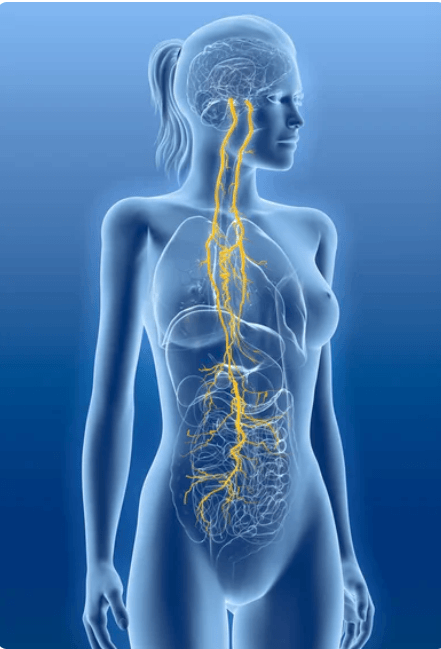
When a large singing bowl (or gong) produces low-frequency, sustained sound, it activates your vagus nerve—the primary nerve controlling your parasympathetic nervous system (your "rest and digest" mode). This activation sends a signal to your brain: "You're safe. You can relax."
In response, your body automatically:
- Slows heart rate
- Lowers blood pressure
- Decreases stress hormones
- Deepens breathing
- Shifts into relaxation
This is measurable neuroscience, not belief-dependent. A skeptic's heart rate will slow just as reliably as a believer's.
The research baseline:
Studies on sound baths consistently show:
- Significant anxiety reduction
- Better sleep quality
- Lower stress markers
- Decreased pain perception
- Improved emotional regulation
For a deeper dive into the nervous system science, see our comprehensive guide to nervous system regulation through sound and the vagal tone connection.
Important limitation: Sound baths are complementary wellness practice, not medical treatment. They support relaxation and stress reduction but don't cure disease or replace professional mental health care.
What to Expect at a Sound Bath Near You
First-time jitters are normal. Here's what actually happens, step by step.
Arriving and Setting Up
You'll arrive 10-15 minutes early. The space is usually dimly lit, quiet, and warm — often a yoga studio, meditation center, or wellness facility.
You'll remove your shoes, set down your belongings, and the facilitator will guide you to lie down on a yoga mat or cushioned floor. You'll have a blanket available (the space is kept warm; you'll want it). Some facilitators provide yoga bolsters for under your knees or neck — take them if offered. Comfort matters.
If you prefer not to lie flat, sitting against a wall is fine.
The room is still filling with other participants during this time. Most people keep to themselves, lying quietly.
What Happens During the Session
Once everyone is settled (usually 5-10 minutes after start time), the facilitator dims the lights further and begins.
The session typically unfolds like this:
Opening (first 5-10 minutes): The facilitator may strike a bowl once or twice, explain what will happen, and perhaps guide you to take a few deep breaths. Then they begin playing.
Main session (30-45 minutes): The facilitator plays multiple instruments in layers — singing bowls of different sizes, perhaps a gong, maybe chimes or tuning forks. The sound is continuous but evolving, complex but soothing. As bowls ring, the vibrations travel through the room and through your body. You're not supposed to do anything except listen and be present.
The facilitator is watching for anyone in distress. Most people relax deeply. Some fall asleep (this is fine). Some feel moved to tears (also fine — trauma or emotion can release in deep relaxation).
Closing (last 5-10 minutes): The playing gradually becomes sparser and quieter. The final strikes are soft and slow. The sound fades completely.
Integration (5-10 minutes): There's silence. The facilitator may ring a bell very softly and invite you to slowly return to awareness. They may guide you to take a few deep breaths and gradually sit up.
How You Might Feel Afterward
There's no "correct" way to feel after a sound bath. People experience:
Calm and peaceful (most common) — You feel deeply relaxed, clear-headed, grounded. This may last hours.
Groggy or spacey — You were in a deep state and it takes a few minutes to fully return to normal awareness. This is normal and temporary.
Emotional — You might feel moved to tears, or experience waves of emotion. Trauma or held emotion can release in deep relaxation. This isn't a sign something went wrong; it's often healing.
Energized or activated — Less common, but some people feel energized rather than calm. This is fine.
No obvious effect — You feel okay but nothing dramatic. This doesn't mean it didn't work; nervous system shifts are sometimes subtle.
All of these are normal. There's no "right" experience.
Common Instruments Used in Local Sound Bath Sessions
Most sound baths use a combination of instruments. You'll want to know what you're hearing.
Himalayan (Tibetan) Singing Bowls
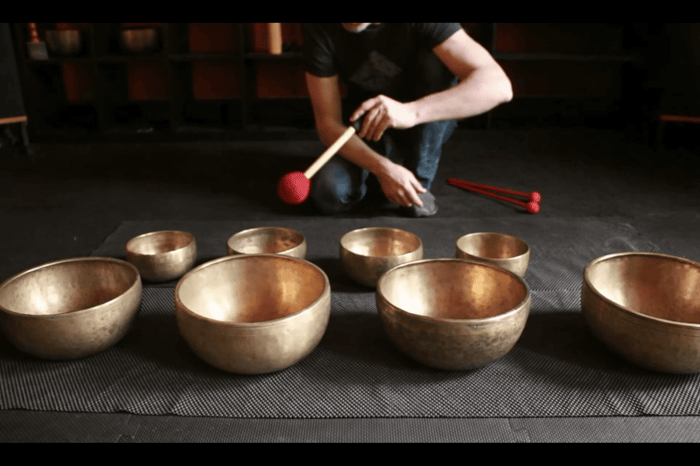
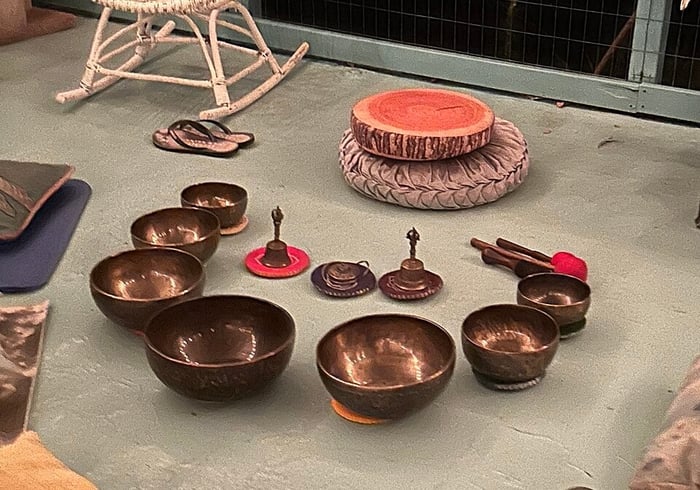
These bronze bowls, typically 5-14 inches in diameter, produce rich, complex tones when played with a mallet. They're the most common sound bath instrument.
What you'll experience: Deep, resonant tones that you feel in your chest and body. The sound changes as it rings — you might hear multiple pitches and layers.
Why they work: They produce the low-frequency, sustained tones that activate your vagus nerve most effectively.
Practical note: There's a lot of marketing mythology about Tibetan bowls (ancient origins, chakra tuning, etc.). Most of this is false. What matters is acoustic quality, not origin story.
Crystal Singing Bowls
Made from fused quartz (developed in the 1980s, not ancient), these bowls produce clear, bright, ethereal tones when rimmed with a mallet.
What you'll experience: Pure, singing tones that are higher-pitched than metal bowls. Some people find them more energizing; others prefer the warmth of metal bowls.
Why facilitators use them: They're visually striking, easier to play than metal bowls, and produce a different sonic character that can complement Himalayan bowls.
Practical note: Chakra-color associations (blue bowl for throat, etc.) are marketing. The bowls work regardless of color. For a detailed comparison, see our guide to crystal vs. metal singing bowls.
Gongs
Large, flat bronze discs that produce powerful, rich, complex sound. In a sound bath, a gong creates intensity and vibrational depth that's felt throughout the body.
What you'll experience: A wall of sound — immersive, sometimes intense. The gong's vibrations can feel physical in your chest and body.
Why facilitators use them: They create a profoundly immersive experience. Some people find them transformative; others find them overwhelming.
First-timer note: If you've never experienced a live gong, it's more intense than a recording. You might feel startled at first. This is normal. The intensity usually becomes deeply relaxing.
Other Instruments You May Encounter
- Tuning forks: Small metal instruments that vibrate at specific frequencies. Often used for targeted work.
- Chimes: Higher-pitched, bright sounds that add shimmer and definition.
- Shruti box: An Indian instrument that provides a droning baseline under other sounds.
- Drums or frame drums: Percussion that adds rhythm and grounding.
A skilled facilitator layers these to create a cohesive soundscape.
Types of Sound Bath Experiences Available Near You
Not all sound baths are the same. Here are the main formats:
Group Sound Baths
The most common format. 10-30 people lie down together in a yoga studio or wellness center while a facilitator plays.
Pros:
- Affordable ($25-60 typically)
- Regular class schedules (easy to fit in)
- Community experience (group energy can enhance results)
- Easy entry point
Cons:
- Less personalized
- No customization for individual needs
- Shared space (may feel less intimate)
Private Sound Baths
One-on-one sessions where a facilitator creates a personalized experience for you.
Pros:
- Highly customized
- Can address specific concerns
- Intimate, private space
- More attention from facilitator
Cons:
- More expensive ($100-300+ per session)
- Requires scheduling
- No group energy
Floating Sound Baths
A niche experience combining sensory deprivation (floating in salt water) with sound. You float in a sealed tank with warm salt water while sound plays through speakers.
Pros:
- Unique sensory experience
- Combines relaxation modalities
- Very immersive
Cons:
- Expensive ($100-200)
- Less available locally
- Not for everyone (some people dislike enclosed spaces)
What to Bring to a Sound Bath
Being prepared reduces anxiety and increases comfort.
What to Wear
Wear comfortable, layered clothing you don't mind lying in for an hour:
- Soft pants or leggings
- T-shirt or comfortable top
- Layers you can remove (you might get warm under blankets)
- Avoid tight waistbands, restrictive fabrics, heavy jewelry
The space is kept warm; you'll want comfort but not bulk.
What to Bring for Comfort
- Yoga mat: If the venue doesn't provide one
- Blanket: Definitely bring one if you run cold (most venues provide, but having your own is better)
- Eye mask: Light can distract; many facilitators provide, but personal one is fine
- Water bottle: For after the session
- Pillow or bolster: For under knees or neck if needed
What to Leave at Home
- Phone: Leave it off and away. Sound baths require presence.
- Strong perfume: Respect shared air space
- Jewelry that jingles: Remove before lying down
- Heavy meal: Eat lightly beforehand; full stomach + lying down = uncomfortable
- Expectations: Come open, not demanding a specific experience
How to Find a Qualified Sound Bath Practitioner Near You
Quality varies dramatically. Finding a skilled, trained facilitator matters.
Where to Search for Local Sound Bath Sessions
Google Search: "Sound baths near me" or "Sound bath [your city]"
Wellness directories:
- Mindbody (yoga studios, wellness centers)
- Eventbrite
- Local yoga studio websites
Specialty sites:
- Meetup.com (sometimes has sound bath groups)
- Local meditation center websites
Referrals: Ask yoga teachers, therapists, or friends — personal recommendations are gold
Tip: When searching, filter by:
- Consistent schedule (not one-off)
- Clear description of what happens
- Facilitator bio/credentials visible
- Reviews or testimonials
What Qualifications Should a Sound Healer Have?
Essential:
- Formal training in sound healing (not just self-taught)
- Minimum 100+ hours of training (legitimate certification programs require this)
- Understanding of contraindications (who shouldn't participate)
- Liability insurance
Ideal:
- Accreditation with recognized body (IICT, ISTA, Yoga Alliance, CMA)
- Training in trauma-informed facilitation
- Background in related field (yoga, therapy, nursing, etc.)
- Ongoing education
Red flags:
- No training mentioned
- Vague credentials ("trained by a monk")
- Unverified frequency claims ("432 Hz heals DNA")
- Hard-selling instruments or supplements
- No insurance or emergency protocols
Questions to Ask Before Booking
Before your first session, ask:
- What's your training background? (Want to hear about formal certification)
- What does a typical session include? (Clarity on structure)
- How many people attend? (Some people prefer smaller groups)
- What should I bring/wear? (Practical prep)
- Are there any contraindications I should know about? (Safety)
- What if something doesn't feel right during the session? (You can always leave; want to know facilitator is okay with this)
Red Flags to Watch Out For
- Practitioner claims sound baths "cure" diseases
- Emphasis on mystical language (energy, chakras, ancient wisdom)
- Expensive upselling of instruments or supplements
- No clear answer about qualifications or training
- Resistance to your questions or boundaries
- Vague session descriptions
Trust your instinct. If something feels off, keep looking.
Is Sound Bath Therapy Right for You?
Not everyone needs or wants a sound bath. This section helps you decide.
Who Can Benefit from a Sound Bath?
Sound baths are particularly useful for:
- Stress and anxiety: Regular practice measurably reduces anxiety and stress response
- Sleep issues: Sound baths improve sleep quality (people usually sleep better the night of/after)
- Yoga and meditation practitioners: Sound provides a focal point for deep practice
- General wellness: Everyone benefits from nervous system regulation
- Recovery from trauma: When practiced with trauma-informed facilitation (not instead of professional treatment)
- Chronic tension: Physical relaxation often releases held tension
- Anyone wanting to try something new: There's no downside to one session
Are There Any Contraindications?
Sound baths are safe for most people but inappropriate for some:
Avoid or consult your healthcare provider first if you have:
- Epilepsy (sound-sensitive): Check with your neurologist; most people are fine, but some with auditory-sensitive epilepsy should be cautious
- Severe inner ear conditions: Immersive sound may worsen symptoms
- Untreated PTSD or acute trauma: Sound can trigger dysregulation without professional support alongside
- Active psychiatric crisis: Stabilize first; add sound baths after
- Pregnancy (first trimester): Avoid intense vibrations; wait until second/third trimester
- Pacemaker or electronic implants: Check with cardiologist about vibration compatibility
None of these are absolute "no's" — they just mean: get professional guidance first.
If you have questions about whether a sound bath is safe for your situation, ask the practitioner before booking.
Want to Become a Sound Bath Practitioner Yourself?
If you've experienced sound baths and want to facilitate them professionally, formal training is essential. This isn't a weekend certification kind of field.
What Proper Sound Bath Training Looks Like
Quality sound bath training covers:
- Nervous system science: Understanding vagal tone, parasympathetic activation, and how sound creates physiological shifts (not mystical ones)
- Psychoacoustics: The science of how sound affects human perception and consciousness
- Instrument mastery: Deep knowledge of bowls, gongs, tuning forks — their acoustic properties and how to play them skillfully
- Contraindications and safety: Who shouldn't attend; how to respond if someone becomes triggered
- Trauma-informed facilitation: How to create safe space for people with trauma histories
- Professional practice: Insurance, liability, scope of practice, ethics
- Supervised practice: Facilitating under mentor feedback before going independent
Minimum hours: 100-200 for basic certification; 300+ for teaching others
Red flag: Anyone offering "sound bath certification" in a weekend or online. Facilitation skill requires practice and feedback.
Professional Training Through Sound Medicine Academy
If you're serious about this work, proper training makes all the difference.
Sound Medicine Academy offers two certification paths:
100-Hour Sound Bath Certification — For those wanting to facilitate sound baths professionally:
- Complete nervous system science curriculum
- Trauma-informed facilitation training
- Instrument mastery and technique
- Professional practice and business skills
- Mentored practice sessions
- Accreditation and insurance pathways
200-Hour Teacher Certification — For those wanting to teach other facilitators:
- Everything in the 100-hour program
- Advanced psychoacoustics and neuroscience
- Curriculum development
- Teaching methodology
- Training the next generation
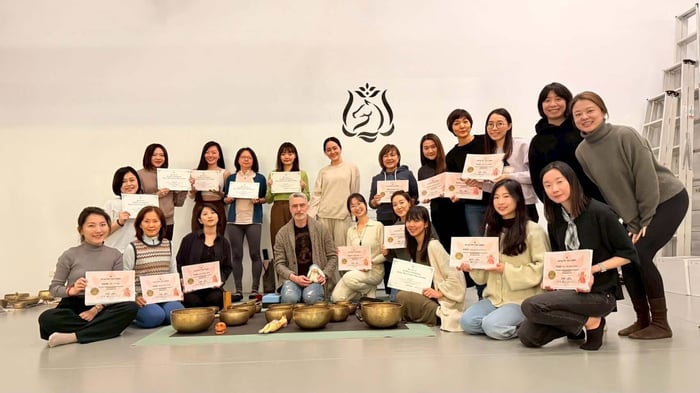
Our 300+ graduates in 16 countries are facilitating sound with integrity grounded in science, not mythology.
Ready to Experience a Sound Bath?
Use the guidance above to find a qualified local practitioner, prepare yourself, and show up with an open mind and reasonable expectations.
Sound baths work. They're evidence-based, safe for most people, and genuinely support nervous system health and relaxation. You don't need to believe in them — your nervous system will respond regardless.
Next steps:
- Search for local sound baths using the methods above
- Ask the questions we outlined
- Check the facilitator's credentials
- Book and show up
- Notice what happens
For deeper dives into any topic covered here, explore our related articles on the Sound Medicine Academy blog.
And if you find yourself drawn to facilitation, remember: proper training exists. Seek it out.
Learn More
For practitioner training and accreditation, see our programs at Sound Medicine Academy.
FAQs
What Is a Sound Bath?
A sound bath is an immersive meditation experience where you lie down or sit comfortably while a trained facilitator plays singing bowls, gongs, chimes, or other instruments around you for 30-60 minutes. You're not doing anything active — you're simply listening and letting your nervous system relax.
The name comes from the metaphor of being bathed in sound. Like a water bath that surrounds your body, a sound bath surrounds you with layers of sound and vibration.
You arrive, remove your shoes, lie down on a yoga mat with a blanket, and the room dims. The facilitator begins playing instruments — often starting with large Himalayan singing bowls that produce deep, resonant tones. More instruments layer in: smaller bowls, perhaps a gong, chimes. The sound is continuous but evolving, complex but soothing.
You lie there for 45-60 minutes, listening. Your mind quiets. Your nervous system relaxes. Your heartbeat slows. You might sleep, meditate, feel emotions, or simply rest deeply. Then it ends. Silence. Slow return to awareness. You sit up gradually, feeling calm and grounded.
People experience sound baths for stress relief, anxiety reduction, better sleep, emotional processing, meditation support, or general wellness. Research shows measurable nervous system benefits: lower anxiety, improved sleep, decreased stress hormones.
What it's NOT: A concert (no performance), Therapy (though it's therapeutic), Spiritual or religious (though people may experience spiritual feelings), Entertainment (it's participatory relaxation).
Where to Find Sound Baths Near Me
Sound baths are increasingly available in most major cities and many smaller towns. Here's how to find one near you.
1. Google Search — Simply search "sound baths near me" or "sound bath [your city]." Google Maps will populate results. Filter by 4+ stars, reviews mentioning facilitator skill, and consistent schedules.
2. Mindbody App/Website — The largest booking platform for wellness services. Nearly every yoga studio is listed. Search by service type, location, schedule, and price.
3. Local Yoga Studios — Call or visit nearby. Most offer sound baths as regular classes or special events. Ask about schedule, facilitator credentials, price, and what to bring.
4. Wellness Centers and Spas — Search "[your city] wellness center" and call to ask if they offer sound baths.
5. Eventbrite — Search "sound bath [your city]" for one-off events and workshops.
6. Direct Practitioner Searches — Many facilitators maintain websites or Instagram. Search "[your city] sound healer" or "[your city] sound bath practitioner."
7. Referrals — Ask yoga teachers, therapists, or friends. Personal recommendations are often best.
Red Flags During Search: Vague descriptions, no facilitator credentials, unverified frequency claims, missing pricing, no reviews or fake reviews, heavy upselling of bowls/crystals.
Vetting Process: Read reviews mentioning facilitator skill and safety, check their training (100-200+ hours minimum), call to ask training background and contraindications, start with one trial class ($25-60).
How Much Do Sound Baths Cost?
Group Sound Baths:
- Budget: $25-60 per session
- Typical: $35-50
- NYC/major cities: $50-75
- Class packages: 5-packs or monthly unlimited (20-30% savings)
Private Sound Baths:
- Budget: $125-500 per session
- Typical: $150-400
- Premium facilitators: $500-800+
Floating Sound Baths:
- Cost: $100-200 per session
Special Events:
- One-off workshops: $50-150
- Intensive retreats: $300-1,000+ (multi-hour or full-day)
Factors That Affect Price: Location (NYC/LA cost more), facilitator experience, group size, venue quality, duration, inclusions (meditation instruction, journaling, tea).
Value Considerations: Group classes ($35-50) are best value for frequent practice; private sessions are higher price but customizable; packages reduce per-session cost; some studios offer intro discounts.
Budget-Friendly Options: Start with group classes, look for intro discounts, buy packages, try free community events, consider online alternatives.
Don't Skimp On: Quality facilitators matter more than cheap pricing. A $50 session with a skilled facilitator beats a $25 session with someone under-trained.
What Should I Wear to a Sound Bath?
Ideal Clothing:
- Soft pants or leggings (not jeans)
- Comfortable t-shirt or top
- Layers you can remove
- Socks (floors are cold)
- Avoid tight waistbands and restrictive jewelry
Sound bath spaces are kept warm because you'll be lying still and will cool down. You don't need heavy clothing, but you'll want a blanket (provided, but bring your own if you prefer).
What NOT to Wear:
- Jeans (too restrictive)
- Tight waistbands
- Heavy jewelry that jingles (remove before lying down)
- Strong perfume (respect shared air space)
- Anything you mind getting wrinkled
Most people remove shoes before entering. Some facilitators ask you to remove socks in the session space for cleanliness; others don't care.
Can Sound Baths Help With Anxiety?
Yes. Sound baths can support anxiety management through measurable nervous system effects. However, they're complementary to professional mental health treatment, not a replacement.
How Sound Baths Help Anxiety:
Acute relief: During and immediately after, anxiety decreases measurably. Heart rate slows, stress hormones drop, nervous system shifts into relaxation.
Anxiety symptom reduction: Regular practice reduces baseline anxiety levels. You become less reactive, less triggered, better able to regulate emotion.
Sleep improvement: Anxiety often disrupts sleep. Sound baths improve sleep quality, which reduces next-day anxiety.
Nervous system training: Consistent practice teaches your nervous system to shift into relaxation more easily, building resilience.
Research backing: Studies show significant anxiety reduction following sound bath sessions. Regular practice (1-2x weekly) produces measurable improvements in baseline anxiety, stress response, and sleep.
What sound baths won't do: Replace professional mental health treatment for clinical anxiety disorders. For Generalized Anxiety Disorder, Social Anxiety Disorder, or severe anxiety, professional therapy and/or medication remain essential.
Best approach: Use sound baths alongside therapy, not instead of it. Talk to your therapist about incorporating sound baths into your wellness plan.
What to Expect at Your First Sound Bath?
Arrival (10-15 minutes before): You remove shoes, set down belongings, find a spot on the floor. A yoga mat is provided. You lie down under a blanket. The room is dimly lit, warm, quiet. Other people are doing the same around you.
Opening (first 5-10 minutes): Everyone settles. The facilitator may welcome you, explain what will happen, suggest a few deep breaths. Then the first sound begins.
Main experience (30-45 minutes): The facilitator plays instruments — singing bowls, perhaps a gong, maybe chimes. The sound fills the room. You feel vibrations in your body. Your mind quiets. Time becomes fuzzy. Some people sleep. Most just rest deeply.
Closing (last 5-10 minutes): The sounds become quieter and sparser. The final notes fade. Silence.
Integration (5-10 minutes): The facilitator may ring a soft bell and invite you to slowly return to awareness. There's no rush to get up. Many people lie quietly for a few more minutes.
After: You sit up slowly, take a few minutes to orient, and gradually return to normal activity. Most people feel deeply relaxed.
Common experiences: Most common is profound relaxation, calm, peace, clear mind, grounded feeling. Also common: slight grogginess, emotional release (tears are fine), tingling sensations, drowsiness that leads to great sleep. All of this is normal.
Red Flag Feelings (that aren't serious): Startled by intensity of gong (normal), aware of other people (normal; passes), restlessness in mind (normal; still beneficial).
If something feels genuinely wrong: You can leave anytime. Quietly. Facilitators understand.
How Often Should You Do Sound Baths?
For relaxation/one-time wellness: Once is fine. You'll feel acute relaxation benefit immediately.
For anxiety management: 1-2x weekly for 4-8 weeks to see measurable improvements in baseline anxiety.
For sleep improvement: 1-2x weekly. Most people notice better sleep after first session; consistent practice maintains it.
For nervous system training: 2-3x weekly is most effective for building lasting changes.
For maintenance (after establishing benefits): 1-2x weekly maintains gains.
Practical scheduling:
- Budget option: 1x weekly group class ($25-50) shows benefits within 4-8 weeks
- Optimal option: 2x weekly group + occasional private sessions
- Intensive option: 2-3x weekly deepens and accelerates benefits
Timeline to results:
- Acute (during session): Immediate relaxation
- Short-term (1-2 weeks): Better sleep, reduced anxiety
- Medium-term (4-8 weeks): Significant nervous system shift, baseline improvements
- Long-term (3+ months): Sustained new baseline of calm and resilience
Diminishing returns: Beyond 3x weekly, additional sessions provide minimal additional benefit. Consistency matters more than frequency.
Combining with other practices: Sound baths work synergistically with yoga, breathwork, meditation, and therapy. If you're also practicing these, fewer sound baths are needed.
Do Sound Baths Actually Work?
Yes. Sound baths produce measurable physiological effects through your nervous system, not through belief or placebo.
What Research Shows: Studies consistently find heart rate decreases (measurable within minutes), blood pressure drops (within 15-30 minutes), stress hormones decrease (cortisol drops), anxiety decreases significantly, sleep quality improves, nervous system flexibility increases. These are objective, measurable changes — not subjective feelings.
The Mechanism: Low-frequency sound (50-200 Hz) from singing bowls and gongs activates your vagus nerve. This nerve controls your parasympathetic nervous system — your "rest and digest" state. Activation produces automatic heart rate slowing, automatic blood pressure reduction, automatic stress hormone decrease, automatic nervous system downregulation. This is hardwired biology, not belief-dependent.
Proof of Effect: Real sound baths produce greater effects than placebos. Skeptics' heart rates slow just as much as believers'. People who aren't "into" sound baths still experience measurable benefits.
What Doesn't Work: Specific frequency claims ("432 Hz heals DNA") — not supported. Chakra tuning or energy alignment — not how sound works physiologically.
What's the Difference Between a Sound Bath and a Gong Bath?
Sound bath and gong bath are related but not identical terms.
Sound Bath: Generic term for any immersive sound meditation using any combination of instruments (singing bowls, gongs, chimes, tuning forks, etc.).
Gong Bath: Specific type of sound bath featuring primarily or exclusively the gong as the main instrument.
Practical difference: Most "sound baths" use singing bowls as primary instrument with other instruments as accompaniment. "Gong baths" emphasize the gong for its intense, transformative power.
Experience difference:
- Sound bath (singing bowls primary): Gentle, accessible, complex layering, meditative
- Gong bath: Intense, immersive, more dramatic, potentially more transformative
For first-timers: Start with a singing bowl sound bath. It's more accessible. If you find that transformative, try a gong bath for more intensity.
Are Sound Baths Safe?
Sound baths are safe for most people but have contraindications for some.
Generally safe for: Healthy adults, people with anxiety, people with stress, people with sleep issues, most yoga and meditation practitioners.
Caution needed for:
- Epilepsy (sound-sensitive): Consult your neurologist; most people are fine, but some with auditory-sensitive epilepsy should be careful
- Inner ear conditions: Immersive sound may worsen symptoms
- Untreated PTSD: Sound can trigger dysregulation without professional support alongside
- Active psychiatric crisis: Stabilize first; add sound baths after
- Pregnancy (first trimester): Avoid intense vibrations; wait until second/third trimester
- Pacemakers: Check with your cardiologist about vibration compatibility
- Unmanaged hearing sensitivities: High-intensity sound can overwhelm
None of these are absolute "no's." They just mean: consult your healthcare provider first.
Safe practices: Quality facilitators screen for contraindications. They ask about health history. They know when to refer you elsewhere.