By Guy Beider, founder of Sound Medicine Academy. Reviewed November 2026.
Sound healing is the deliberate use of sound and vibration (voice, singing bowls, gongs, drums, tuning forks, or recorded audio) to shift a person's nervous system, attention, and emotional state toward rest and regulation. It works through hearing, breathing, rhythm, felt vibration, and meaning. Research supports it for relaxation, anxiety, and mood. It does not cure disease, and no single "healing frequency" has been shown to repair the body.
That is the short answer. The long one goes back 2,500 years and runs through acoustics, psychology, neuroscience, and philosophy. This guide covers all of it: what sound healing is, where it came from, how it works in the body, what the studies show and don't show, who should be careful, and how to try it yourself tonight.
What's in this guide
- What sound healing is (and what it isn't)
- A short history of healing with sound
- How sound healing works: six mechanisms that hold up
- Why some sounds calm us and others don't
- What the research actually shows
- The frequency question: 432 Hz, Solfeggio, and "DNA repair"
- Benefits of sound healing
- What happens in a sound healing session
- The instruments and what each one does acoustically
- Who should not do sound healing
- The philosophy of listening
- Try it yourself: a 10-minute practice
- Frequently asked questions
- References
What sound healing is (and what it isn't)
Sound healing is an umbrella term. It covers a group sound bath in a yoga studio, a one-to-one session with bowls placed on the body, a choir humming together, a drum circle, and a person chanting alone in the car. What these share is intent: sound is being used on purpose to change how someone feels, not only to entertain them.
The term gets confused with several neighboring practices. They overlap, but they are not the same thing, and the differences matter when you are deciding what to try or what to study. (For a deeper comparison, see sound healing vs. music therapy.)
| Practice | What it is | Who delivers it |
|---|---|---|
| Sound healing | Broad wellness practice using sound and vibration for relaxation, emotional regulation, and contemplative experience | Sound practitioners, facilitators, yoga and meditation teachers |
| Sound bath | One format of sound healing: participants lie still while a facilitator plays sustained, resonant instruments | Sound practitioners |
| Music therapy | A clinical, evidence-based health profession with defined treatment goals, assessment, and a therapeutic relationship | Board-certified music therapists |
| Vibroacoustic therapy | Low-frequency sound (roughly 20 to 120 Hz) delivered through a bed or chair so it is felt in the body, combined with music listening | Therapists trained in vibroacoustic methods |
| Sound therapy (audiology) | Use of sound generators or noise to manage tinnitus and sound sensitivity | Audiologists |
A useful distinction from the research world: music therapy is built on the relationship between a therapist and a client, while music medicine treats the sound itself as the active ingredient. Most sound healing sits closer to music medicine, with the facilitator's skill in shaping the soundscape and holding the room doing the work a therapist's relationship would do in a clinic.
What sound healing is not: a replacement for medical diagnosis or treatment. A good practitioner will tell you this before you lie down. A practitioner who promises to dissolve a tumor or rebalance your DNA is telling you something about their training, not about sound.
A short history of healing with sound
The idea that sound can restore balance to a person is old. The specific practices sold as "ancient" today are often not. Both things are true, and a serious practitioner should know the difference.
Pythagoras and the numbers inside music
Around 500 BCE, the Pythagoreans noticed that the intervals we hear as most stable (the octave, fifth, and fourth) come from simple ratios of string length: 2:1, 3:2, 4:3. From this they built a whole cosmology, the idea that the universe itself is ordered by the same proportions. Later biographers described Pythagoras using music as medicine. Porphyry wrote that he healed psychic and bodily sufferings with rhythm, songs, and incantations, and that he played specific melodies in the evening to settle his students into sleep. The Pythagoreans spoke of purifying the body through medicine and the soul through music.
Plato and Aristotle: music shapes character
Greek philosophers treated musical modes as having ethical force. In the Republic, Plato argues over which modes belong in the education of citizens. In Politics Book VIII, Aristotle writes that melodies and rhythms have an affinity with the soul, prefers the Dorian mode as the steady middle path, and describes the Phrygian as exciting and emotional. He also gives music a role in catharsis: people overwhelmed by pity or fear find release through music, and come out of it calmer. That is close to how many people describe a good sound bath.
Boethius and the three kinds of music
In the early sixth century, the Roman philosopher Boethius wrote De institutione musica, a textbook copied and taught for a thousand years. He divided music into three kinds: musica mundana, the order of the cosmos; musica humana, the harmony between body and soul; and musica instrumentalis, the music we actually hear. Every sound healer who talks about "bringing the body back into harmony" is, knowingly or not, speaking Boethius's language.
David's harp and the Ottoman healing houses
The Hebrew Bible tells how David played the harp for King Saul, and Saul "was refreshed, and was well" (1 Samuel 16:23). Ottoman medicine went further and built music into hospital care. The Edirne hospital founded by Sultan Bayezid II in 1488 employed musicians for patients, and its physicians matched particular makams (melodic modes) to particular conditions, drawing on the medical theories of al-Farabi and Avicenna. The building is now a health museum, with a section devoted to the hospital's music therapy.
Kepler, Helmholtz, and the turn to science
In 1619 Johannes Kepler published Harmonices Mundi, trying to show that planetary orbits follow musical ratios. Two centuries later Hermann von Helmholtz did something more useful: in On the Sensations of Tone (1863) he explained consonance and dissonance through the physics of the ear, showing that the "roughness" of a dissonant interval comes from beating between overtones. That book is where the science of sound healing really starts.
The modern revival, and an honest note about singing bowls
Sound healing as most people know it today, with bowls, gongs, and the word "vibrational," took shape in the West from the 1970s onward. The Himalayan metal bowls at its center are a good case for honesty. Bowls that could "sing" began to be imported to the West in the early 1970s, and the historical records of Tibetan music are silent about them being played that way. The bowls are real objects, many of them old and beautifully made. The story that Tibetan monks used them for healing for thousands of years is marketing. We wrote about this in more depth at Bells of Bliss: Tibetan singing bowls: separating history from marketing myth.
This matters because the bowls don't need the myth. Their sound works on the nervous system the same way whether they are 5 years old or 150. What changed in the last decade is that mainstream science started paying attention. In 2017 the U.S. National Institutes of Health and the Kennedy Center launched the Sound Health initiative to fund research on music and the brain, and NIH has since committed $20 million to it.
How sound healing works: six mechanisms that hold up
"Vibration heals the cells" is the explanation you'll hear most. It is also the weakest. The mechanisms below are the ones with real physiology behind them. A good session uses several at once, which is why it can feel so much stronger than playing a relaxation track in the background.
1. Hearing is a threat detector, and predictable sound tells it to stand down
Your ears never close. Even in sleep, the auditory system is scanning for danger. A sudden loud sound triggers the acoustic startle reflex, a fast circuit that runs from the cochlea to the brainstem and straight to the muscles, before you consciously know what you heard. It is thought to be set off by sounds above about 80 dB.
The flip side is what sound healing uses. Sustained tones with soft attacks, slow changes, and no sudden peaks give the brain nothing to defend against. Vigilance drops. This is why the way a bowl is struck matters more than which bowl it is: a hard strike close to someone's head is a small startle; a gentle strike that blooms slowly is an invitation to let go. In a 2023 randomized trial, one session of singing bowls reduced the brain's alpha activity, which the authors read as a drop in "environmental hyperalertness," the background scanning that anxious people rarely switch off.
2. Rhythm entrains the body
The body follows rhythm. In a study published in Heart, Luciano Bernardi's team found that faster music raised heart rate, blood pressure, and breathing rate, while slower music calmed them. The most striking result came from the silence: a pause in the music reduced heart rate, blood pressure, and breathing even below baseline. A follow-up study showed that the cardiovascular system tracks musical crescendos and decrescendos as they happen.
The strongest clinical proof of rhythmic entrainment comes from neurology. In Michael Thaut's work with Parkinson's patients, three weeks of walking to a rhythmic beat improved gait speed by 25%, compared with 7% for patients who trained at their own pace. Rhythm reaches the motor system directly.
For a sound practitioner, the lesson is practical: tempo, density, and silence are the controls. A session that slowly lengthens the space between strikes is guiding the nervous system down, one breath at a time.
3. Voice slows the breath, and slow breath changes the heart
Bernardi made another discovery in 2001. Reciting the rosary in Latin, or a yoga mantra, slowed breathing to about six breaths per minute, and at that pace the heart's natural rhythms grew stronger and more synchronized. Baroreflex sensitivity, a marker of how well the body regulates blood pressure, rose significantly. The authors concluded that rhythm formulas involving six breaths per minute have favorable psychological and possibly physiological effects.
Chanting, toning, and humming all force a long, controlled exhale. That is a large part of why they calm people, and why they were built into prayer traditions long before anyone measured heart rate variability. More on this in our guide to vagal tone and nervous system regulation.
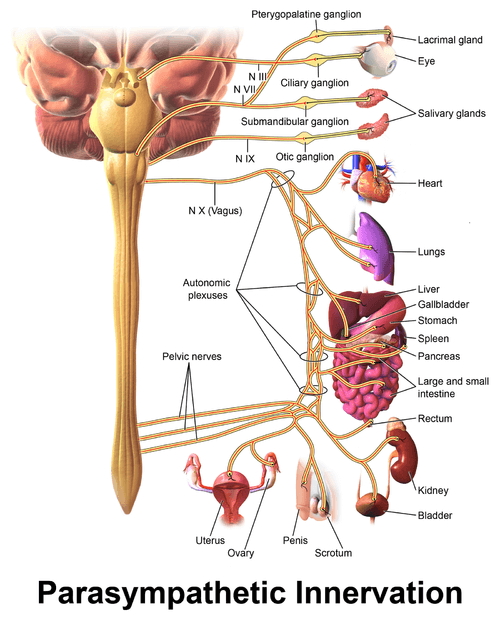
Humming has one more measured effect. In a 2002 study at the Karolinska Institute, nasal nitric oxide increased 15-fold during humming compared with quiet exhalation, because the vibration ventilates the sinuses. Be careful with what follows from that: it shows that humming moves air in the sinuses, not that humming cures anything.
4. Sound reaches the brain's reward system
In 2011, researchers at McGill used brain imaging to show that intensely pleasurable music releases dopamine in the striatum, the same reward circuitry involved in food and other pleasures. The caudate was more active during anticipation, the nucleus accumbens at the peak moment. Music psychologist David Huron explains much of this through expectation: the brain constantly predicts what comes next, and the tension and release of those predictions produces emotion.
This is where facilitation becomes an art. A sound journey that builds slowly, delays resolution, and then arrives somewhere consonant is working with the brain's prediction machinery, not just making pleasant noise.
5. You feel sound, not only hear it
Low frequencies are felt in the chest, the floor, and the bones. Vibroacoustic therapy, a recognized receptive method in music therapy, combines sound vibration between 20 and 120 Hz with music listening and a therapeutic relationship. Studies have explored it for pain, spasticity, and dementia care, although reviewers describe the evidence as early.
Large gongs, frame drums, and big bowls placed on or near the body work in this range. The sensation is a strong anchor for attention. Many people who can't quiet their thoughts in silent meditation find they can follow a vibration through the body.
6. Attention, meaning, and the room
The last mechanism is psychological, and it is not a weakness to admit it. When you lie down in a quiet room, turn off your phone, and let someone else hold the space for an hour, you have already changed your state before the first sound. Expectation, safety, ritual, and the presence of other people all shape the result. Researchers usually call this "context" or "placebo" and try to remove it. Practitioners should do the opposite: design it deliberately and honestly. A trustworthy facilitator, a safe room, and a clear structure are part of the medicine.
Why some sounds calm us and others don't
Psychoacoustics is the study of how we perceive sound, and it explains something every practitioner learns by ear: two bowls that sound lovely alone can sound harsh together.
When two tones are very close in pitch, their waves drift in and out of phase and you hear a slow pulsing called beating. A few beats per second can feel gentle and alive. When the tones are a bit further apart, the beating gets so fast it turns into roughness, a buzzy, grating quality. In 1965, Reinier Plomp and Willem Levelt measured this and found that tones become consonant once their frequency difference reaches the ear's critical bandwidth, with the least consonance at about one quarter of it. The critical band is, roughly, the stretch of the inner ear's basilar membrane that a single tone excites.
Real instruments are not single tones. A singing bowl produces several partials that are not whole-number multiples of the fundamental, and each partial can rub against the partials of another bowl. This is why a carefully matched set sounds open and spacious, and a random pile of bowls can leave a room tense without anyone knowing why. It is also why "tuned to a chakra note" tells you almost nothing about how a set will actually sound together. If you want the physics behind this, read harmonics, overtones, and timbre.
A few other principles a sound healer uses, whether they name them or not:
- Loudness is not linear. The decibel scale is logarithmic, and perceived loudness depends on frequency. A gong that seems moderate in the low register can still deliver a lot of energy.
- Masking. A loud sound hides quieter sounds near its frequency. Layering too many instruments erases detail and gives the listener's attention nothing to follow.
- Attack and decay. The shape of a sound's beginning matters more to the startle system than its pitch. Soft attacks and long decays read as safe.
- Space and reverberation. The room is an instrument. Hard walls stretch decays and blur rhythm; soft furnishings shorten them.
What the research actually shows
Here is the evidence as plainly as I can put it. Some is strong, much is early, and some popular claims have none at all.
Studies on singing bowls and sound baths
The most cited study is a 2017 paper by Tamara Goldsby and colleagues at UC San Diego. Sixty-two adults attended a singing bowl sound meditation. Afterward they reported significantly less tension, anger, fatigue, and depressed mood, and people new to the practice saw the biggest drop in tension. It is a useful study, but it had no control group, so it can't separate the bowls from simply lying down for an hour. (We go study by study in sound bowls healing: what the science actually says.)
A 2023 randomized controlled trial did compare. Fifty adults with high anxiety were assigned to one 50-minute session of Tibetan singing bowls, progressive muscle relaxation, or a waiting list. The singing bowl group showed the largest drop in anxiety, the only group to fall below the clinical cut-off, and the strongest increase in parasympathetic heart rate variability. The authors note honestly that the trial was small and couldn't separate the effect of the specific tones from the session itself.
The most complete picture is a 2025 systematic review in Integrative Medicine Research. It found 19 clinical studies from eight countries, nine of them randomized trials. Single trials showed reductions in depression and anxiety in groups such as hospitalized older adults, people with Parkinson's disease, and surgical patients. But blood pressure did not change significantly compared with placebo, and heart rate variability improved compared with a waiting list but not compared with muscle relaxation. The risk of bias in the trials was rated high, and the studies were too different to pool. No adverse events were reported. The authors concluded that singing bowl therapy appears safe and potentially beneficial, but needs higher quality research.
The broader evidence on music and sound
The strongest evidence comes from the wider field of music and health, which has far more trials:
- A 2015 Lancet meta-analysis of studies including nearly 7,000 surgical patients found that music reduced postoperative pain, anxiety, and painkiller use. It worked even under general anesthesia, and the choice of music made little difference.
- A 2018 meta-analysis of 92 randomized trials (7,385 patients) found music interventions reduced anxiety by the equivalent of 21 mm and pain by 10 mm on a 100 mm scale.
- A 2017 Cochrane review found moderate-quality evidence that music therapy added to usual care reduces depressive symptoms in the short term compared with usual care alone.
- For binaural beats, a 2019 meta-analysis of 22 studies found a medium overall effect on anxiety, memory, attention, and pain perception. Newer trials have been mixed, and some found no effect at all. See binaural beats, monaural beats, and isochronic tones.
Where that leaves us
| Claim | Evidence |
|---|---|
| Sound and music reduce anxiety and stress | Strong across music research; consistent but early for singing bowls specifically |
| Sound healing improves mood and feelings of well-being | Moderate; mostly short-term and self-reported |
| Music reduces perceived pain as an add-on to care | Strong for music around surgery; limited for sound baths |
| Rhythm improves movement in neurological conditions | Strong for rhythmic auditory stimulation in Parkinson's and stroke |
| Sound baths lower blood pressure | Inconsistent; no significant effect versus placebo in the 2025 review |
| Specific frequencies heal specific organs or repair DNA | No evidence |
The honest summary: sound healing is a low-risk way to bring the nervous system toward rest, with real effects on anxiety and mood. The mechanism is the listener's whole nervous system responding to sound, rhythm, breath, and setting. It is not a magic number.
The frequency question: 432 Hz, Solfeggio, and "DNA repair"
"Sound healing frequencies" is one of the most searched phrases in this field, so it deserves a direct answer.
Solfeggio frequencies (396, 417, 528, 639, 741, 852 Hz) are often sold as an ancient scale used in Gregorian chant. They aren't. They were derived in the mid-1970s by Joseph Puleo through numerology applied to Bible verses, and popularized later by Leonard Horowitz. Gregorian chant was not sung at fixed frequencies at all; there was no pitch standard in the Middle Ages. Fact-checkers have found no evidence that these frequencies have any effect on the body. The claim that 528 Hz repairs DNA has no research behind it. Our full breakdown: Solfeggio frequencies: the claims vs. the science.
432 Hz is a tuning standard, a slightly lower reference for the note A. It has one small, interesting study: a double-blind crossover trial in which the same music tuned to 432 Hz was associated with a slightly lower heart rate than at 440 Hz. One study with a small sample is a starting point, not proof. And if a recording is lowered simply by slowing it down, it also plays about 2% slower, which on its own could calm the body.
"Every organ has its own frequency" sounds scientific but doesn't hold up. Organs are not tuned resonators, and audible sound in air transfers very little energy into the body's tissues. The vibration you feel from a bowl on your chest is real, and it is felt mainly through touch receptors in the skin and tissues, not through an organ "resonating."
Here is what does matter, all of which practitioners can learn and control: tempo, volume, consonance, the shape of each sound's attack, the density of layers, how silence is used, and the safety of the room. A gentle, well-paced session at any frequency will do more than a harsh one tuned to a "sacred" number.
Benefits of sound healing
Based on the evidence above, these are the benefits you can reasonably expect, along with what each looks like in real life. For a closer look at the physical side, see the top benefits of sound healing for the body.
Faster access to deep rest. Many people who find silent meditation frustrating drop into stillness within minutes of a sound bath beginning. Sound gives a busy mind something to follow. Falling asleep in a first session is common, and it is not a failure: it usually means the body was more tired than the mind admitted.
Lower anxiety and stress. This is the most consistent finding across studies, and the reason hospitals, schools, and workplaces increasingly offer sound sessions.
Better mood. Studies report less tension, anger, fatigue, and depressed mood after sessions. The effect is usually short-term, which is an argument for regular practice rather than a single event.
Support for sleep. Slower breathing, reduced vigilance, and an evening routine built around calm sound all help the body wind down. Sound healing is not a treatment for insomnia, but it can be a useful part of a sleep routine. See can sound healing help you sleep better?
A different relationship with pain. Music reliably lowers perceived pain in medical settings. Sound baths may do the same for some people, as a complement to medical care.
Emotional release. Aristotle's catharsis is real. People sometimes cry during a session without knowing why. A trained facilitator expects this and knows how to hold space for it.
Connection. Group sound baths and chanting create shared rhythm and shared breathing. Feeling part of a group, in a culture where loneliness is common, is a benefit in itself.

What happens in a sound healing session
Formats vary, but a typical group sound bath runs 45 to 90 minutes and looks like this:
- Arrival and settling. You lie on a mat with a blanket, pillow, and often an eye mask. The facilitator explains what will happen and how to leave if you need to.
- Breath and intention. A few minutes of guided breathing to slow the body down.
- The sound journey. Instruments come in gradually: bowls, gongs, chimes, drums, voice. A skilled facilitator shapes the arc, building intensity in the middle and slowly releasing it.
- Silence. Several minutes of quiet. This is where the physiological drop below baseline happens, and it is often the part people remember most.
- Return. Gentle cues to move, sit up, and come back.
A one-to-one session is more tailored. The practitioner may place bowls on or around your body, use tuning forks near the ears or on specific points, or work with your own voice. People describe feeling heavy, warm, tingly, or as if they slept for hours. Some see colors or images. Some feel nothing special and simply leave rested. All of these are normal. For a first-timer's walkthrough, read what are sound baths?
The instruments and what each one does acoustically
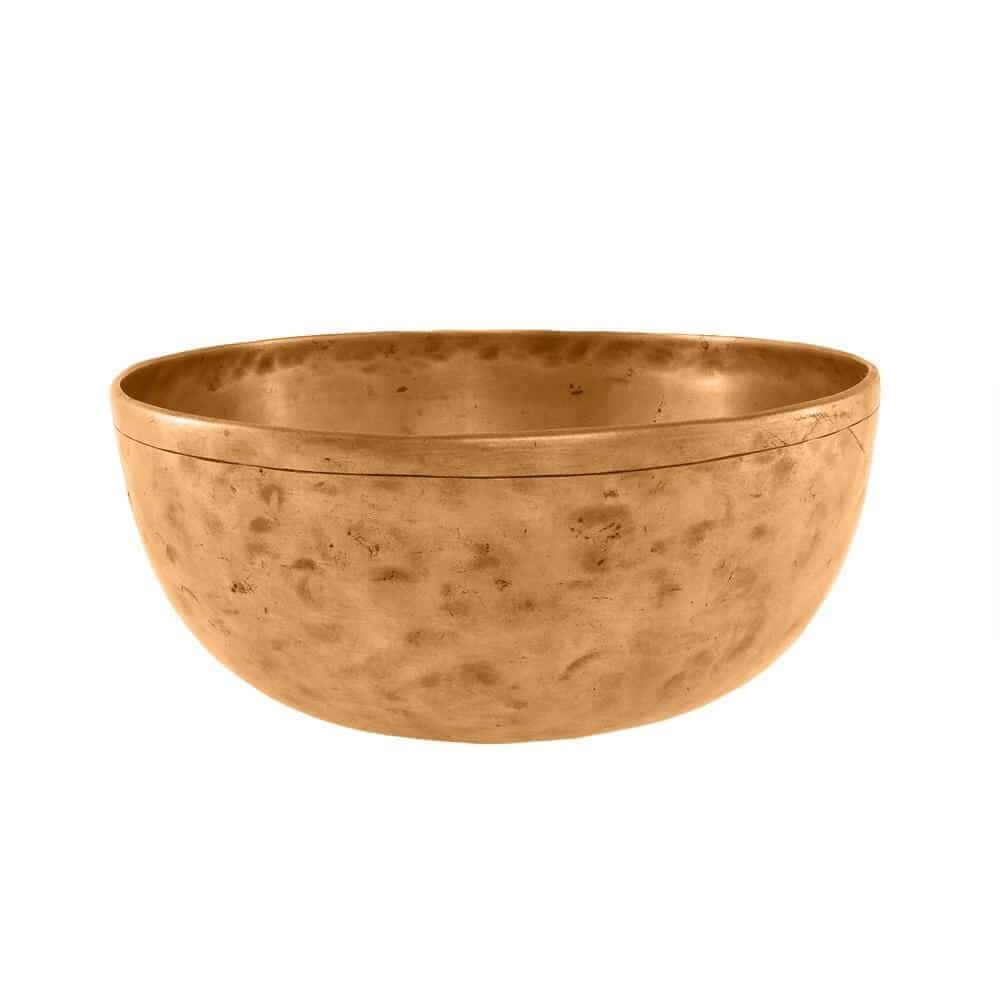
Himalayan singing bowls. Metal bowls that produce a complex, slowly decaying tone with several inharmonic partials. Played on the body, they give a clear tactile vibration. The quality varies enormously; wall thickness, alloy, and shape all change the sound.
Crystal singing bowls. Quartz bowls with a purer, louder, more sustained tone and fewer audible overtones. They are powerful in a large room and need careful volume control up close.
Gongs. The most complex instrument in the room, with a wide spread of frequencies that blooms and shifts over time. Gongs can overwhelm the analytical mind in a useful way, and can also exceed safe volume quickly.
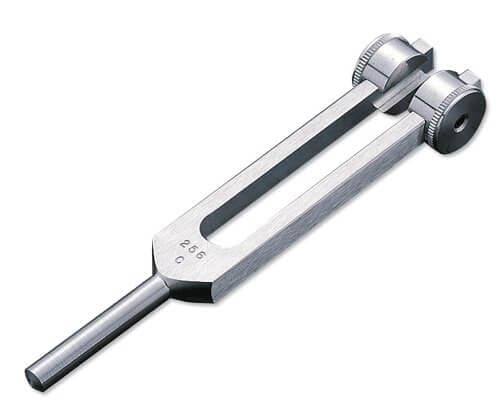
Tuning forks. Unweighted forks produce a clean tone held near the ears. Weighted forks are designed to be placed on the body, where the vibration is felt more than heard. More in what is tuning fork therapy?
Frame drums and shakers. Rhythm instruments that work through entrainment. A steady, slow pulse is one of the oldest tools for changing state.
Voice. The only instrument everyone owns. Humming, toning, and chanting combine sound, vibration, and slow breathing in one act.
Chimes, ocean drums, and others. Texture instruments that add space and movement, useful for transitions.
Who should not do sound healing
Sound healing is low-risk for most people. The 2025 review of singing bowl studies reported no adverse events. But "low risk" is not "no risk," and these situations need care:
- Hearing. Loud sound damages the ear. NIOSH recommends limiting exposure to 85 dBA averaged over eight hours, and halving the safe time for every 3 dB above that; at 100 dBA the limit is 15 minutes. A forcefully struck gong can reach 100 to 110 dB or more. A responsible facilitator keeps the room well below that, especially near people's heads.
- Tinnitus and sound sensitivity (hyperacusis). Loud or high-pitched sounds can make symptoms worse. Talk to the facilitator first, and lie further from the instruments or bring earplugs.
- Epilepsy. Sound-triggered seizures are rare but exist. If you have a seizure disorder, check with your doctor before attending.
- Trauma and PTSD. Sudden sounds, darkness, and lying still can trigger a stress response. Look for a trauma-informed facilitator who explains everything in advance and lets you keep your eyes open and move freely.
- Pregnancy. Most practitioners avoid placing instruments on the abdomen during pregnancy and keep volume moderate. Ask your doctor or midwife if you have questions.
- Implanted medical devices, recent surgery, or serious medical conditions. Avoid instruments placed directly on the body unless your doctor agrees.
- Mental health crises. Sound healing can support well-being, but it is not a treatment for a psychiatric emergency. If you are in crisis, contact a medical professional or a crisis line.
In all cases, sound healing works alongside medical care, never instead of it.
The philosophy of listening
Why has this idea survived for 2,500 years, through so many cultures and so much bad theory? I think because it points at something true about being human.
Boethius thought the body and soul were held together by proportion, the way a chord is. He was wrong about the mechanism and right about the experience: when we are well, we feel "in tune"; when we are not, something is off-key. Arthur Schopenhauer went further and argued that music, unlike the other arts, doesn't represent the world but expresses the inner movement of feeling directly. That may be why sound reaches places words can't.
The composer Pauline Oliveros spent her life teaching what she called Deep Listening: attending to every sound around you, without judging it, as a practice of awareness. This is the real core of sound healing, and the part no frequency chart can replace. When you listen fully to a bowl decaying into silence, you are, for a moment, entirely present. The mind stops rehearsing the past and planning the future. Many contemplative traditions would call that the beginning of healing, and the physiology agrees: a body that feels safe enough to listen is a body that has started to rest. Try it with our guide to active listening as meditation.
Try it yourself: a 10-minute practice
You don't need instruments to feel the core mechanisms. Try this tonight:
- Listen (2 minutes). Sit or lie down, close your eyes, and name every sound you can hear, from the loudest to the faintest. Don't label them as good or bad. Just notice.
- Hum (5 minutes). Breathe in through your nose for about four seconds. Hum on the exhale for about six seconds, lips closed, at a comfortable low pitch. That is six breaths a minute. Notice where you feel the vibration: lips, face, chest.
- Silence (3 minutes). Stop and stay still. Notice your breath, your heartbeat, and the quiet. This is where much of the effect lands.
If you have a singing bowl, strike it gently once at the start of the silence and follow the sound until you can no longer hear it.
Learning sound healing properly
If this guide has you wondering whether you could do this work for others, the honest answer is yes, with real training. A good practitioner needs more than a set of bowls and a playlist. You need the physics of sound, enough music theory to build consonant, intentional soundscapes, psychoacoustics, the physiology of the nervous system, safety and contraindications, and the skill of holding a room.
That is what we teach at Sound Medicine Academy. Our 200-hour Sound Healing Certification is accredited and grounded in acoustics, psychoacoustics, music theory, and conscious facilitation, with mentorship and the business skills to build a practice. If you want to start with group sessions, our 100-hour Sound Bath Training covers the same foundations. And if you simply want to deepen your own practice, start with Sound Healing for Beginners.
Frequently asked questions
What is sound healing used for?
Mostly for relaxation, stress and anxiety reduction, better mood, support for sleep, and meditation. It is also used as a complement to medical care for pain and emotional well-being, and in clinical music therapy for conditions such as Parkinson's disease, depression, and dementia.
Does sound healing actually work?
For relaxation, anxiety, and mood, yes: studies consistently show short-term improvements, and the broader research on music and health is strong. For curing disease or repairing the body through specific frequencies, there is no evidence. It works through the nervous system, breath, rhythm, and attention.
Is sound healing the same as music therapy?
No. Music therapy is a clinical health profession practiced by board-certified therapists with defined treatment goals. Sound healing is a wellness practice. They share tools and some mechanisms, but they are different in training, regulation, and purpose.
What is the best frequency for healing?
No single frequency has been shown to heal. What matters more is volume, tempo, consonance between instruments, soft attacks, and the use of silence. Claims about 528 Hz repairing DNA or Solfeggio tones curing specific problems are not supported by research.
How long should you listen to a healing frequency or sound bath?
Most studies use sessions of 20 to 60 minutes. For home practice, 10 to 20 minutes is enough to feel a change. Keep the volume comfortable; if you need to raise your voice to be heard over the sound, it is too loud.
Who should not do sound healing?
People with tinnitus, hyperacusis, sound-sensitive epilepsy, or severe trauma responses should talk to a professional and the facilitator first. During pregnancy, avoid instruments placed on the abdomen. Anyone with an implanted device or a serious medical condition should check with their doctor before on-body work.
What does a sound bath feel like?
Most people feel heavy, warm, calm, or sleepy. Some feel tingling or vibration through the body, see colors, or have memories and emotions come up. Some fall asleep. All are normal responses.
Does sound healing work with headphones or recordings?
Partly. Recordings can relax you and slow your breathing, and binaural beats only work through headphones. But you lose the physical vibration of live instruments and the presence of a facilitator, both of which seem to matter.
How often should you do sound healing?
The effects in studies are mostly short-term, so regular practice works better than a single session. Once a week for a group session, plus a few minutes of humming or listening at home, is a good rhythm for most people.
How do I become a sound healer?
Look for a training that teaches the physics of sound, music theory, psychoacoustics, safety, and facilitation, not only instrument technique. Check accreditation, ask who the teachers are, and make sure there is real mentorship and supervised practice. Sound Medicine Academy's Sound Healing Certification is built around exactly these principles.
References
- Goldsby TL, Goldsby ME, McWalters M, Mills PJ. Effects of singing bowl sound meditation on mood, tension, and well-being: an observational study. J Evid Based Complementary Altern Med. 2017;22(3):401–406.
- Rio-Alamos C, et al. Acute relaxation response induced by Tibetan singing bowl sounds: a randomized controlled trial. Eur J Investig Health Psychol Educ. 2023;13(2).
- Cai Y, Yang G, Liu Y, et al. Therapeutic effects of singing bowls: a systematic review of clinical studies. Integr Med Res. 2025;14(2):101144.
- Stanhope J, Weinstein P. The human health effects of singing bowls: a systematic review. Complement Ther Med. 2020;51:102412.
- Hole J, Hirsch M, Ball E, Meads C. Music as an aid for postoperative recovery in adults: a systematic review and meta-analysis. Lancet. 2015;386(10004):1659–1671.
- Kühlmann AYR, et al. Meta-analysis evaluating music interventions for anxiety and pain in surgery. Br J Surg. 2018;105(7):773–783.
- Aalbers S, et al. Music therapy for depression. Cochrane Database Syst Rev. 2017;11:CD004517.
- Garcia-Argibay M, Santed MA, Reales JM. Efficacy of binaural auditory beats in cognition, anxiety, and pain perception: a meta-analysis. Psychol Res. 2019;83(2):357–372.
- Bernardi L, Porta C, Sleight P. Cardiovascular, cerebrovascular, and respiratory changes induced by different types of music in musicians and non-musicians: the importance of silence. Heart. 2006;92(4):445–452.
- Bernardi L, Sleight P, Bandinelli G, et al. Effect of rosary prayer and yoga mantras on autonomic cardiovascular rhythms: comparative study. BMJ. 2001;323:1446–1449.
- Weitzberg E, Lundberg JO. Humming greatly increases nasal nitric oxide. Am J Respir Crit Care Med. 2002;166(2):144–145.
- Salimpoor VN, Benovoy M, Larcher K, Dagher A, Zatorre RJ. Anatomically distinct dopamine release during anticipation and experience of peak emotion to music. Nat Neurosci. 2011;14(2):257–262.
- Thaut MH, McIntosh GC, Rice RR, et al. Rhythmic auditory stimulation in gait training for Parkinson's disease patients. Mov Disord. 1996;11(2):193–200.
- Plomp R, Levelt WJM. Tonal consonance and critical bandwidth. J Acoust Soc Am. 1965;38(4):548–560.
- Huron D. Sweet Anticipation: Music and the Psychology of Expectation. MIT Press; 2006.
- Campbell EA, et al. Tactile low frequency vibration in dementia management: a scoping review. Front Psychol. 2022;13:854794.
- Collins FS, Fleming R. Sound Health: an NIH-Kennedy Center initiative to explore music and the mind. JAMA. 2017;317(24):2470–2471.
- National Institute for Occupational Safety and Health. Understanding noise exposure limits. CDC; 2016.
- Boethius. De institutione musica (c. 500 CE).
- Aristotle. Politics, Book VIII.
- Porphyry. Life of Pythagoras; Iamblichus. On the Pythagorean Way of Life.